A surface schedule can make or break a project long before cabinetry is installed or furniture arrives. The difference is rarely just color or pattern. Premium architectural surface materials shape how a space performs under daily use, how cleanly details resolve on site, and how confidently a builder, designer, or homeowner can move from selection to installation.
For high-end residential and commercial interiors, the right material has to do more than look refined in a sample box. It needs to hold its visual integrity across larger areas, meet performance expectations, and arrive within a timeframe that supports the build program. That is why material selection is less about chasing trends and more about specifying surfaces that balance design intent with practical delivery.
What makes premium architectural surface materials premium
The word premium gets used loosely in the finishes market, but experienced specifiers know it means something concrete. A premium surface should show quality in three areas: visual depth, technical reliability, and supply confidence.
Visual depth is often the first signal. In porcelain, that might mean cleaner graphic development, more convincing stone interpretation, and a finish that feels considered rather than overworked. In engineered stone, it can mean consistency, refined movement, and a palette that supports architectural detailing instead of competing with it. In timber, it often comes down to grade, tone, surface treatment, and how naturally the floor sits within the broader scheme.
Technical reliability matters just as much. Premium materials should perform as promised, with clear installation requirements and realistic maintenance expectations. They should suit the intended application rather than forcing compromises later. A bathroom wall, a kitchen island, a retail floor, and a living room under full afternoon sun each ask different things of a surface.
Then there is procurement. A beautiful finish that cannot be supplied when needed creates site delays, redesigns, and avoidable cost pressure. For many projects, premium also means curated ranges, dependable stock access, and informed support during quoting, sample review, and layout decisions.
Premium architectural surface materials by application
The smartest way to specify is to start with where the material will be used, then narrow the palette. That approach protects both the design outcome and the construction timeline.
Porcelain tiles for walls and floors
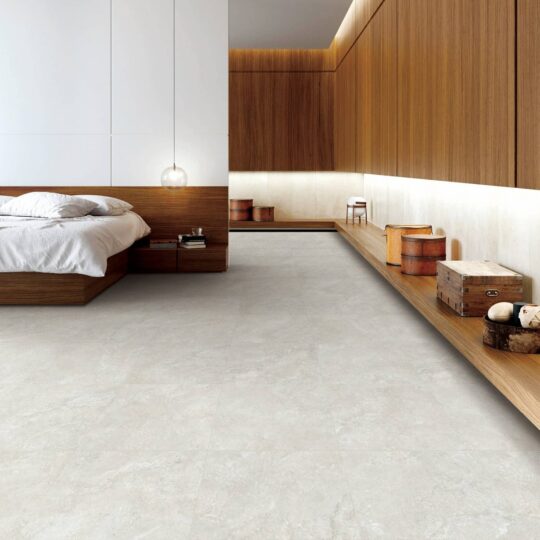
Porcelain remains one of the most versatile premium architectural surface materials because it performs across a wide range of interior applications. It suits bathrooms, laundries, kitchens, open-plan living spaces, and many commercial settings where durability and easy maintenance matter.
What makes porcelain especially valuable is its ability to deliver a high-end look without requiring delicate treatment. Quality porcelain offers excellent resistance to wear, moisture, and staining, making it a strong option for busy households and high-traffic projects. Large-format formats can create a more expansive, architectural feel, although they do require careful substrate preparation and experienced installation to avoid lippage or alignment issues.
The trade-off is that not every porcelain range is equal. Lower-grade products may fall short in rectification, print variation, or finish quality. For premium projects, those details are visible. A well-sourced porcelain collection gives designers greater confidence in both appearance and installability.
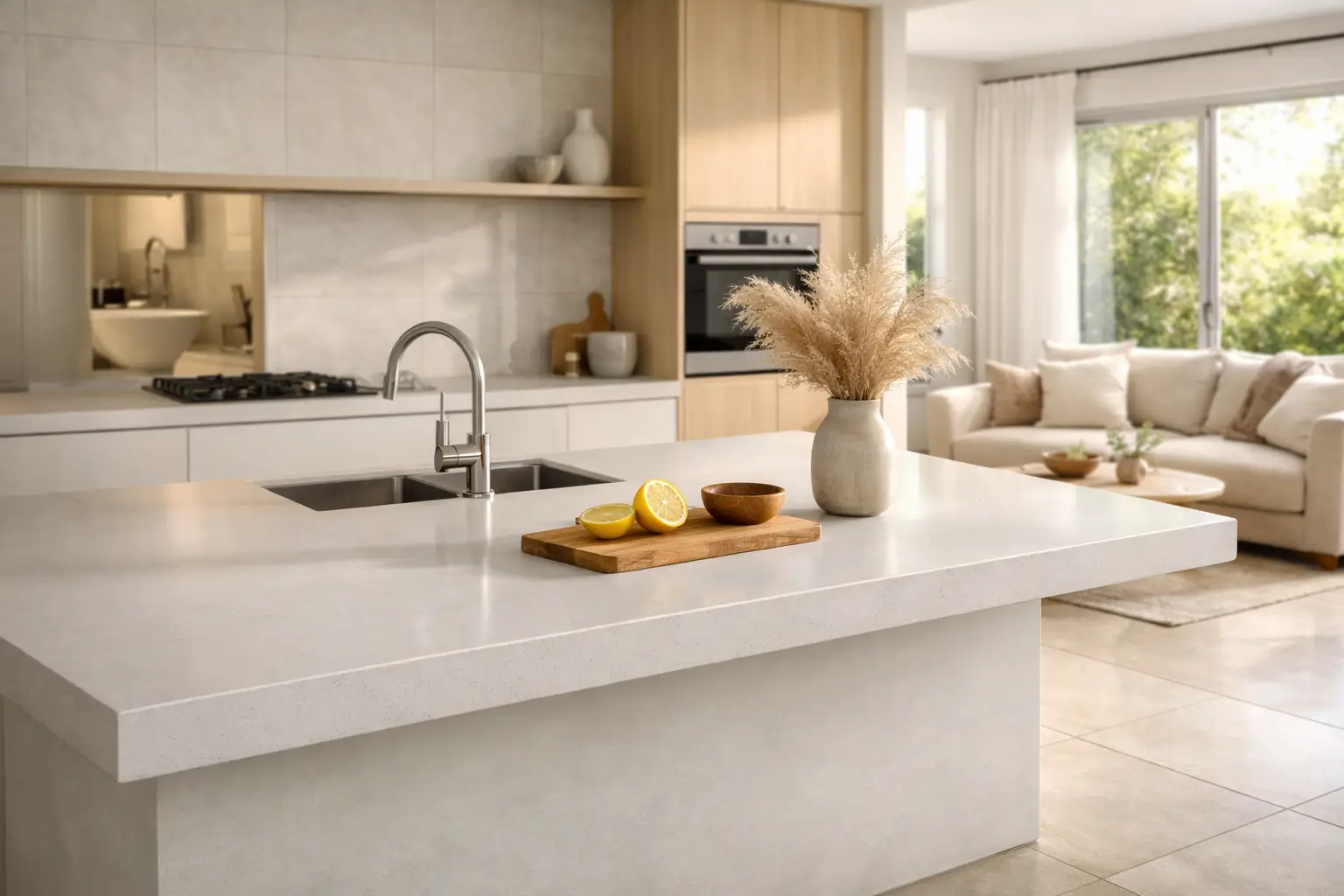
Zero-silica engineered stone for benchtops and joinery
Benchtops, islands, splashbacks, and custom joinery panels often need a surface that combines crisp aesthetics with practical daily performance. Zero-silica engineered stone has become an increasingly important category for that reason.
From a design perspective, it offers the tailored, architectural finish many clients want in kitchens, bathrooms, and integrated interior details. From a specification perspective, the safety profile matters. As awareness of fabrication risks has increased across the industry, 100% zero-silica engineered stone provides a more safety-conscious pathway for projects seeking engineered consistency without introducing the same concerns tied to crystalline silica exposure.
That does not mean every application is automatic. Fabrication quality still matters, edge details still need to be resolved properly, and the selected finish should match how the space will be used. A pale, refined slab may be ideal for a minimalist kitchen, but in a heavy-use commercial environment, maintenance habits and visual wear tolerance should be part of the conversation.
European oak timber flooring for warmth and texture
Where porcelain and engineered stone often provide structure and precision, European oak introduces warmth, softness, and lived-in character. In premium residential work especially, it plays an important role in making interiors feel grounded rather than overly hard.
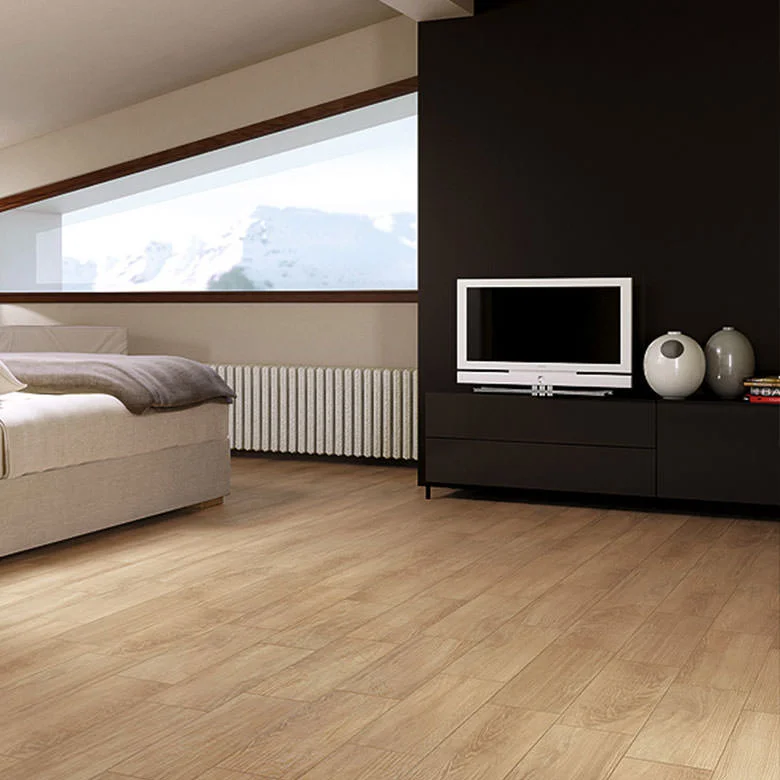
European oak flooring works well in living areas, bedrooms, circulation zones, and select commercial environments where acoustic comfort and natural material presence are priorities. It brings tonal richness and organic variation that cannot be fully replicated by synthetic alternatives.
The key is understanding that timber asks for a different type of commitment. It is durable, but not indestructible. It responds to environmental conditions, requires suitable installation planning, and will develop character over time. For many clients, that is part of the appeal. For others, especially in wet zones or very heavy-traffic commercial settings, another material may be the more practical choice.
How to choose the right surface for the project
A strong specification usually comes from asking better questions early. The first is not which finish is most impressive. It is what the space needs to do every day.
Traffic levels, moisture exposure, cleaning requirements, and installation conditions should all shape the shortlist. A polished surface may look exceptional in a showroom setting, but if slip resistance is a concern, the project may need a different finish underfoot. A timber floor may elevate a master suite, but a porcelain tile may be the better fit where water and frequent cleaning are part of normal use.
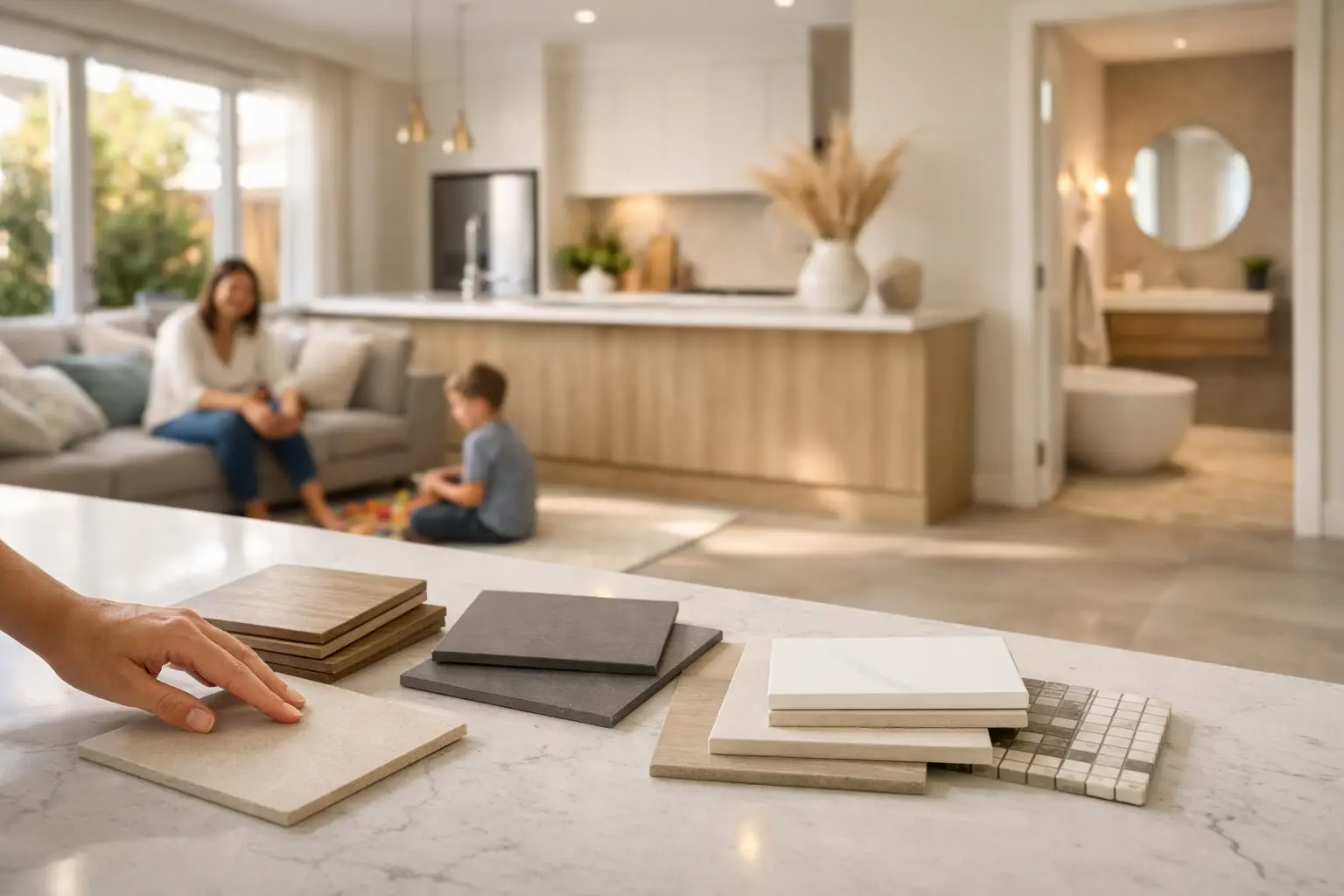
Scale also matters. Some materials look outstanding in a single sample yet feel too busy when repeated across an entire floor plate. Others appear understated in the hand but become highly architectural once installed at scale. That is where showroom viewing, larger samples, and layout guidance can materially improve the decision.
Budget should be handled with nuance. Premium does not always mean selecting the most expensive product in every category. Often it means putting investment where it has the greatest visual and functional return. A project might justify a statement engineered stone island, balanced by a more restrained porcelain on secondary surfaces. Or it may call for premium timber in primary living spaces while using porcelain in utility areas for practical durability.
Why supply and support matter as much as the material
Design quality can be undermined by poor process. That is especially true when projects involve multiple finish categories, tight installation windows, or clients who need certainty before committing to final selections.
A premium supplier should help reduce friction, not add to it. That includes access to samples, informed product guidance, realistic lead time communication, and local stock visibility where available. For builders and designers, this makes quoting more accurate and site coordination less exposed. For renovators and homeowners, it reduces the risk of choosing a finish that looks right on paper but creates avoidable problems later.
There is also value in sourcing with continuity across categories. When porcelain, engineered stone, and timber are selected in isolation, the palette can start to feel fragmented. A curated, full-surface approach creates stronger visual cohesion and often simplifies the procurement path. That is one reason suppliers such as Verona Ceramic are increasingly relevant to specification-led projects that need both design clarity and dependable local support.
Common mistakes when specifying premium surfaces
One of the most common mistakes is selecting purely on appearance. A surface might photograph well and still be wrong for the way the space functions. Another is underestimating installation requirements. Large-format porcelain, patterned tile layouts, mitred stone details, and timber transitions all need early coordination.
Another issue is treating all premium-looking products as equal. Differences in sourcing, finish consistency, technical composition, and stock depth can have a major effect on the project outcome. This is where careful curation matters. Premium architectural surface materials should feel resolved not only in design terms, but in how they arrive, install, and perform over time.
Finally, many projects leave surface decisions too late. When selections are rushed, compromises tend to follow. Better outcomes come from reviewing samples under the actual lighting conditions, confirming application suitability, and aligning the material choice with site timing before orders are locked in.
The standard clients expect has changed
Clients are more informed than they were a few years ago, and trade professionals are under greater pressure to deliver both aesthetic quality and practical certainty. That has raised the bar for surface specification. It is no longer enough for a material to simply imitate luxury. It needs to support a real project with durability, safety, availability, and design integrity.
That shift is good for the industry. It rewards better sourcing, better technical guidance, and a more disciplined approach to material selection. For anyone planning a considered interior, the strongest result usually comes from choosing surfaces that are beautiful, yes, but also credible under real conditions. When the finish works as hard as the design, the whole project feels more resolved.