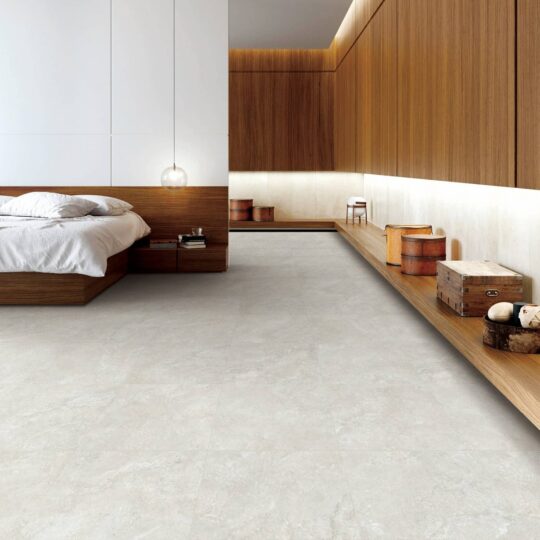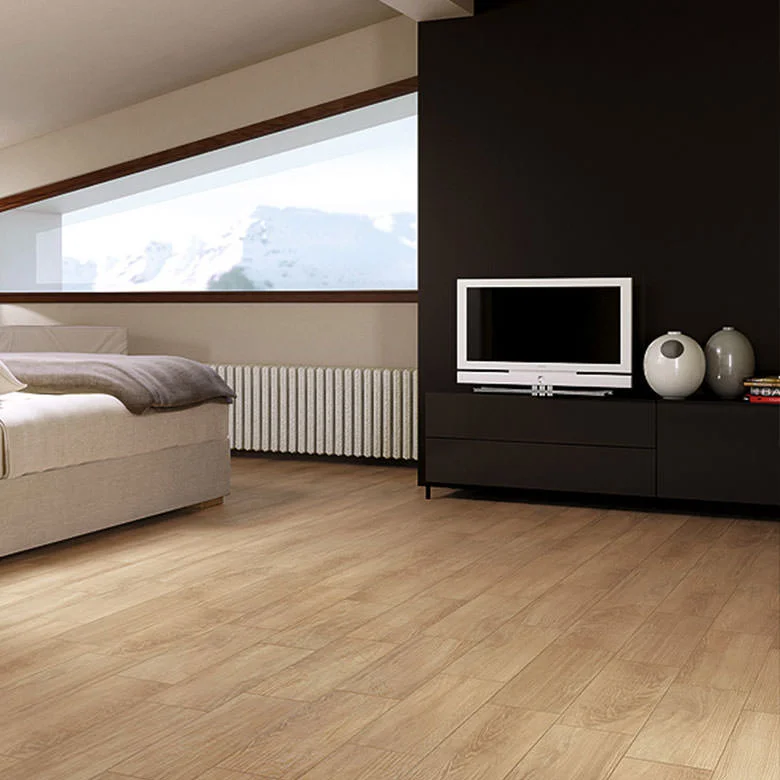
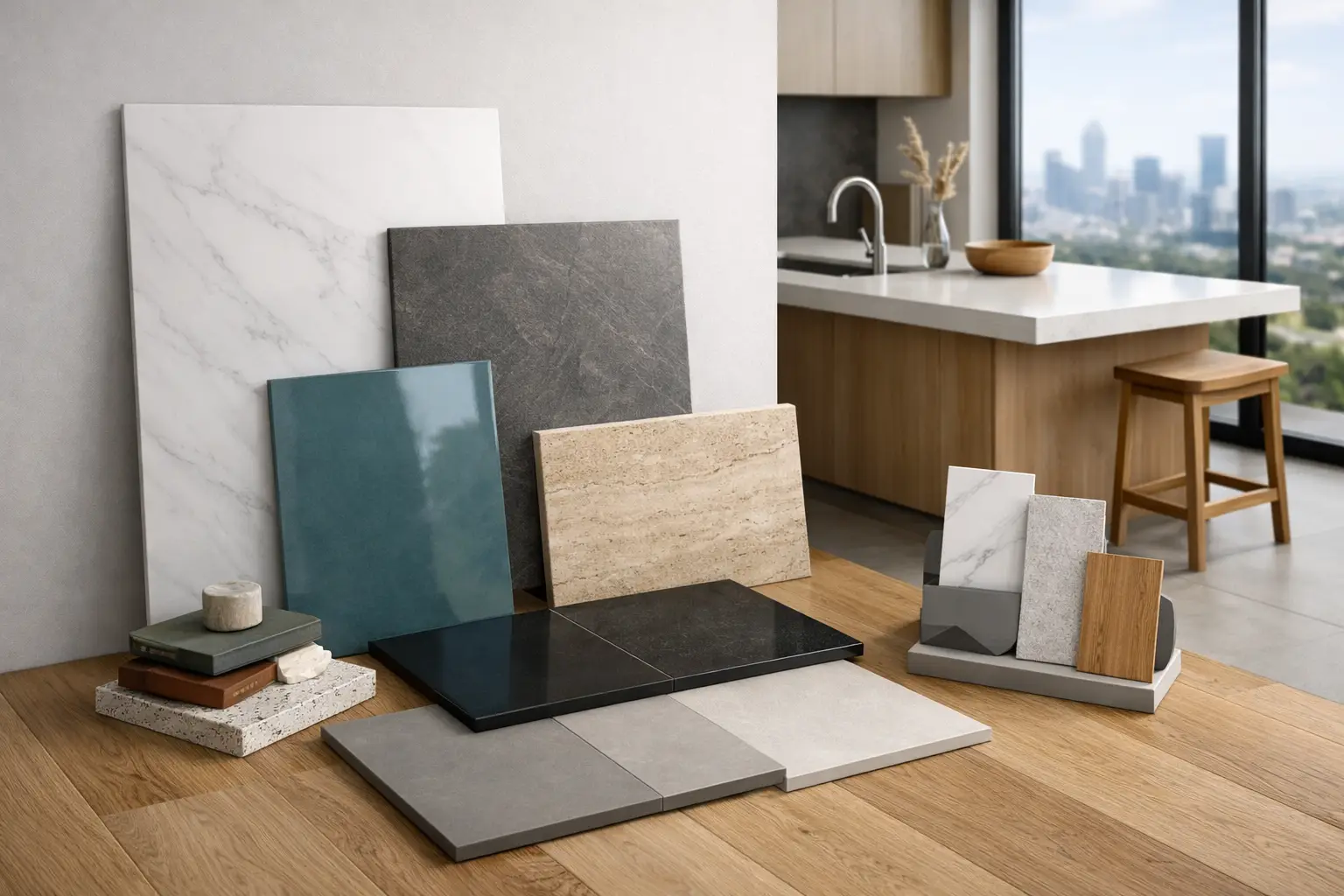
A tile schedule can look perfect on paper and still fail on site. The usual causes are not dramatic design errors. They are quieter problems: batch drift, warped large-format pieces, incompatible slip ratings, or substrates that were never flat enough for the joint width the design requires. For premium tiles Melbourne projects, the real differentiator is not just the surface itself. It is whether the material can hold design intent under construction pressure.
What makes premium tiles in Melbourne genuinely premium
At the architectural end of the market, premium is not a retail label. It is a specification outcome. A premium porcelain tile should deliver consistent calibration, dependable batch-to-batch color stability, and sufficient planarity for tight joint execution without visible lippage. If it cannot do those things reliably, it is not premium in any meaningful project sense.
That matters even more on contemporary residential and boutique commercial work, where designers are pushing for larger formats, quieter surface movement, and sharper transitions between wet and dry zones. A visually refined tile with weak technical discipline becomes a site problem very quickly. The better product is the one that supports the detail, not the one that simply photographs well as a sample.
Why premium tiles Melbourne specifications fail
Most failures begin before installation. Designers may approve a hand sample under controlled lighting, but the project later receives production material with subtle tonal variation that reads differently across an open floor plate. Builders may allow for minimal grout joints without confirming whether the tile’s actual flatness supports that decision. Installers may be expected to achieve a flush finish over a substrate that does not meet tolerance.
This is where specification needs to move beyond product selection. Slip resistance must align with actual use conditions and relevant Australian requirements, including AS 4586 where applicable. Interior-exterior continuity needs more than a matching look. It requires calibrated formats across P3 or P5 applications so level changes, drainage, and safety do not undermine the original concept.
Lead time is another pressure point. A beautiful imported range is of limited value if batch continuity cannot be maintained across staged deliveries. On high-end builds, replacement delays do not just inconvenience the program. They can compromise sequencing across joinery, glazing, waterproofing, and practical completion.
How to assess premium architectural surfaces properly
A serious tile review should start with the finish under project lighting, then move immediately into technical verification. Ask whether the tile body and surface finish suit the traffic class and cleaning regime. Confirm whether the nominal size matches the actual calibration. Review edge rectification quality, because this directly affects joint consistency and the visual sharpness of laid fields.
For large-format porcelain, planarity is non-negotiable. If the project is targeting minimal grout joints, the tile needs to be flat enough to support that ambition, and the substrate needs to be prepared to the same standard. Otherwise, even a premium product will present as poorly installed. The issue is often blamed on workmanship when the root cause was a mismatch between design detail, product tolerance, and substrate readiness.
Designers should also check how the range performs across transitions. A tile selected for a main living area may need a matching external surface, a grip-rated wet area option, and compatible trims or stair details. Premium specification is about system thinking. The best collections resolve more than one zone without forcing visual compromise.
Premium tiles Melbourne projects need procurement discipline
In Melbourne, where custom residential timelines are often compressed and boutique commercial programs leave little room for reselection, procurement discipline is as important as product quality. Bulk order inspection matters. So does confirming shade, batch, and quantity before dispatch. Returns and substitutions are rarely simple once tiles have been cut, mixed, or partially installed.
The practical sequence is straightforward. Finalize quantities with wastage that reflects the pattern and format, not a generic allowance. Secure technical sign-off early on movement joints, substrate preparation, and any setting-out constraints around niches, stair landings, and thresholds. Then lock supply against the approved batch where possible. This is the kind of operational rigor that protects design outcomes and avoids expensive arguments on site.
For teams specifying premium architectural surfaces, the supplier’s role should be closer to technical partner than showroom merchant. That means identifying execution risks before material reaches site, not after the first pallet is opened.
Where premium value actually shows up
The value of a premium tile is rarely in the first impression alone. It shows up in quieter ways: cleaner reflected light across a large floor, tighter joints at long sightlines, fewer batch inconsistencies, and less negotiation between the drawing set and site reality. It also shows up in compliance confidence, especially where slip resistance, wet area performance, and exterior durability are part of the brief.
Verona Ceramic operates in that exact space between design ambition and construction reality. For architects, designers, and premium builders, the point of specifying better material is not prestige. It is control. When the tile, the technical data, and the delivery sequence all align, the project has a far better chance of finishing exactly as drawn.