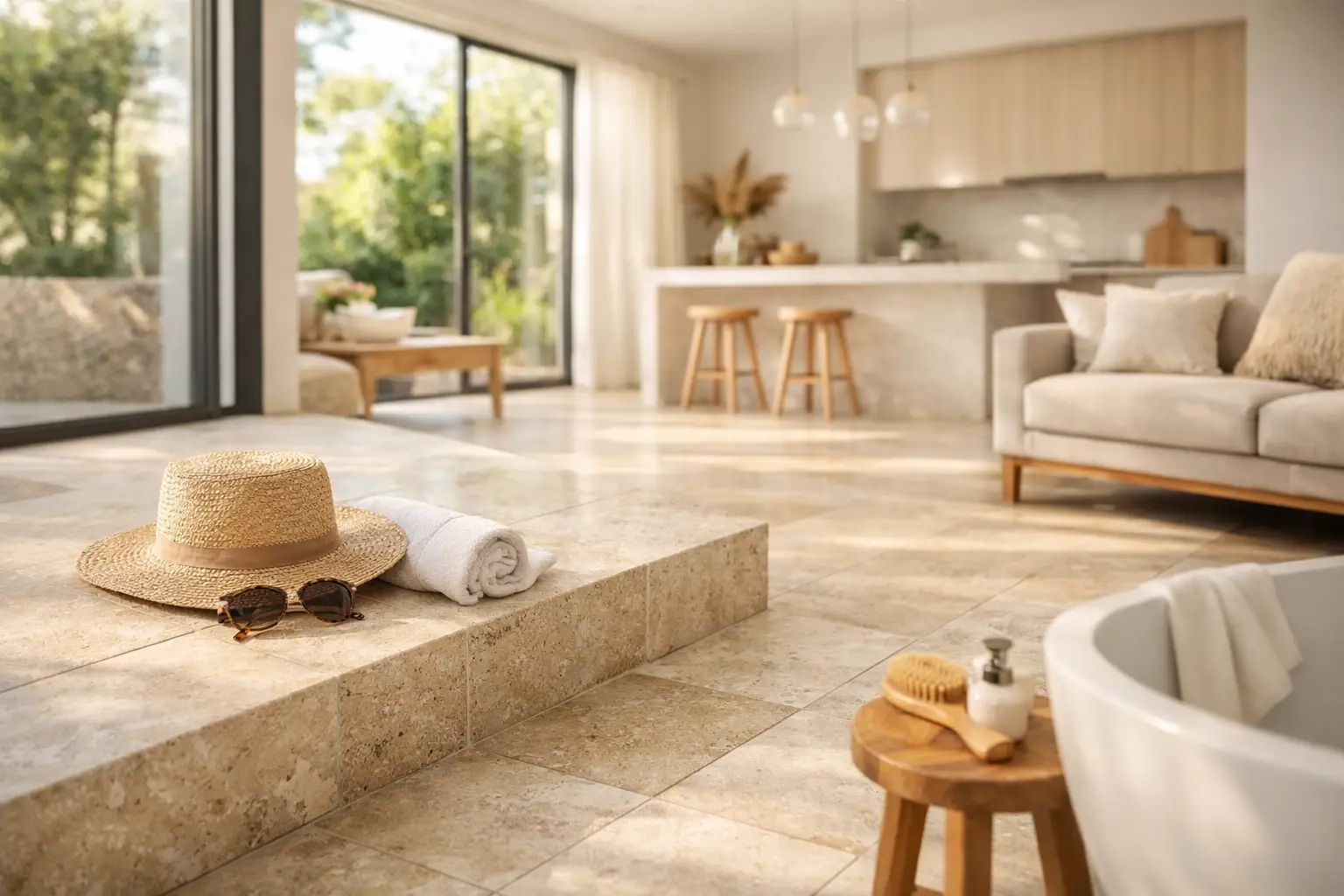
A floor can set the entire mood of a renovation before the furniture even arrives. Travertine tiles have a quiet, natural character that appeals to homeowners who want warmth, movement and a finish that does not feel overly manufactured. From soft ivory through to warm beige, silver and walnut tones, each tile carries variations formed in natural stone over time.
That individuality is the appeal, but it also means travertine deserves a considered choice. It can create beautiful bathrooms, living spaces and alfresco areas, provided the finish, installation method and ongoing care suit the way your family lives. For busy homes that love the look but need simpler maintenance, quality travertine-look porcelain can be an equally considered option.
What Makes Travertine Tiles Different?
Travertine is a natural limestone formed by mineral-rich spring water. Its recognisable appearance comes from subtle colour variation, fine layers and small surface voids. Those holes are not faults – they are part of the stone’s natural structure and visual charm.
Tiles can be supplied filled or unfilled. Filled travertine has the larger voids filled with a colour-matched compound, creating a smoother surface that is often more practical indoors. Unfilled travertine retains more of its rustic texture and is commonly chosen for outdoor settings, where its irregular surface can add character and grip.
Unlike a printed tile, no two pieces of natural travertine are exactly alike. Samples are useful for understanding the general colour family and finish, but a full installation will always show natural variation. For many designers and homeowners, this is what makes the finished room feel layered and enduring rather than uniform.
Where Travertine Tiles Work Best
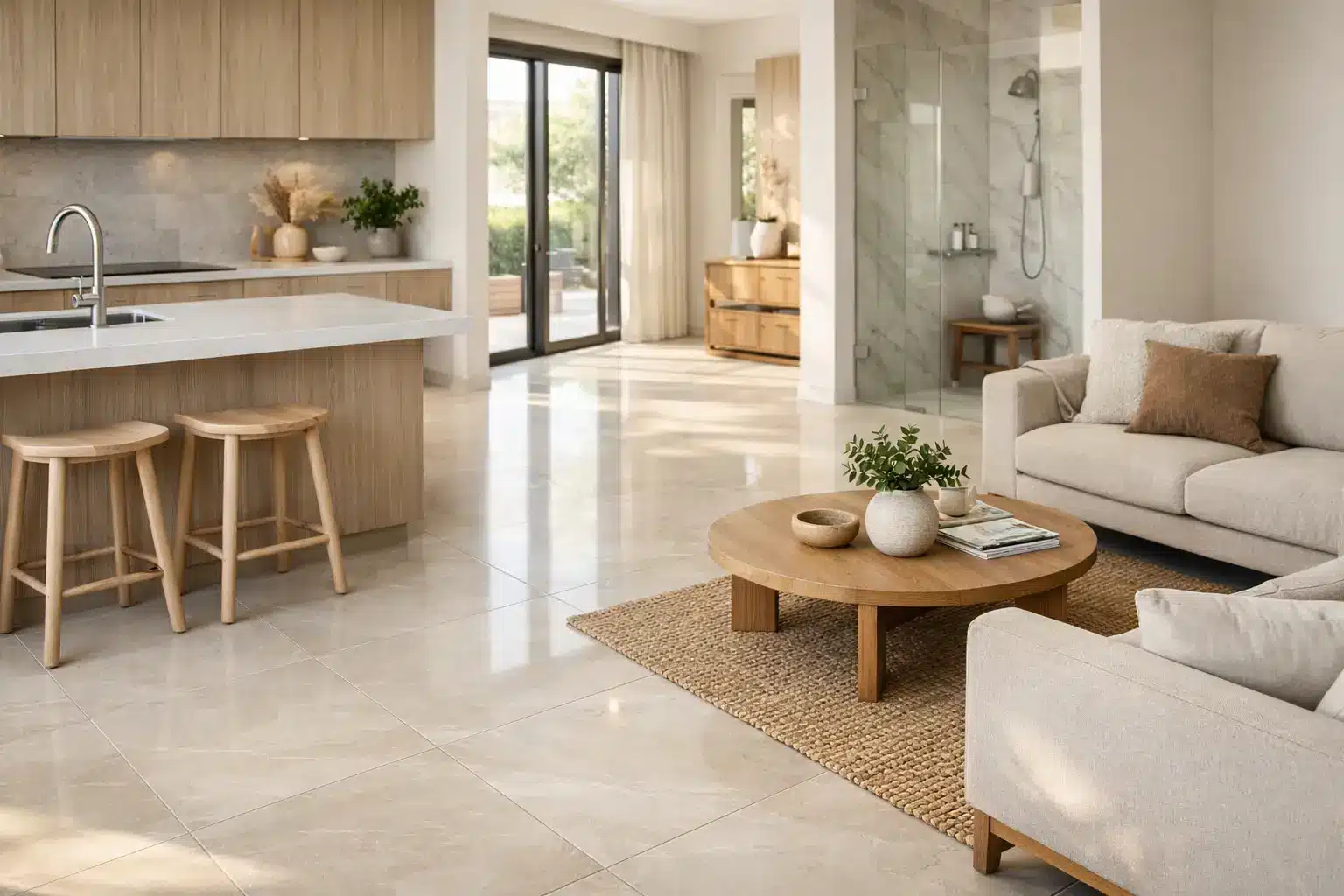
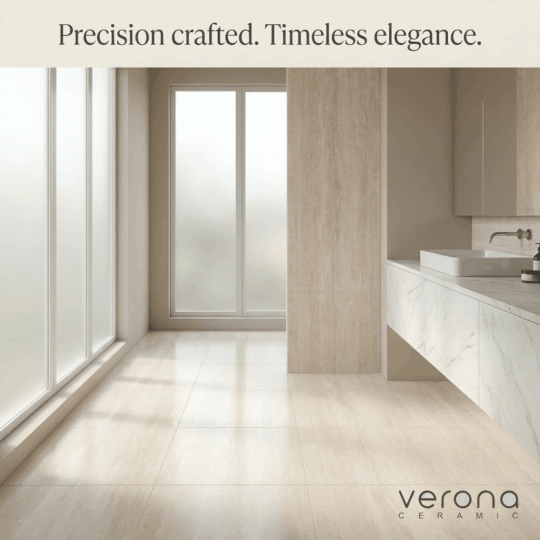
Travertine can suit a wide range of spaces, although the right finish matters as much as the colour. Honed travertine has a smooth, matte surface and is a refined choice for internal floors, living rooms, entry areas and feature walls. It brings a calm, architectural feel without the glare associated with high-gloss finishes.
A tumbled finish has softened edges and more texture. It works particularly well in Mediterranean-inspired courtyards, alfresco dining areas and around pools when the product has been selected for wet conditions. A brushed or textured surface may also be available for external applications.
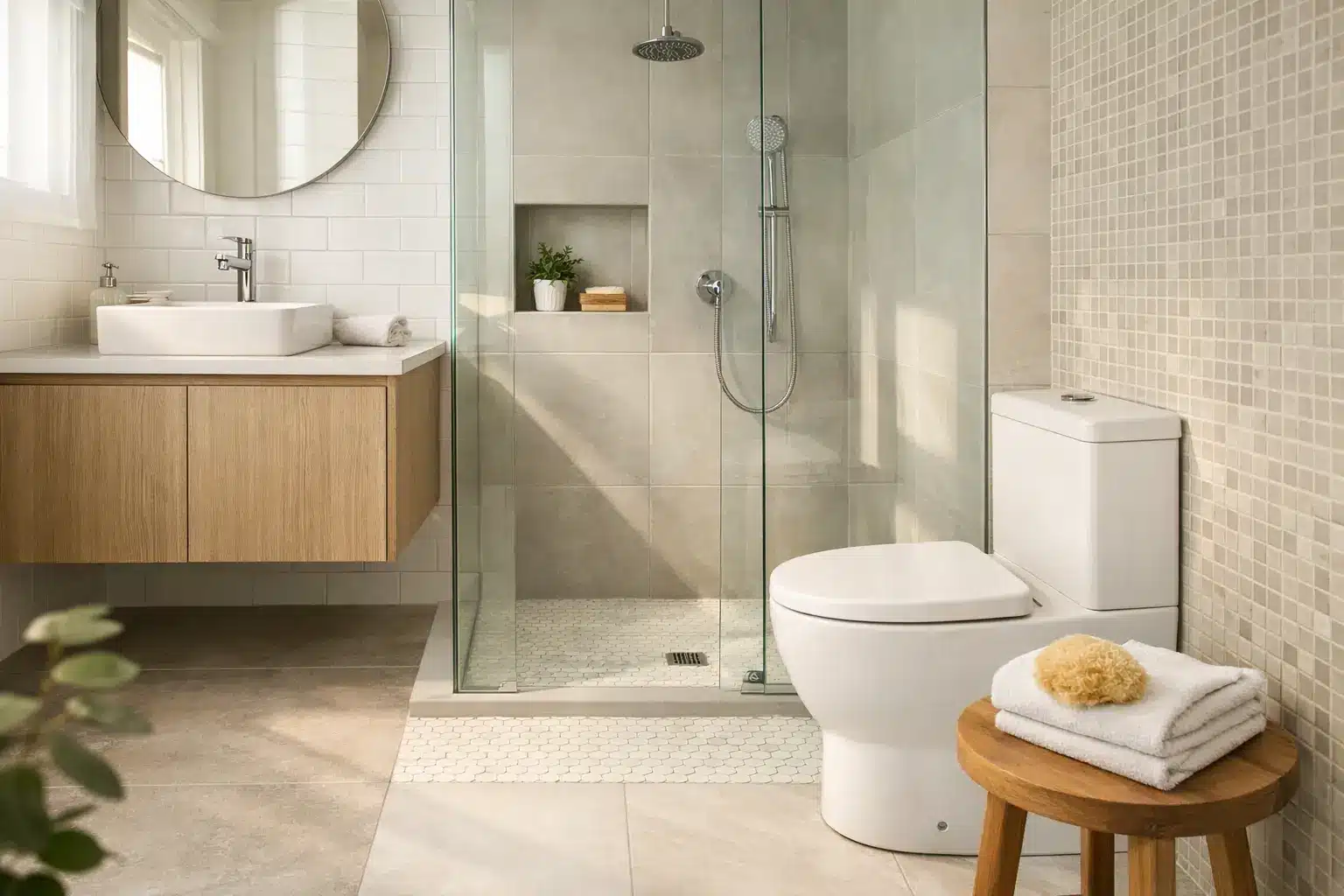
In bathrooms, travertine can look especially beautiful on walls, vanity splashbacks and low-traffic flooring. However, it needs diligent sealing and prompt cleaning because natural stone is more porous than porcelain. It is not the most forgiving choice for every family bathroom, particularly where cosmetics, hair colour, cleaning sprays or bath products are likely to sit on the surface.
Kitchen floors can also work well with travertine, but this is where lifestyle should lead the decision. A household that cooks often, has young children or wants a very low-maintenance finish may prefer a matte porcelain tile with a travertine appearance. Porcelain offers the same warm visual direction with easier everyday cleaning and no routine sealing requirement.
The Finish Changes the Practicality
When selecting tiles, it helps to look beyond colour. Surface finish affects feel underfoot, cleaning needs and suitability for wet areas.
A honed finish is smooth and elegant, but should be assessed carefully for bathrooms, laundries and external spaces. A tumbled or brushed finish gives greater texture, while a filled-and-honed product is often easier to clean than an open, unfilled surface. In a shower or pool setting, do not assume a textured stone is automatically suitable. Ask for the product’s slip-resistance information and ensure the selected tile is appropriate for the intended area.
For porcelain alternatives, specifications may include a P-rating or wet pendulum result to help assess slip resistance. PEI ratings are also relevant to glazed porcelain tiles because they indicate resistance to surface wear. Natural stone is assessed differently, so a PEI rating is not generally used as a measure of travertine performance. A knowledgeable supplier can explain the specifications in plain language and help align the product with Australian installation expectations.
Travertine Needs Sealing – and That Is the Trade-off
The most important practical point is simple: travertine needs to be sealed. A suitable penetrating sealer helps reduce absorption and gives homeowners more time to wipe up spills before they can mark the stone. Sealing does not make natural stone completely stain-proof, and it should not be treated as a substitute for regular care.
How often resealing is needed depends on the stone, finish, traffic levels and products used for cleaning. High-use floors and splash-prone areas generally need closer attention than a feature wall. Your tiler or stone-care professional can recommend a sealer and maintenance schedule for the specific product and location.
For day-to-day cleaning, use a pH-neutral cleaner made for natural stone and a soft mop or cloth. Avoid acidic products such as vinegar, lemon-based cleaners and many bathroom descalers. Acids can etch limestone, leaving dull marks that may be difficult to remove. Abrasive powders and harsh bleach-based products should also be avoided unless a stone-care specialist has confirmed they are suitable.
This care requirement is not a reason to rule out travertine. It is simply part of owning a natural material. Much like timber, it rewards sensible maintenance with a finish that develops character over the years.
Planning for Colour Variation and Installation
A successful travertine installation starts before the adhesive is mixed. Tiles should be unpacked and dry-laid where possible so the installer can blend tones, veining and movement across the floor or wall. This avoids clusters of darker or lighter pieces and creates a more balanced result.
Subfloor preparation is equally important. Natural stone can be less forgiving than porcelain if the substrate is uneven or moves over time. The base needs to be flat, stable and properly prepared, while adhesive, grout and movement joints should be selected for the project conditions. In wet areas, waterproofing must be completed correctly before tiling begins.
Grout colour has a strong effect on the finished look. A close tonal grout can create a calm, continuous surface, while a contrasting grout makes individual tiles more noticeable. Smaller grout joints can look refined, but they are only suitable when tile sizing, edge finish and installation tolerances allow. A skilled tiler will advise on what is realistic for the chosen format.
For external areas, consider drainage, fall, exposure to weather and whether the stone is suited to Melbourne’s changing conditions. Pool surrounds deserve particular care. The tile needs to be appropriate for wet bare feet, and the installation should allow water to drain away rather than sit on the surface.
Travertine or Travertine-Look Porcelain?
This decision usually comes down to authenticity versus convenience. Genuine travertine offers natural variation, tactile texture and a depth that many homeowners value in premium architectural surfaces. It can be an excellent choice for feature spaces, carefully designed bathrooms and elegant indoor-outdoor schemes where its maintenance needs are understood.
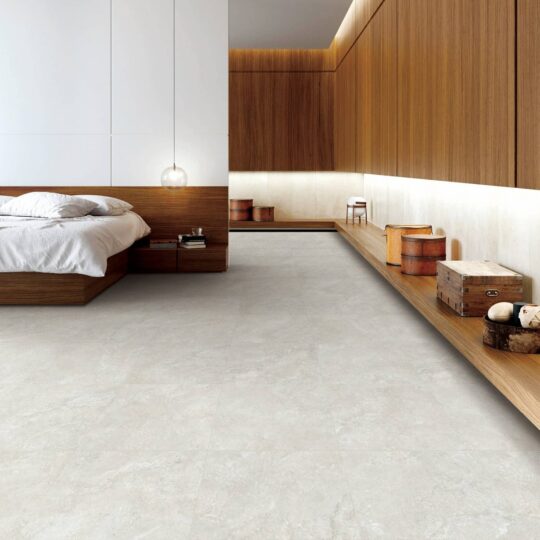
Travertine-look porcelain is often the practical winner for hard-working family homes. Modern large format tiles can reproduce the soft movement and warm colour of stone while offering excellent stain resistance, straightforward cleaning and reliable consistency between tiles. Matte porcelain is particularly useful for kitchen tiles, bathroom tiles and busy living areas where durability matters every day.
Porcelain also gives more flexibility where a coordinated finish is needed across floors and walls. It can be easier to source in ready stock, and a factory-direct tile range may offer strong value without compromising the visual result. The best choice is not about one material being better in every situation. It is about choosing the surface that matches the room, the expected wear and the level of maintenance you are comfortable with.
Questions to Ask Before You Buy
Before confirming a travertine selection, ask whether the tile is filled or unfilled, honed, tumbled or brushed, and whether it is recommended for your specific location. Confirm the thickness, edge profile, batch variation and any available slip-resistance information. If it is going outdoors or near a pool, ask about suitability in wet conditions rather than relying on appearance alone.
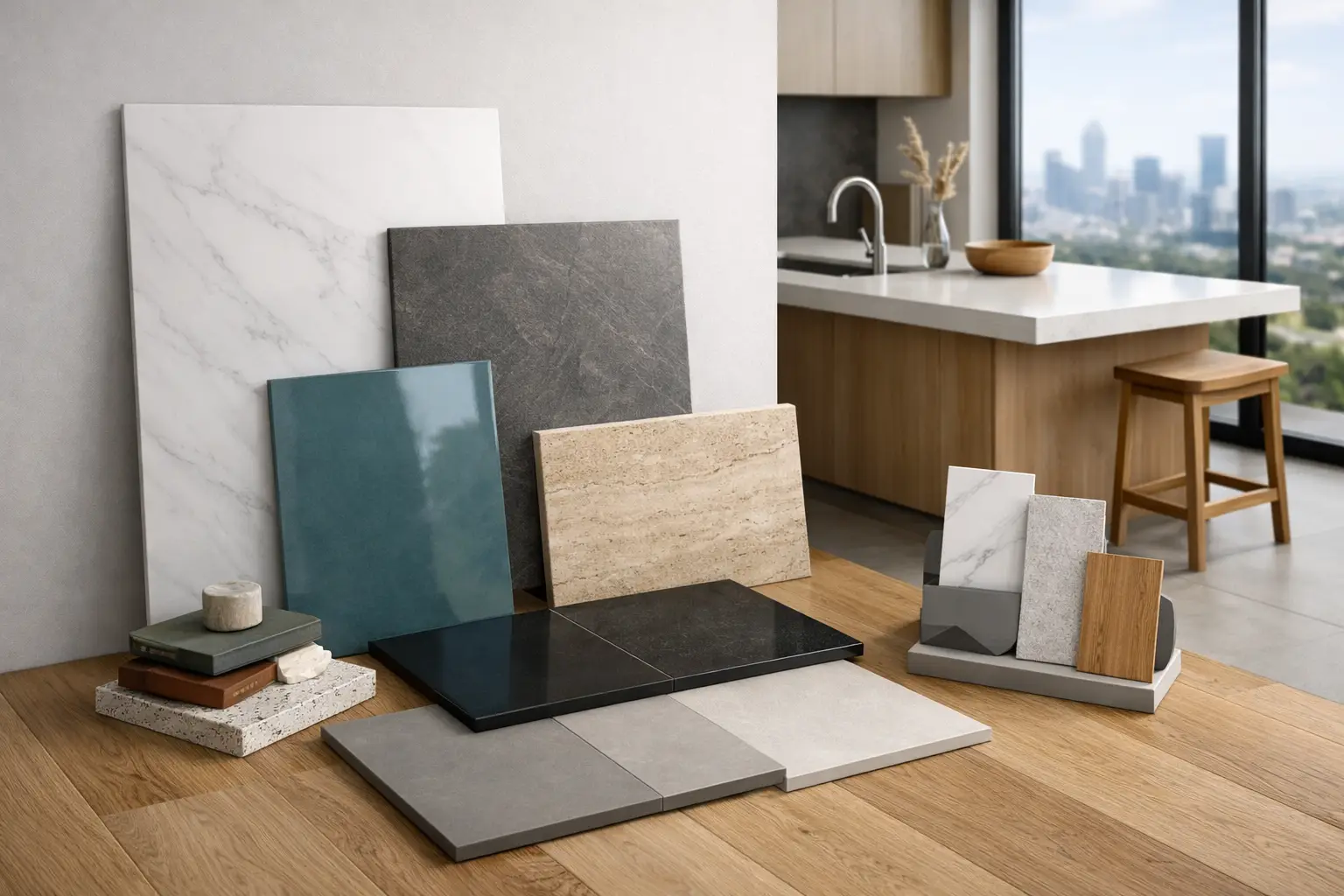
It is also wise to take a sample home and view it in morning, afternoon and artificial light. Travertine’s warmth can shift noticeably depending on surrounding cabinetry, wall colour and natural light. Check samples beside your benchtop, paint and timber finishes so the room feels cohesive, not simply attractive in isolation.
For a renovation with several moving parts, arranging measurements and a layout discussion early can prevent expensive adjustments later. At Verona Ceramic, Melbourne renovators can combine practical product advice with ready warehouse stock and a free measuring and 3D design service to make those decisions clearer before work begins.
Travertine is at its best when chosen for the right reason: not because it is fashionable, but because its natural texture and gentle variation make a home feel settled, warm and lived in. Choose it with care, install it properly and maintain it well, and it can remain one of the most characterful surfaces in the home for years to come.