A family home asks more of its surfaces than a display home ever will. Tiles need to cope with muddy shoes at the back door, dropped toys, wet bathroom floors, busy weeknight cooking and years of regular cleaning. Knowing how to choose tiles for family homes means looking beyond a beautiful sample and selecting a surface that will still feel right after everyday life has happened on it.
For most Melbourne renovations, porcelain is the practical starting point. It offers enduring quality, low water absorption and excellent resistance to scratching, staining and wear. The finer details – finish, slip resistance, size and installation – determine whether that porcelain tile is the right choice for each room.
Start with how each room is actually used
A whole-home tile scheme can look wonderfully considered, but every area has different demands. The entry and living zone may need a hard-wearing floor that handles grit and frequent foot traffic. A bathroom needs a finish that provides secure footing when wet. Kitchen tiles need to stand up to spills, chairs moving in and out, and daily wiping.
Before choosing colours or patterns, consider who uses the room and what happens there. Young children, older family members, pets and regular entertaining can all change the best specification. A pale polished floor may look striking in a quiet formal space, for example, but a textured matte porcelain will usually be more forgiving in a high-traffic family kitchen.
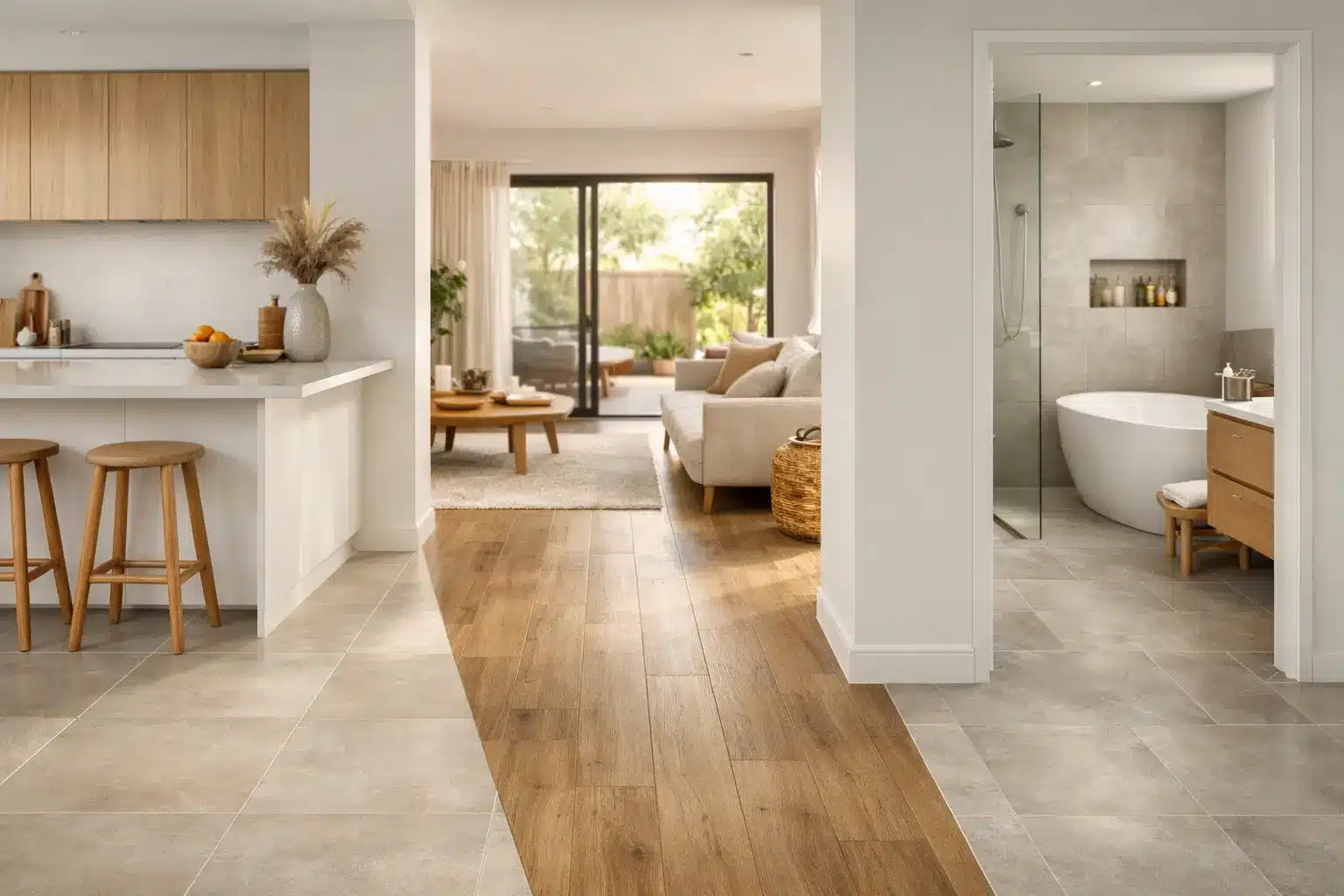
It is also worth planning transitions between spaces. Continuing the same or a closely related floor tile from the kitchen into living areas can make the home feel larger and calmer. In wet rooms, a compatible smaller-format tile can provide additional grip while keeping the overall palette cohesive.
Choose porcelain for hardworking family floors
Porcelain tiles are fired at high temperatures to form a dense, durable surface. For family homes, this makes them a strong choice for kitchen tiles, bathroom tiles, hallways, laundries and open-plan living areas. They are generally easier to maintain than natural stone and do not need the same level of ongoing sealing.
When comparing options, check that the product is designated for floor use rather than wall-only use. Wall tiles can be thinner or made for decorative applications, so they may not be suitable beneath regular foot traffic. For glazed porcelain, the PEI wear rating can also help indicate how well the glaze will perform in a particular setting. A higher rating is generally appropriate for busier residential floors, though the full product specification matters more than one number alone.
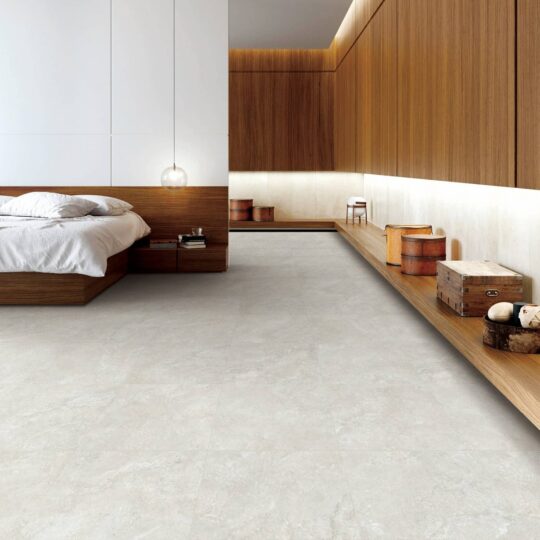
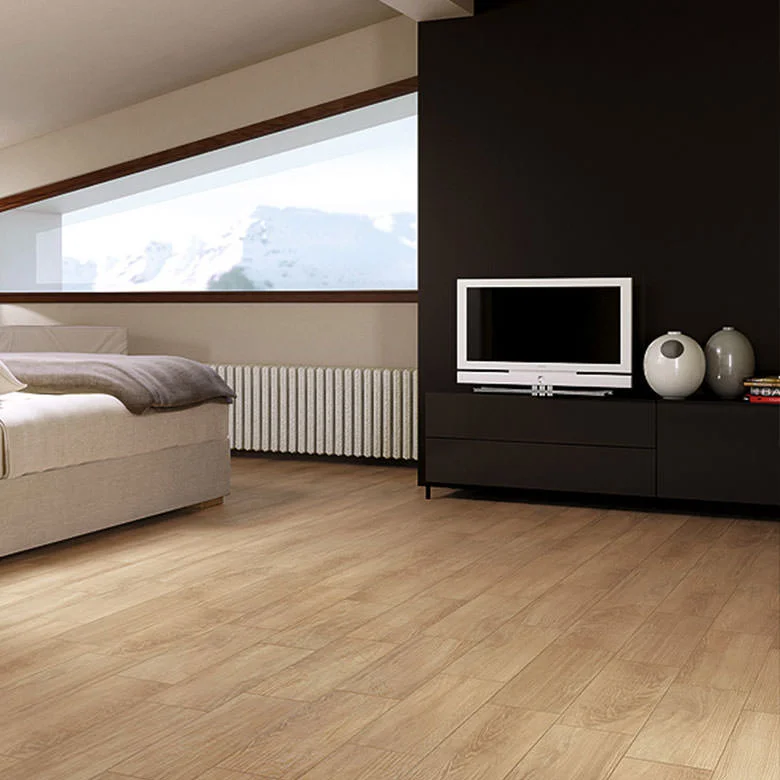
For households that want a premium architectural look without a high-maintenance routine, porcelain that resembles stone, concrete or timber is often a sensible balance. It delivers visual warmth and natural variation while remaining easy to clean after the usual family messes.
Matte, polished or textured finishes?
Finish changes both the look and the day-to-day experience of a tile. Matte tiles are a favourite for active households because they soften reflected light, tend to disguise smudges and water marks, and suit contemporary interiors. A quality matte finish is not automatically slip resistant, however, so always check the tested slip rating rather than relying on appearance alone.
Polished porcelain offers a refined, light-reflecting finish and can make smaller rooms feel more open. It is often best reserved for walls, lower-traffic areas or rooms where wet shoes and splashes are less likely. In a busy kitchen or entrance, it may show footprints and require more frequent cleaning.
Textured and structured finishes offer greater underfoot grip, making them particularly useful for shower floors, laundry areas, alfresco zones and external paths. The trade-off is that deeper texture can hold more dirt, so it needs a little more care when cleaning. The ideal finish is not the roughest one available – it is one that provides suitable traction while still fitting your cleaning routine.
Put slip resistance ahead of looks in wet areas
Bathrooms are where practical specification matters most. Ask for slip-resistance test information and choose a product suited to its intended location, especially shower floors and areas that can become wet underfoot. Australian standards and installation requirements should guide the final selection, with advice from your tiler or builder where needed.
Tile size has an effect here too. Large format tiles can create a clean, spacious look on bathroom walls and main floors, but shower bases commonly use smaller tiles. More grout joints can help the installer form the necessary falls towards the drain and can improve traction underfoot.
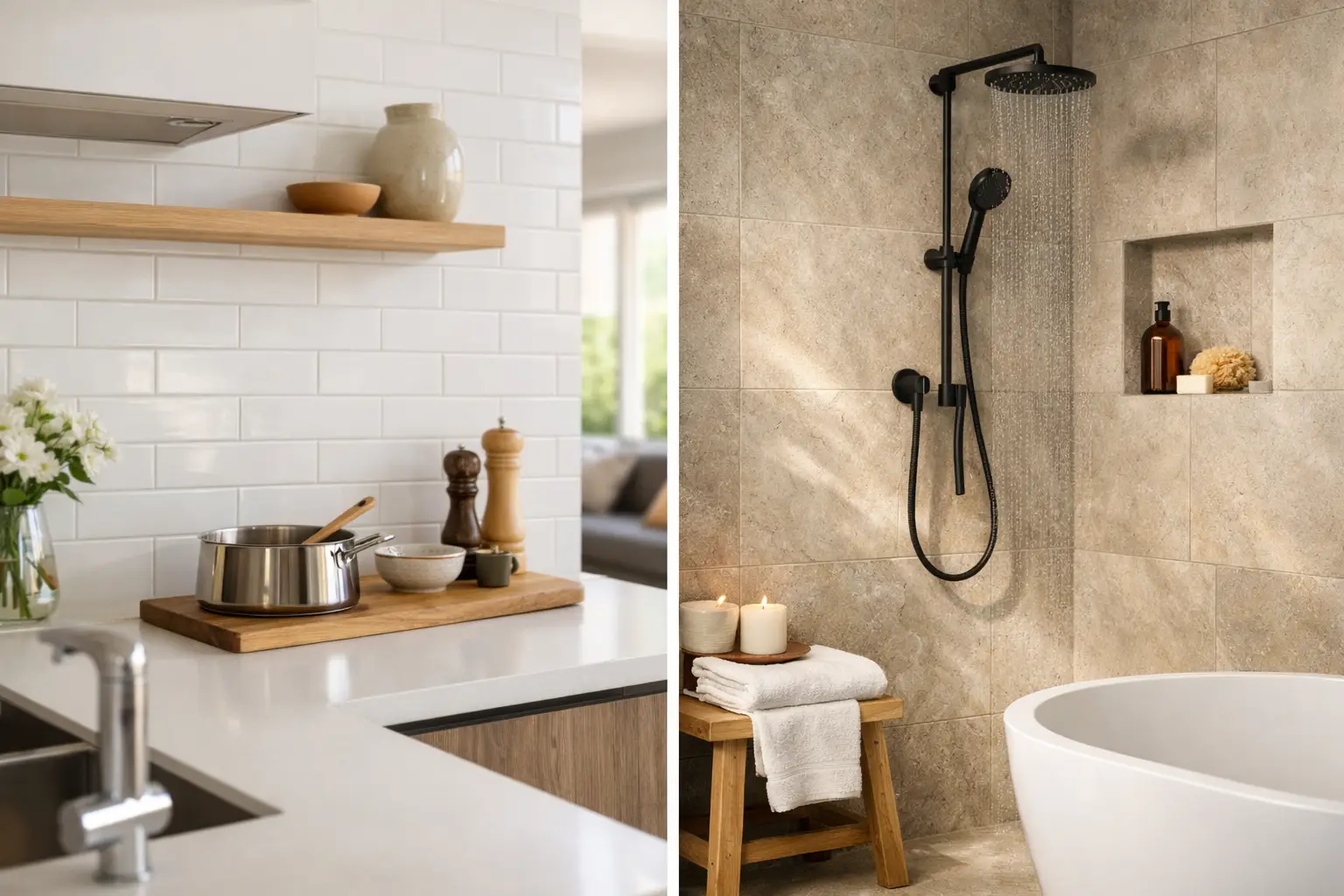
For family bathrooms, avoid treating every surface identically. A large format tile can look elegant on the walls, while a smaller matching mosaic or structured tile on the shower floor provides a more practical solution. This approach gives the room a tailored, high-end result without compromising everyday safety.
Select sizes that suit the space and installation
Large format tiles are popular because fewer grout lines can make rooms feel expansive and uncluttered. They are especially effective in open living areas, kitchens and generous bathrooms. Large tiles also mean less grout to clean, which is a meaningful benefit in a busy home.
They do require a suitably flat substrate and an experienced installation team. Lippage – where adjoining tile edges sit at slightly different heights – is more noticeable with large format tiles if the floor is not properly prepared. Discuss the condition of the existing slab or subfloor with your tiler before finalising the size.
Medium formats remain an excellent all-round option. They work well in homes with smaller rooms, more doorways or irregular layouts, and they can reduce cutting and waste in some spaces. Smaller tiles have their place too, particularly on shower floors, feature walls and detailed entries. The best size is the one that works with room proportions, drainage needs and the existing structure, not simply the largest tile in the showroom.
Pick colours that make daily care easier
A tile should complement the home, but it should not make ordinary living feel like a cleaning emergency. Very dark glossy floors can show dust, pet hair and water spots. Very pale plain floors may highlight soil around entry points. Mid-tone colours with gentle movement, stone-look variation or soft veining are often the most forgiving choices for family areas.
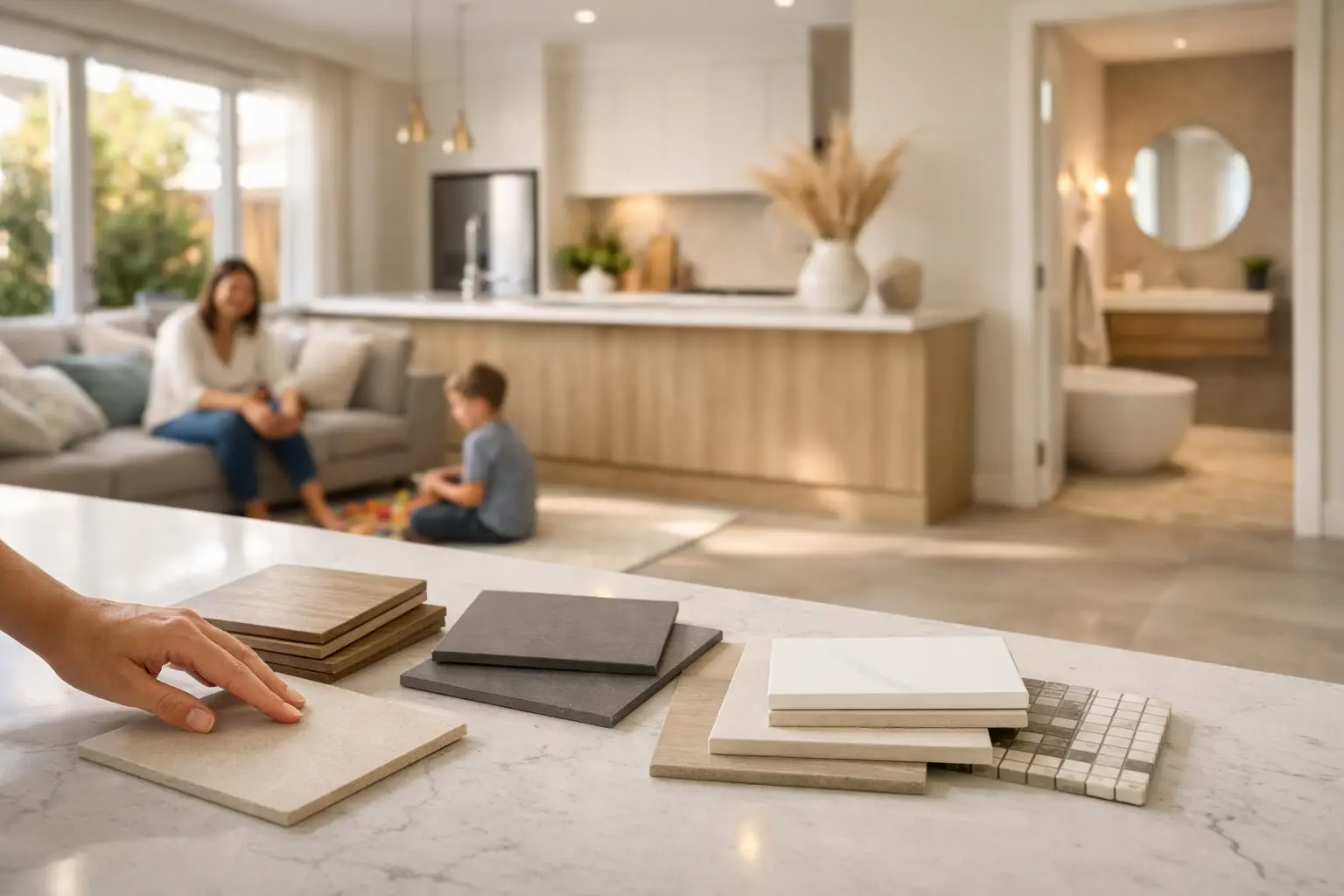
Consider the amount of natural light as well. A darker charcoal tile can add depth to a bright, open room, while warm beige, soft greige and light stone tones can lift a more enclosed space. Bring cabinetry, paint swatches and flooring samples to the selection process so undertones can be assessed together. A tile that looks neutral under showroom lighting can read quite differently in a north-facing room at home.
Grout deserves equal attention. A grout colour close to the tile is usually easier to maintain than high-contrast grout, particularly across large floor areas. Quality grout selection and proper sealing where required help reduce staining and keep the finished surface looking consistent.
Coordinate tiles with kitchen and benchtop surfaces
Kitchen materials work hardest when they are planned as a group. Floor tiles, splashback tiles, cabinetry and benchtops should relate without competing for attention. If a benchtop has prominent veining, a quieter porcelain floor can give the room balance. If cabinetry and benchtops are simple and tonal, a textured or subtly patterned splashback can provide character.
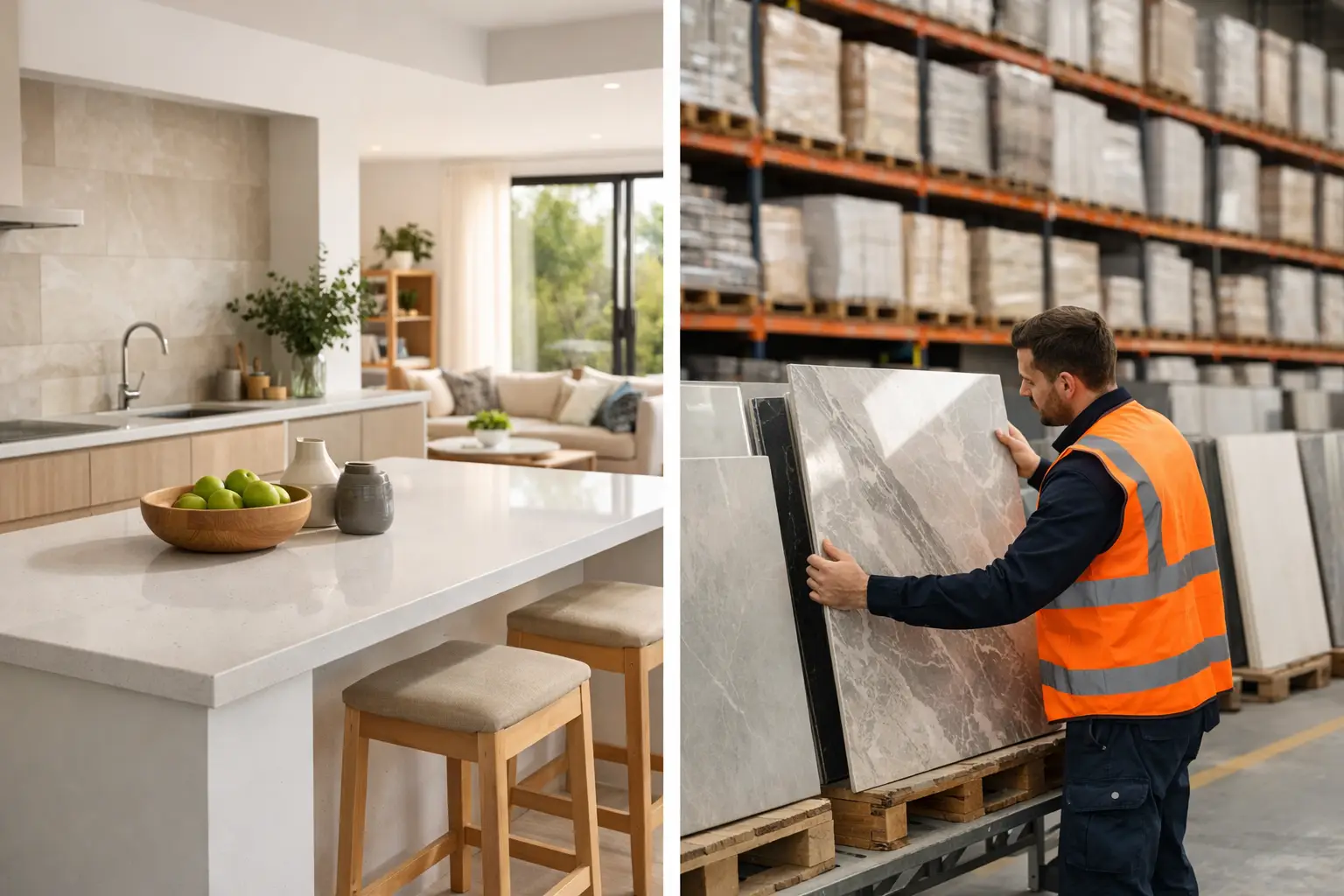
For a safer material palette, zero silica benchtops offer a considered option alongside premium porcelain tiles. The key is to view full samples together, rather than making decisions from a mobile image or a small colour chip. Finish, undertone and reflected light are easier to judge in person.
Confirm the practical details before ordering
A beautiful tile is only a good purchase if there is enough of it for the project and a suitable allowance for cuts, breakages and future repairs. Your tiler can calculate quantities based on the layout, but ordering a little extra from the same batch is usually wise. Batch variation is a normal feature of many tile ranges, particularly those designed to replicate natural stone.
For renovators working to a schedule, ready stock tiles can reduce uncertainty and help coordinate trades. A local supplier with warehouse stock in Melbourne can also make it easier to inspect full tiles, confirm lead times and arrange a prompt turnaround. At Verona Ceramic, homeowners can use free measuring and 3D design support to see how tile sizes and layouts may work before committing to a final selection.
Ask to see a full tile, not just a small sample. Place it on the floor, view it from standing height and look at it in different light. The right tile will feel practical underfoot, suit the character of the home and give your family a durable foundation for the years ahead.