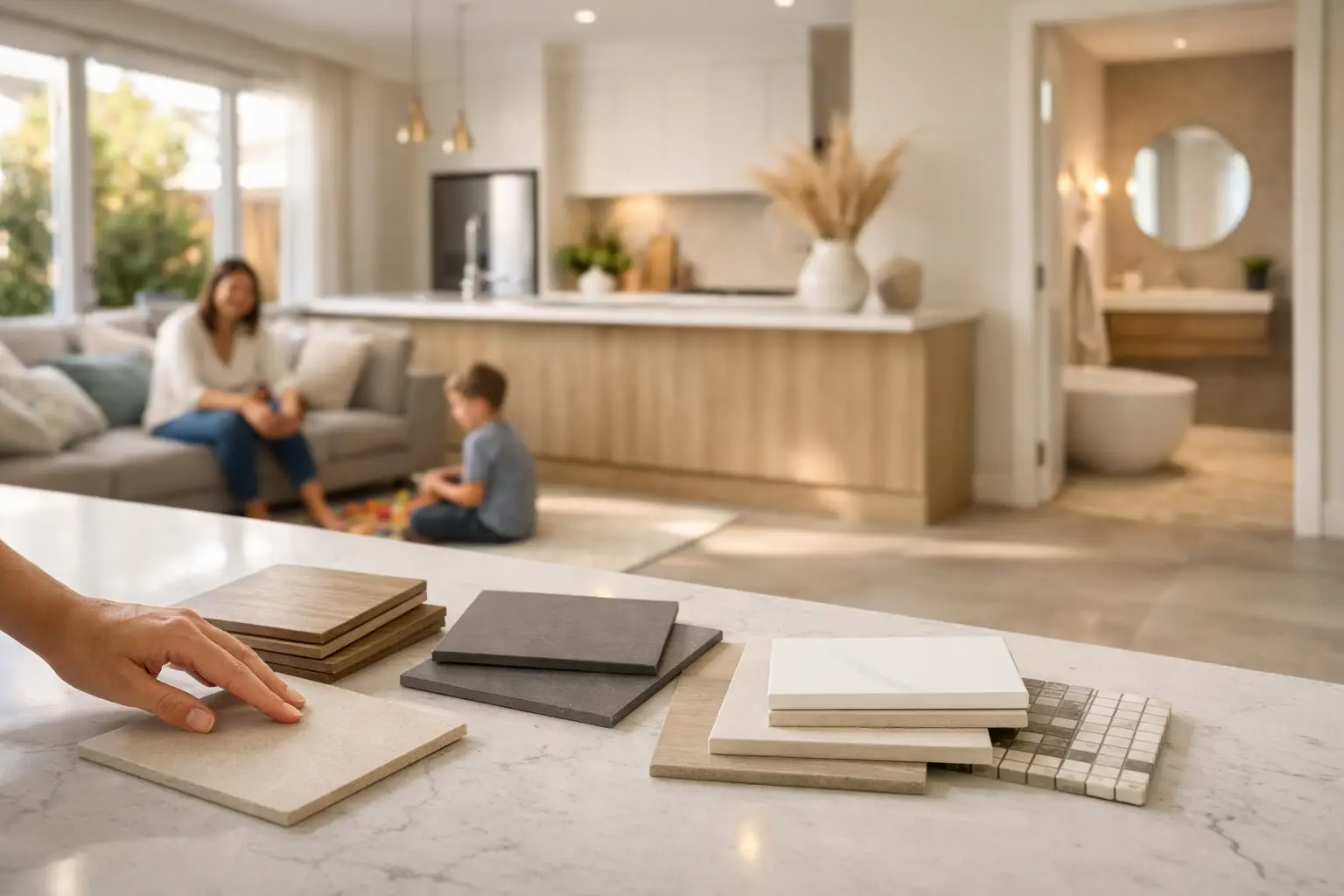
When you are choosing floor tiles for full home renovations, the biggest mistake is treating each room as a separate decision. It usually starts with a bathroom tile, then a kitchen tile, then something different again for the living area – and suddenly the home feels chopped up. A whole-home approach creates better flow, makes spaces feel larger, and helps every finish work harder for daily family life.
For most homeowners, the real question is not simply which tile looks good in a showroom. It is which tile will still look good after muddy shoes at the entry, dropped utensils in the kitchen, steam in the bathroom, and years of regular cleaning. That is where careful material selection matters.
Why floor tiles for full home renovations need a bigger-picture plan
A full renovation gives you one valuable opportunity – the chance to make flooring decisions once, properly, and with the entire layout in mind. When the same or closely related tile runs through key areas, the home feels calmer and more resolved. This is especially effective in open-plan homes, smaller homes, and renovations where you want a more architectural finish.
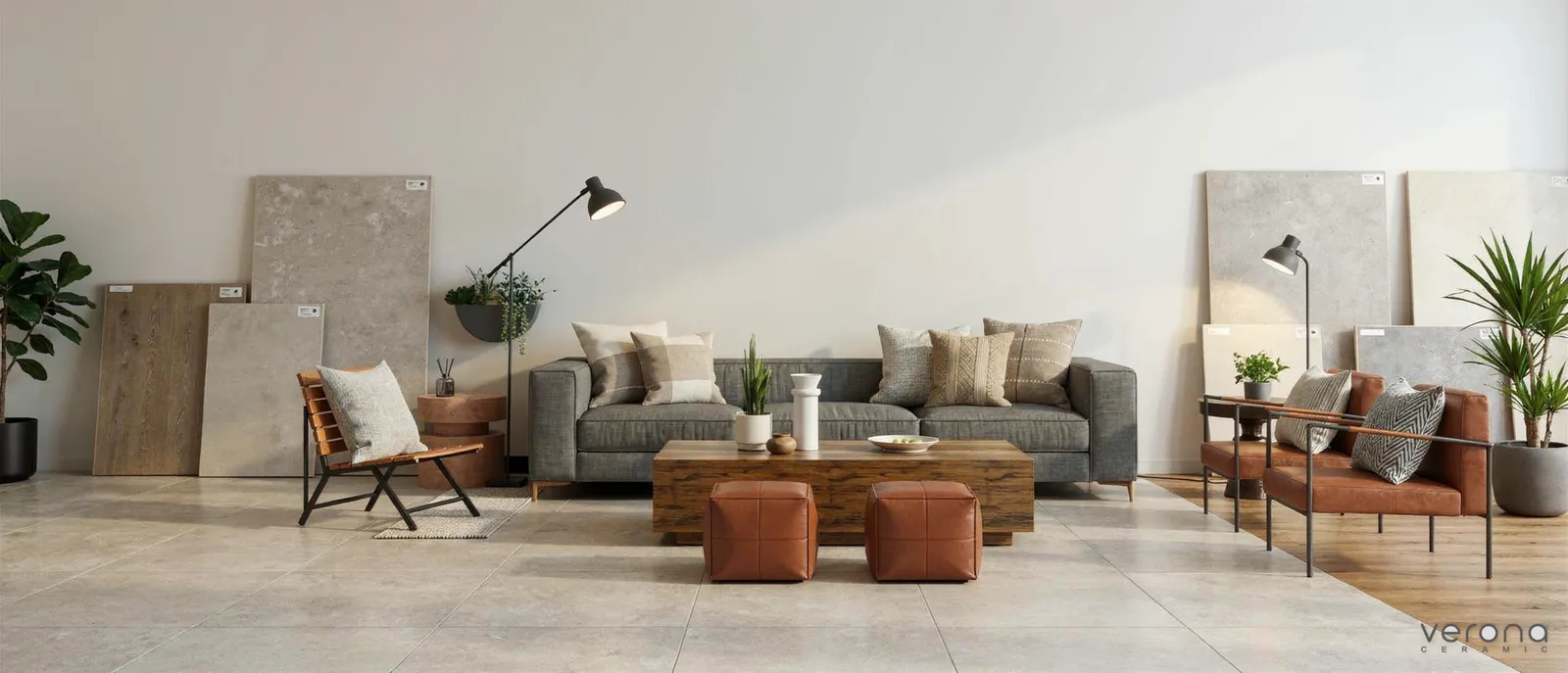
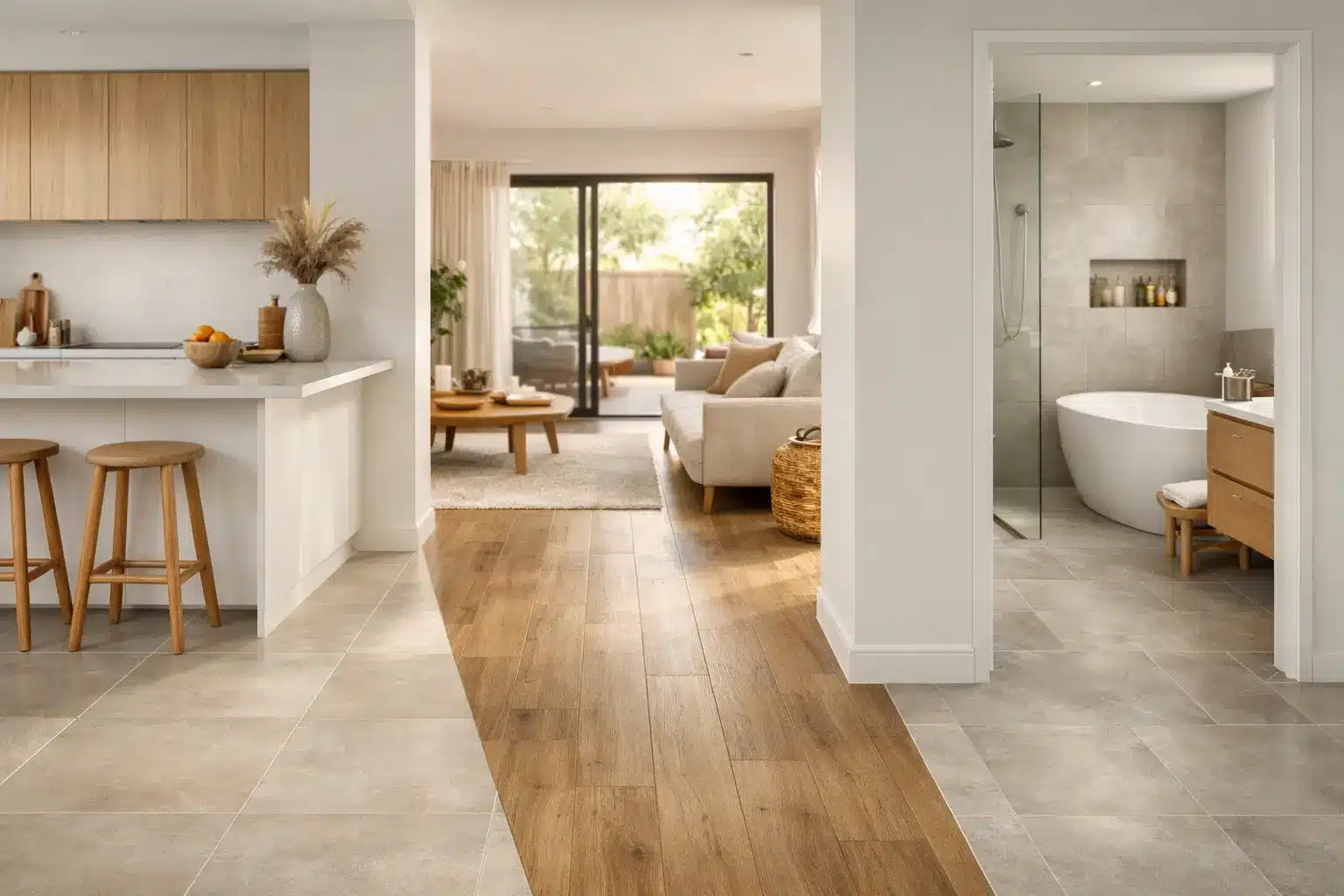
That does not mean every room must use exactly the same tile. Bedrooms, wet areas and outdoor zones may need different surface performance. But the colours, texture and scale should still speak the same design language. A soft stone-look porcelain in a matte finish, for example, can move through the living area and kitchen beautifully, while a coordinating slip-resistant version can be used in bathrooms or outdoor entertaining areas.
This is also where practical planning pays off. Ordering from a supplier with ready stock can save delays when you are trying to keep a renovation on schedule. For trade professionals and families alike, fast turnaround is not just convenient – it can affect the whole build sequence.
Porcelain is usually the safest choice for whole-home flooring
For full home renovations, porcelain is often the strongest all-round option. It is dense, durable, low maintenance and suitable for high-traffic family homes. Compared with more porous materials, porcelain handles moisture better and is generally easier to keep clean, which makes it particularly useful when you want visual consistency from kitchen to hallway to bathroom.
The appeal is not only practical. Today’s porcelain tiles can replicate natural stone, concrete, terrazzo and timber with impressive realism. That gives homeowners and designers more flexibility to achieve a premium look without the maintenance concerns that come with some natural materials.
PEI rating is worth checking for internal areas that cop heavy use. This rating helps indicate resistance to surface wear. For most residential renovations, a tile with a suitable PEI rating for medium to heavy foot traffic gives peace of mind, particularly in kitchens, hallways and living zones. In wet areas, slip resistance becomes equally important. A beautiful floor is only doing half its job if it does not feel safe underfoot.
Choosing finishes that suit real family living
Finish changes everything. The same colour in polished, satin or matte can create a completely different effect.
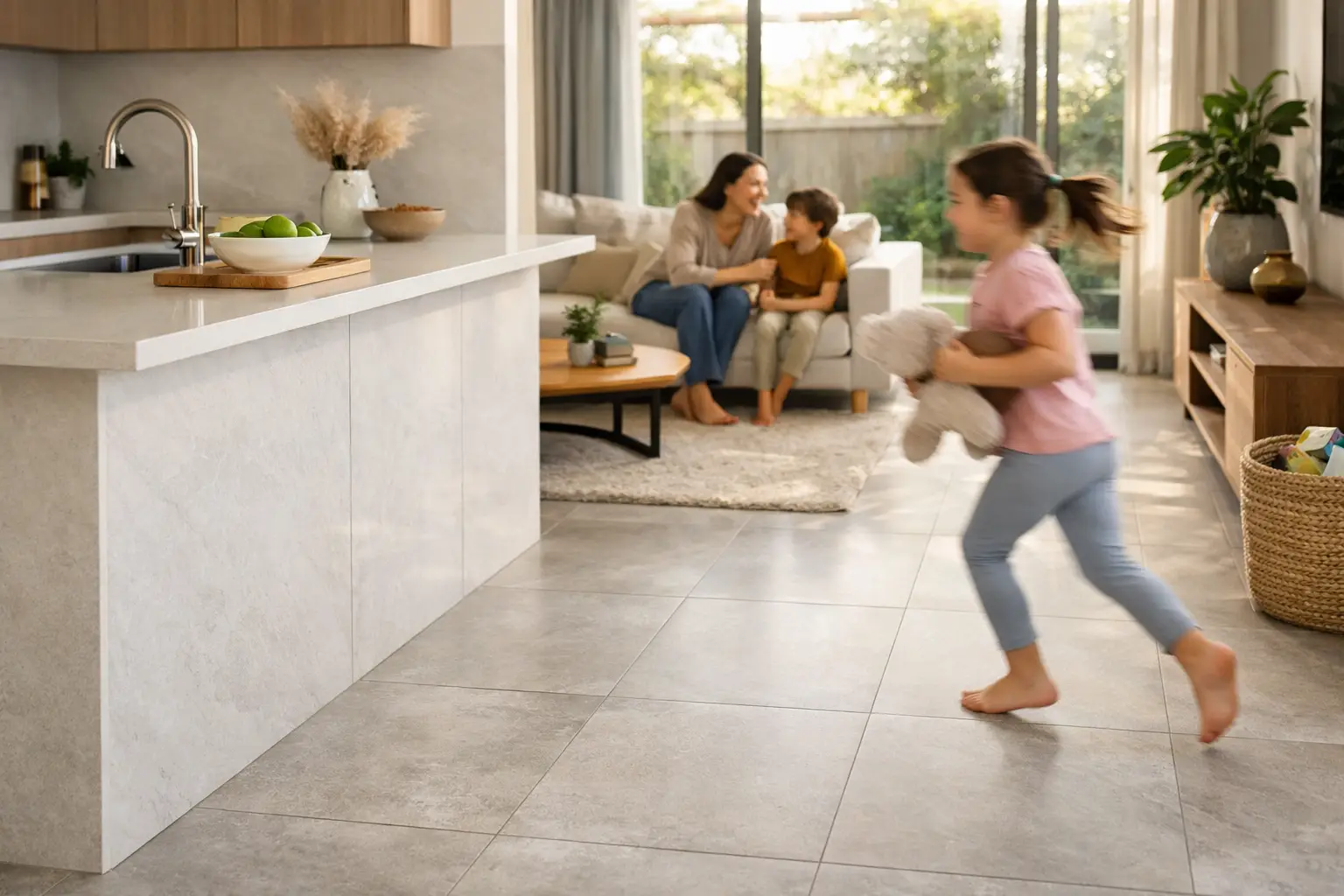
Matte tiles are a popular choice for whole-home use because they feel softer and more natural. They are also practical, tending to show fewer marks and water spots than high-gloss surfaces. In busy homes with children or pets, that lower-maintenance appearance matters.
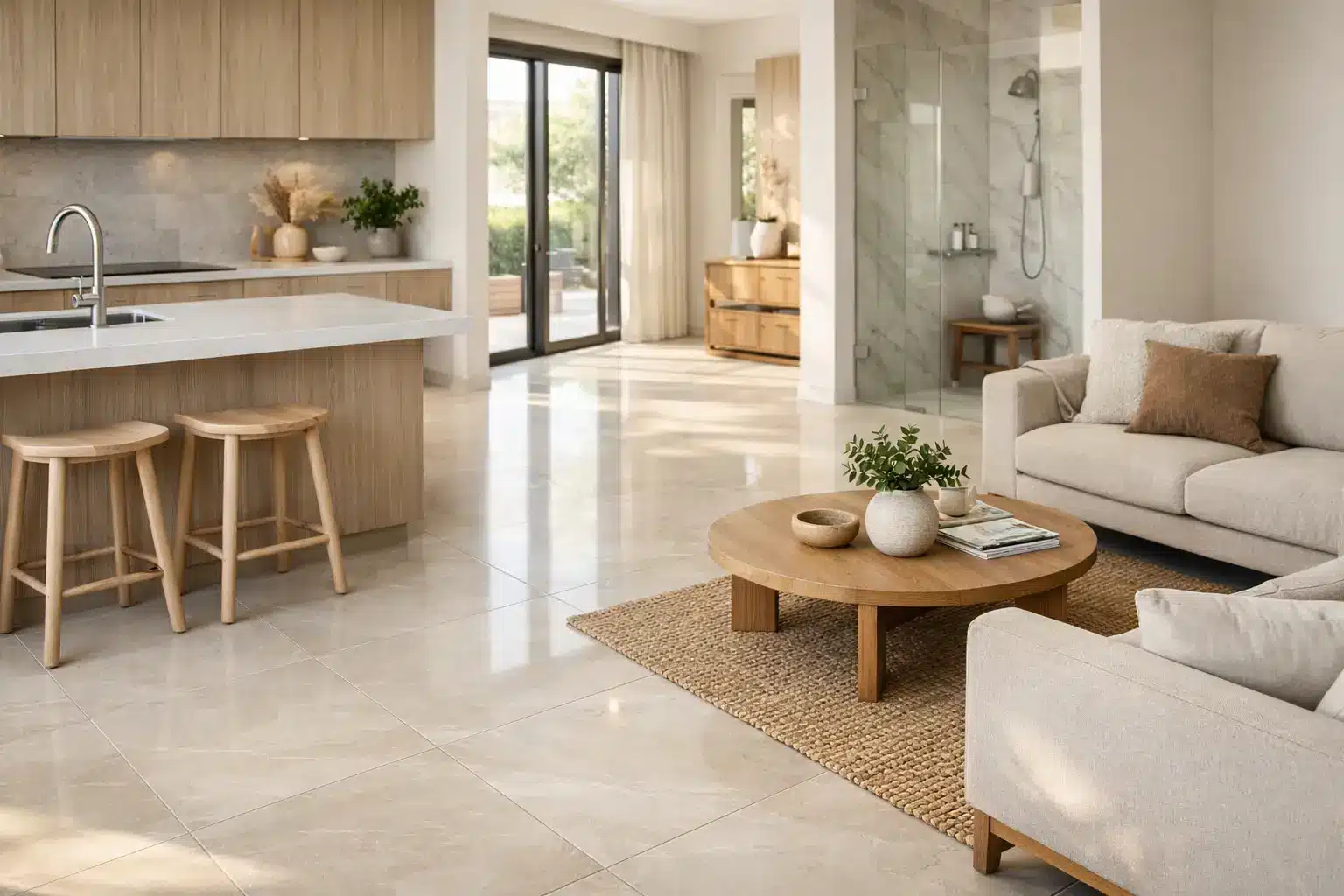
Polished tiles can look refined and spacious, especially in formal areas, but they are not always the best fit across an entire renovation. They may show smudges more easily and can be less forgiving in wet zones. If you love the brighter look of polished finishes, it may be better to reserve them for selected areas rather than making them the default everywhere.
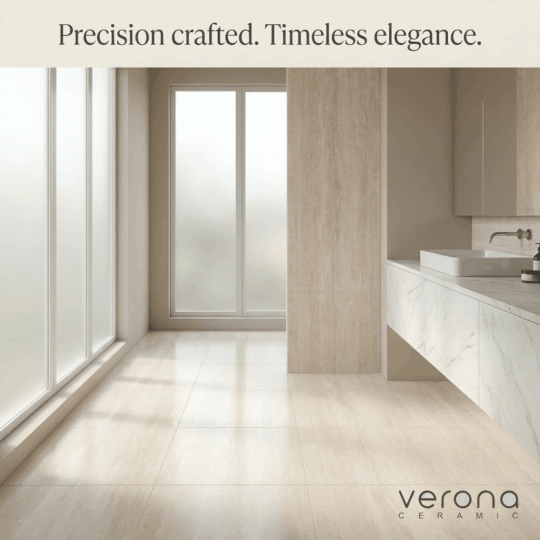
Textured finishes deserve close attention in bathrooms, laundries and external areas. A tile with an appropriate slip rating can help support safer movement, especially for young children, older family members and anyone coming in from the pool or garden. The balance is finding a finish that offers grip without becoming difficult to clean.
Tile size shapes the feel of the home
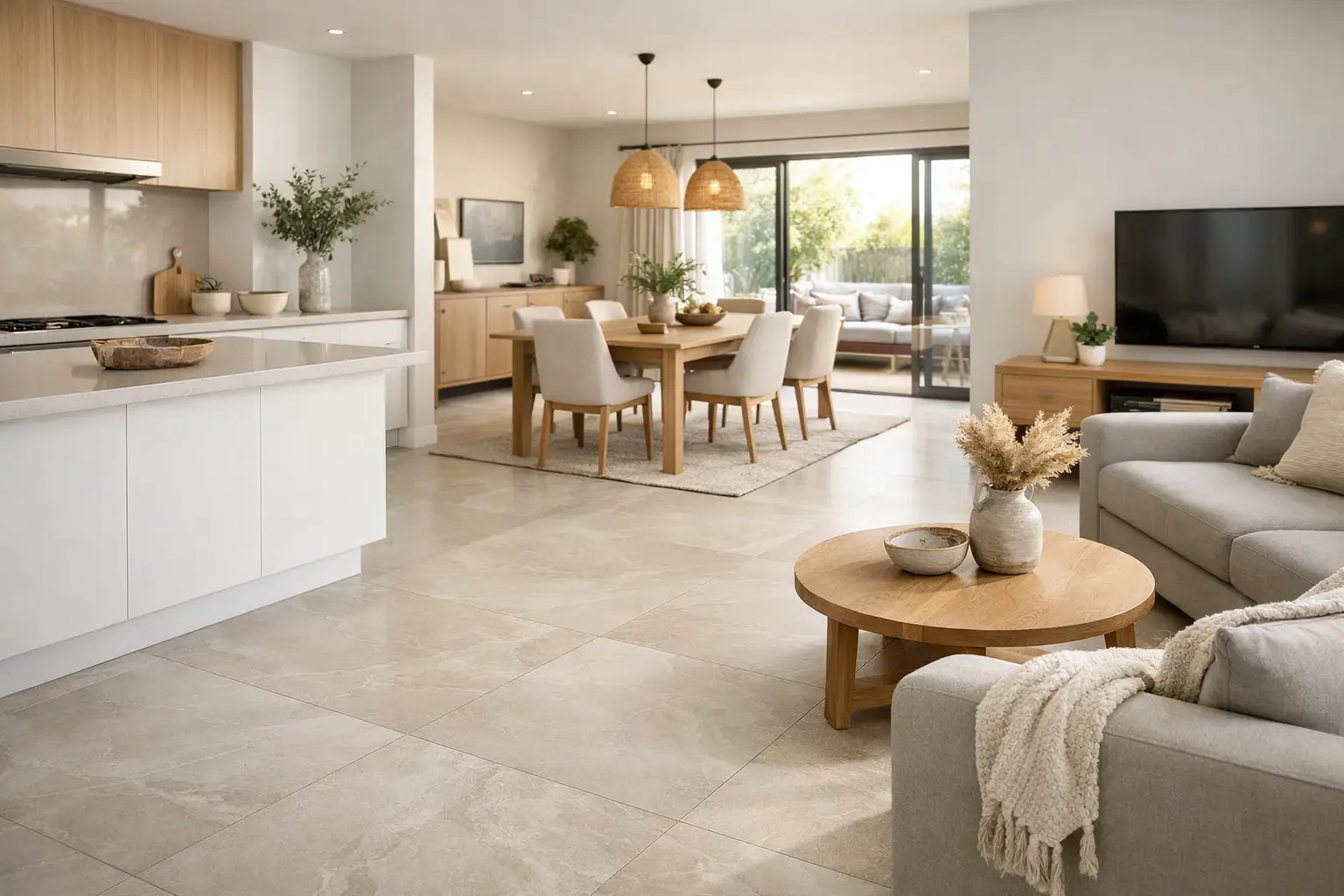
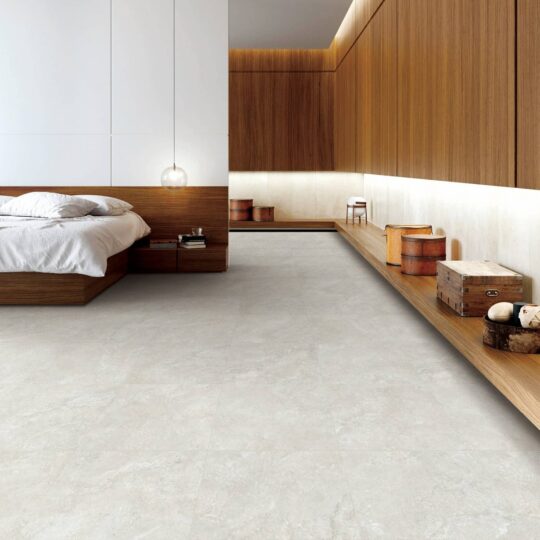
Large format tiles have become a favourite in full home renovations for good reason. Fewer grout lines create a cleaner visual field and can make spaces feel more expansive. In open-plan kitchens and living areas, that uninterrupted effect often looks more premium and easier on the eye.
Common larger sizes such as 600 x 600, 600 x 1200 and other rectangular formats work well in contemporary homes. They suit minimalist schemes, stone-look finishes and architectural interiors. They can also help connect different rooms so the flooring feels intentional rather than pieced together.
That said, bigger is not always better. Very small bathrooms, older homes with uneven substrates, or rooms with lots of angles may suit more moderate tile sizes. Installation quality matters here. Large format tiles need proper preparation and experienced laying to achieve a flat finish and avoid lippage.
If you are renovating for long-term value, it is wise to choose a size that feels current but not overly trend-driven. Floor tiles are not something most families want to replace in a few years.
How to coordinate floor tiles across the home
The best floor tiles for full home renovations create continuity without monotony. A consistent base tile can do the heavy lifting, while subtle variation between zones adds function and character.
A common approach is to use one main tile through living areas, kitchen, dining and hallways, then select related tiles for bathrooms and laundry. The bathroom may need extra grip, while the laundry might benefit from a finish that hides dust and water marks. If the colour tone and pattern family stay aligned, the home still feels connected.
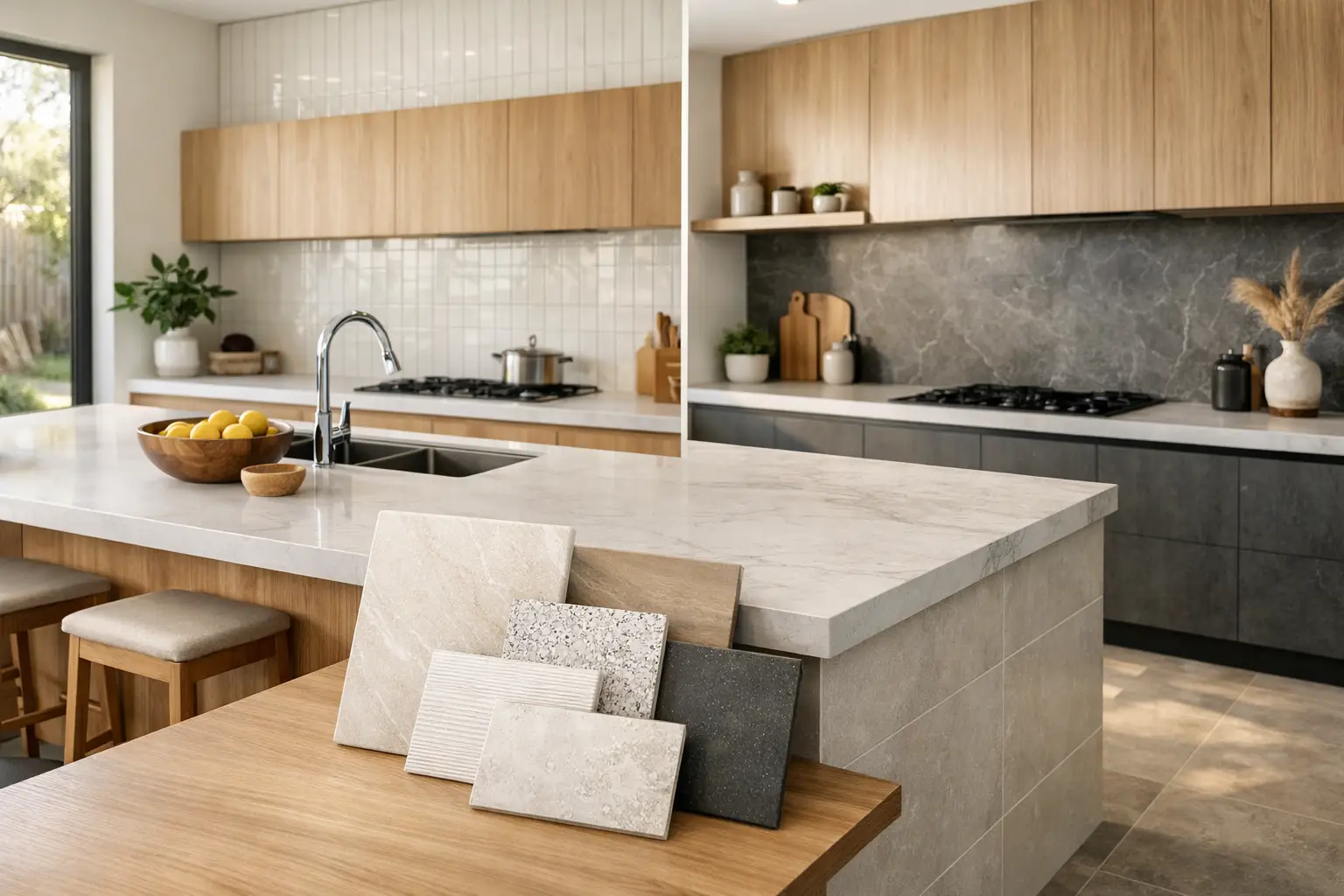
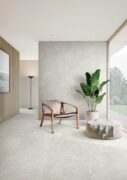
Stone-look porcelain remains one of the most dependable options because it bridges classic and modern styles. Soft greys, warm beiges, off-whites and greige tones tend to age well and pair easily with cabinetry, timber joinery and benchtops. If you are also selecting kitchen surfaces, this is where the overall palette should be considered together rather than one product at a time.
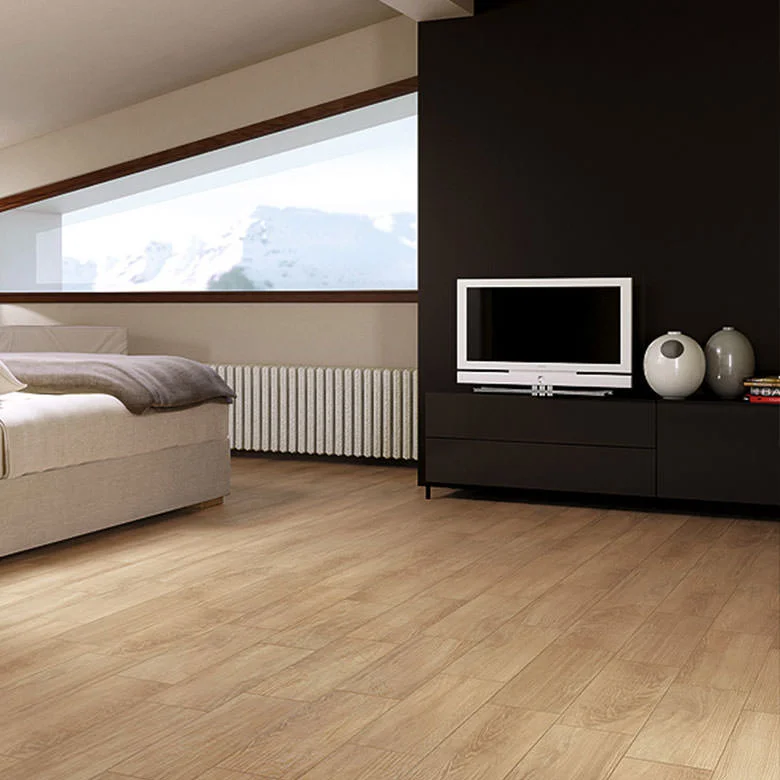
Timber-look porcelain can also work beautifully in whole-home renovations, especially where homeowners want warmth with easier upkeep than timber flooring. It is particularly useful in homes that need a hardwearing, moisture-friendly surface throughout.
Practical considerations that get overlooked
Tile selection is partly about appearance, but successful renovations are won on practical details. Grout colour is one of them. A very light grout can look crisp at installation, though it may need more care over time in high-use areas. Mid-tone grout often gives a more forgiving result.
You should also think about cleaning routines before committing to a finish. Highly textured surfaces can be excellent in the right places, but they may require more effort if used throughout the entire home. Likewise, very pale tiles can brighten a space, although they may show dirt more quickly in entry zones.
Batch consistency matters in larger renovations. When flooring runs across many rooms, colour variation between batches can be noticeable. Working with a supplier that has large warehouse stock can make ordering more reliable and help avoid patchwork results. For homeowners renovating in Melbourne, that local stock availability can make a real difference when trades are booked and timelines are tight.
Another point is compliance and suitability. Tiles should meet relevant Australian standards, particularly in areas where slip resistance and durability are essential. This is not only about ticking a box – it is about creating a home that is safe, functional and built to last.
Getting expert support early saves costly changes later
The earlier flooring decisions are made, the better the renovation tends to run. Tiles influence skirting details, transitions, bathroom falls, cabinetry heights and the overall tone of the interior. They are not a finishing touch. They are part of the foundation of the design.
This is where expert guidance has real value. A proper measure, layout advice and 3D design support can help you see whether a tile size suits the room, whether the colour balance works, and how the flooring will relate to bathrooms, kitchens and benchtops. It is far easier to adjust a plan on paper than after materials have been installed.
At Verona Ceramic, this kind of support matters because families and trade clients are not just buying a box of tiles. They are making decisions that shape how a home will feel every day. Ready stock, factory-direct supply and clear advice help turn that process into something more confident and more efficient.
The right flooring should feel settled from the moment you walk through the door – practical underfoot, easy to live with, and beautiful in a way that still makes sense years from now.