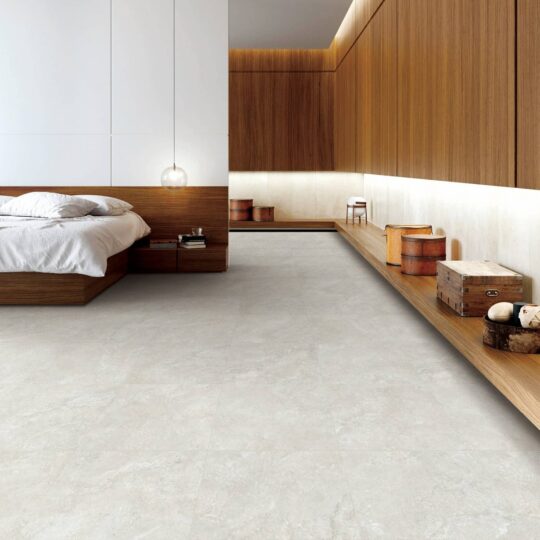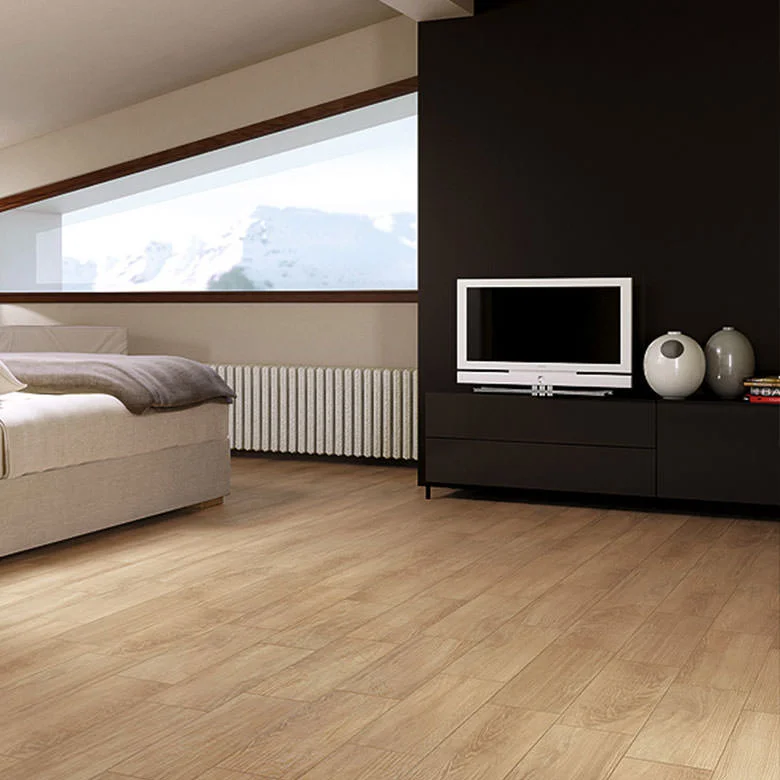
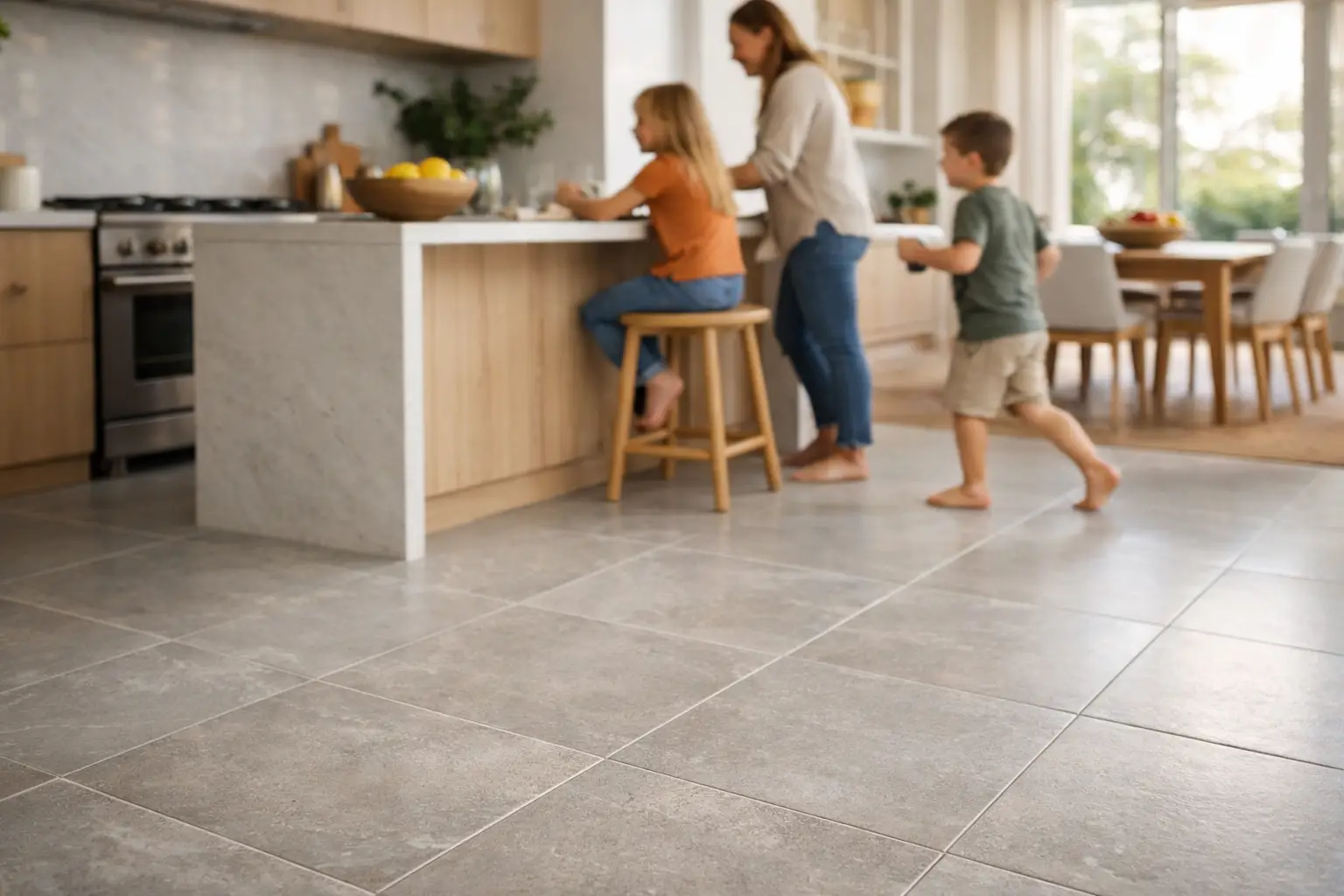
A kitchen floor works harder than almost any other surface in the home. It deals with dropped utensils, cooking splashes, muddy school shoes, dining chairs and constant foot traffic. Choosing the best tiles for kitchen floors is therefore about more than finding a colour you like. The right tile should be comfortable to live with, safe underfoot, easy to maintain and attractive enough to still suit your home years from now.
For most Melbourne family homes and renovation projects, porcelain is the strongest all-round choice. Yet the best result comes from matching the tile’s finish, size, slip resistance and wear rating to the way the kitchen will actually be used.
Why porcelain is often the best tile for kitchen floors
Porcelain tiles are made from refined clay and fired at very high temperatures. This process creates a dense, low-porosity surface that is highly resistant to moisture, stains and everyday wear. In a kitchen, that means less concern about spills from the sink, splashes near the cooktop or the occasional dropped glass.
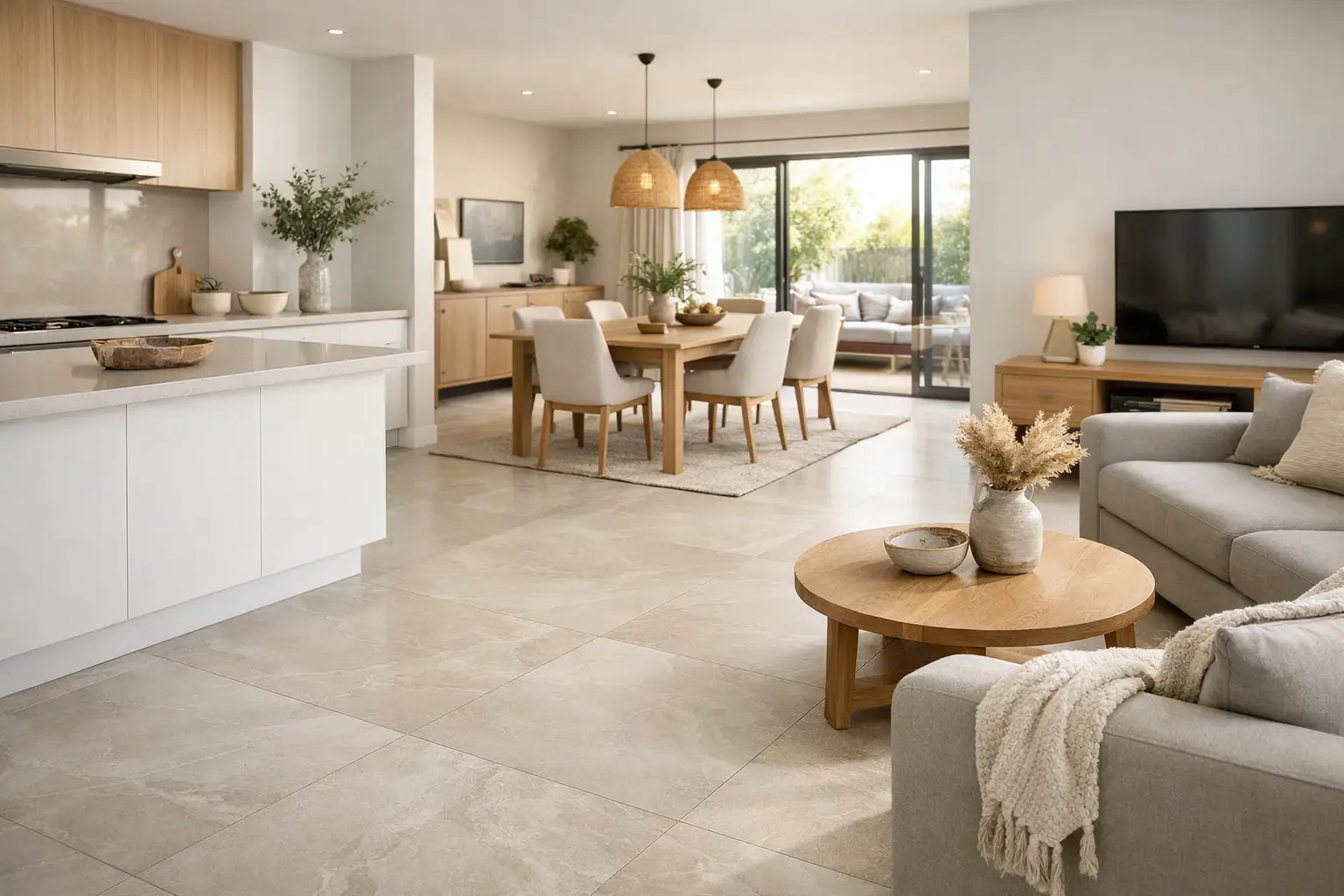
Quality porcelain is also a practical choice for open-plan homes. The same tile can often continue from the kitchen into dining, living and hallway areas, creating a calm, connected look without changing materials at every threshold. It is an especially useful approach in contemporary renovations where clean lines and generous, uninterrupted spaces are part of the brief.
Ceramic floor tiles can suit lighter-use areas, but porcelain generally offers greater density and durability. For a family kitchen or a property where long-term value matters, porcelain provides the more dependable foundation.
Best tiles for kitchen floors: start with finish, not colour
Colour matters, but finish has a greater impact on daily safety and cleaning. A highly polished tile can look striking in a showroom, particularly in a light-filled kitchen. However, its smooth surface may show water marks, crumbs and footprints more readily. It can also become slippery when wet, depending on the product.
A matte porcelain tile is often the most balanced choice. Its softly textured appearance suits a wide range of cabinetry, from warm timber-look joinery to crisp white or charcoal kitchens. Matte finishes are also more forgiving of everyday marks and usually provide better grip than polished surfaces.
For households with young children, older family members or frequent outdoor-to-kitchen traffic, consider a structured or textured porcelain finish. These surfaces can provide additional slip resistance, although deeper texture may need slightly more attention when cleaning. The key is choosing a finish with enough grip for confidence underfoot without creating a surface that traps dirt.
Understanding slip resistance ratings
Slip resistance is worth discussing early, particularly for kitchens connected to an alfresco area, laundry or pool zone. In Australia, tiles may be assessed using ramp ratings such as R9, R10 or R11, or wet pendulum classifications such as P ratings. A higher rating generally indicates greater slip resistance, but it is not automatically the best choice for every room.
An R9 or suitable P-rated matte tile is commonly appropriate for many internal kitchens. Where the floor is regularly exposed to water, pets coming inside or wet footwear, a more slip-resistant option may be sensible. Your tile selection should also consider cleaning methods, grout choice, lighting and whether the kitchen opens directly to an exterior door.
Choose a size that suits the room and installation
Large format tiles are popular for good reason. Formats such as 600 x 600 mm, 600 x 1200 mm and larger can make a kitchen feel more spacious by reducing the number of grout joints across the floor. They work beautifully in open-plan homes and can give premium architectural surfaces a refined, continuous appearance.
That said, bigger is not always better. Very large tiles need a well-prepared, level substrate and an experienced installer. In a small kitchen with several cabinets, an island and many cut-outs, the layout should be planned carefully so narrow tile slivers do not appear along visible edges. A 600 x 600 mm tile may provide a more efficient and balanced layout in compact rooms.
Smaller formats have their place too. Timber-look planks can bring warmth to a kitchen while delivering porcelain’s water resistance and easy-care benefits. Patterned tiles can define a compact kitchen or butler’s pantry, though they are usually strongest when the surrounding finishes remain simple.
Before ordering, ask for a tile layout that considers room dimensions, doorway lines, island placement and the direction of natural light. Free measuring and 3D design support can remove much of the guesswork, particularly in a full renovation where tiles, cabinetry and benchtops need to work together.
Wear ratings and thickness: what really matters
For glazed porcelain tiles, the PEI rating helps indicate resistance to surface wear. A PEI 3 tile is generally suitable for residential floors with normal traffic, while PEI 4 offers an added margin for busy family homes and heavier residential use. Not every porcelain tile will display a PEI classification, especially if it is through-body or full-body porcelain, but product specifications should still confirm its suitability for internal floor use.
Tile thickness also deserves attention. Standard porcelain floor tiles are often around 9 to 10 mm thick, although sizes and ranges vary. Thickness alone does not determine quality, but it affects transitions to adjoining flooring, cuts around cabinetry and installation planning. A capable tiler will check that the substrate is sound, flat and properly prepared before laying begins.
Kitchen floors need movement joints in the right locations too. Houses naturally experience minor movement, and tiles need allowance around perimeters and structural joints. This is a detail that is easy to overlook during planning but critical to a long-lasting installation that complies with Australian standards.
Think about grout as part of the floor
Grout is not merely a finishing detail. Its colour and width can change the entire look of your kitchen floor. A grout colour close to the tile creates a quieter, more continuous surface, which is often ideal for large format tiles. A contrasting grout highlights each tile and can suit geometric, subway or patterned designs.
For busy kitchens, mid-tone grout is often practical because it is less likely to show every small mark than bright white. A quality grout with stain-resistant properties makes ongoing cleaning easier, while correct sealing or product selection can help protect more porous grout lines.
Rectified porcelain tiles have precisely cut edges, allowing for narrower joints where the substrate and installation quality support it. Narrow grout joints can look elegant, but they are not a substitute for proper movement allowance or careful laying. The best tile installation is one that looks considered and performs reliably, rather than one that simply chases the smallest possible grout line.
Match the floor to the rest of the kitchen
A kitchen floor should support the room’s other materials rather than compete with them. If your cabinetry includes a busy stone pattern or richly grained timber veneer, a quiet concrete-look or soft stone-look porcelain may bring the right balance. If the cabinetry and benchtop are restrained, the floor can take on more character through subtle veining, a warm terracotta tone or a gentle pattern.
Pale greige, sand, soft grey and warm limestone-look tiles remain enduring options because they work with changing paint colours and furnishings. Dark charcoal floors can look sophisticated, but they may show dust and light crumbs more clearly. White or very pale polished surfaces can feel bright and spacious, although they often demand more frequent cleaning in a high-use family kitchen.
When selecting samples, view them beside cabinet finishes, splashback samples and benchtop material in both daylight and artificial light. A tile can look quite different under warm pendants than it does in a showroom. This small step helps avoid a finish that feels cooler, darker or busier once installed.
Plan for stock, lead times and installation
The right tile is only useful if it is available when your project needs it. Renovation schedules can quickly be affected by delayed materials, particularly when cabinetry, appliance installation and final trades are booked around flooring. Choosing ready stock tiles from a local warehouse can support a faster turnaround and allow you to inspect the shade, calibre and batch before work begins.
Always order enough tiles for the planned area, cuts and a sensible allowance for future repairs. As a guide, many projects allow around 10 per cent extra, though complex layouts, diagonal patterns and rooms with many corners may require more. Keep a few spare tiles after installation, stored safely for any later repair work.
For homeowners and trade professionals seeking porcelain tiles in Melbourne, a supplier with factory-direct pricing, local stock and clear technical advice can make selection more straightforward. Verona Ceramic can help coordinate tile sizes, finishes and quantities around the practical realities of your renovation, not just the showroom look.
A kitchen floor is the backdrop to thousands of ordinary moments – breakfast rushes, family dinners and quiet cups of tea after the work is done. Choose a porcelain tile that feels right underfoot, stands up to real life and gives your home a finish you will be happy to see every day.