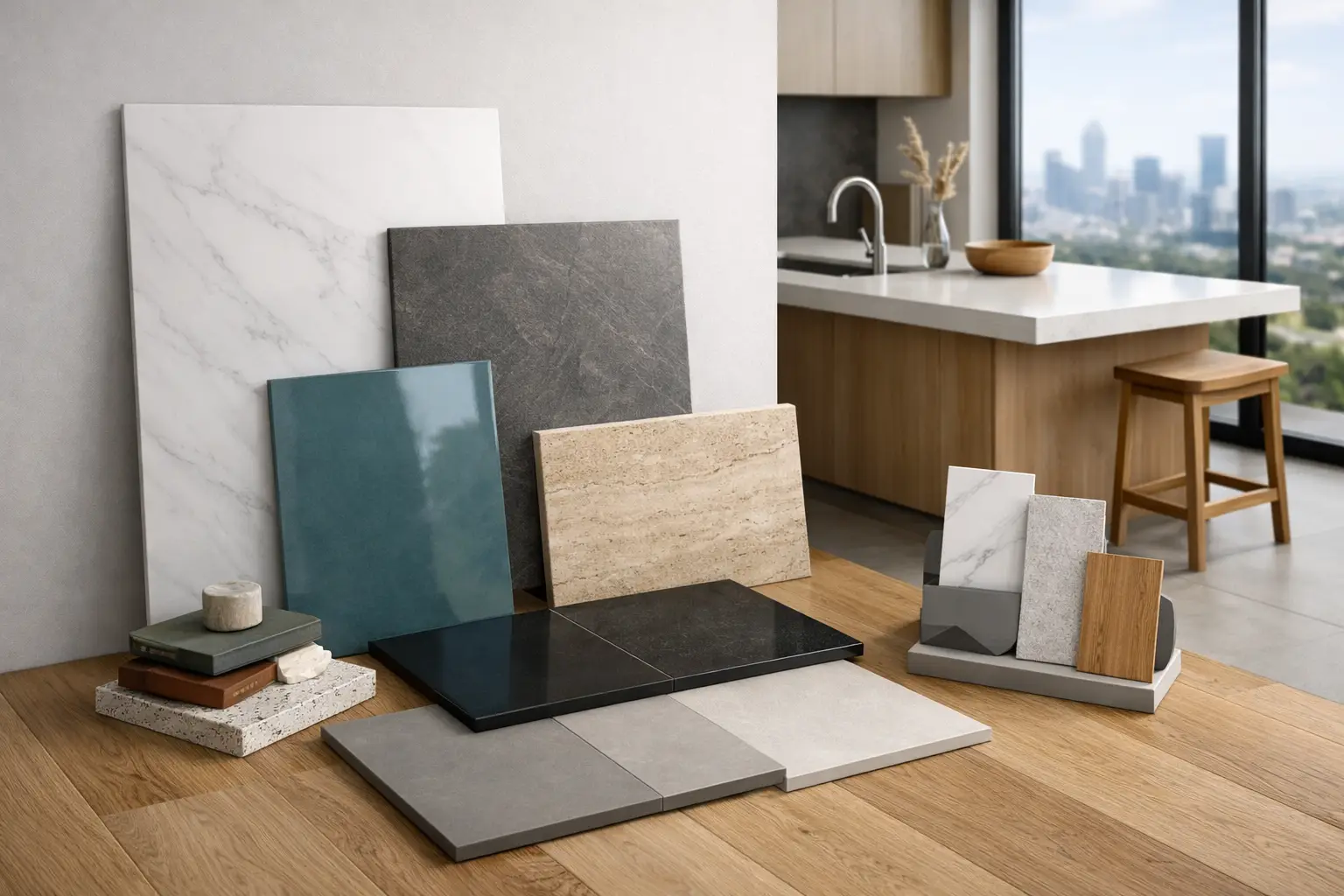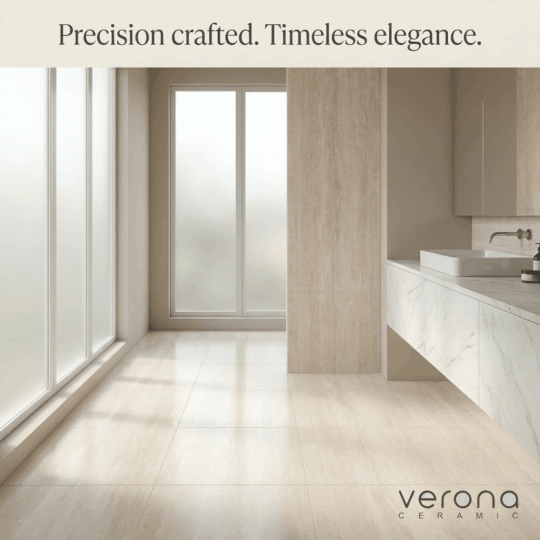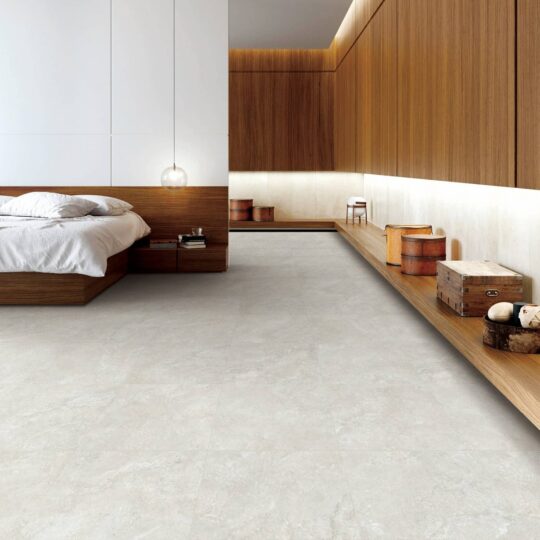
A kitchen is asked to handle more than almost any other room: dropped utensils, steamy pots, hurried breakfasts, wet shoes at the back door and years of daily cleaning. This kitchen renovation materials guide helps Melbourne homeowners and renovation professionals choose surfaces that look considered on day one and remain practical for the years ahead.
The best material selections are rarely about choosing the most dramatic finish in isolation. They come from matching performance, maintenance, safety and visual warmth to the way the household actually lives. A pale matte tile may be ideal for a bright family kitchen, for example, while a large-format porcelain floor can suit an open-plan renovation where a quieter, more continuous look is the goal.
Start Your Kitchen Renovation Materials Guide With Priorities
Before comparing colours or samples, decide what needs to work hardest in the room. For most kitchens, the key surfaces are flooring, splashback, benchtop, cabinetry and wall finishes. Each has a different role, and the right choice depends on whether the priority is low maintenance, a premium architectural look, slip resistance, heat resistance or a particular budget allocation.
Families often place easy cleaning and forgiving finishes at the top of the list. A custom builder may be more focused on coordinating slab size, grout lines and cabinetry details. In either case, planning the materials together prevents common mismatches, such as pairing a highly textured floor with a difficult-to-clean grout colour, or selecting a dramatic benchtop that competes with a busy splashback.
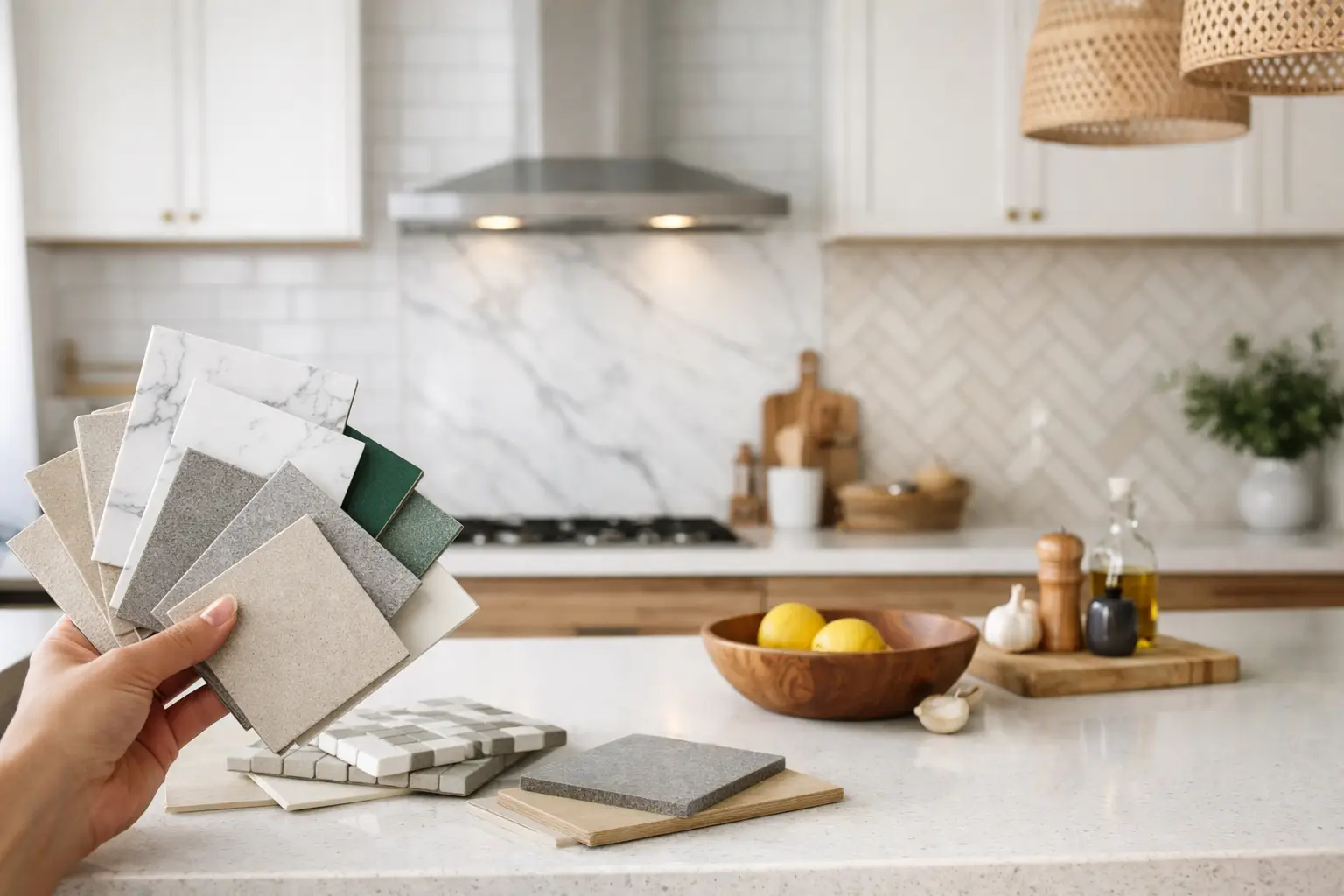
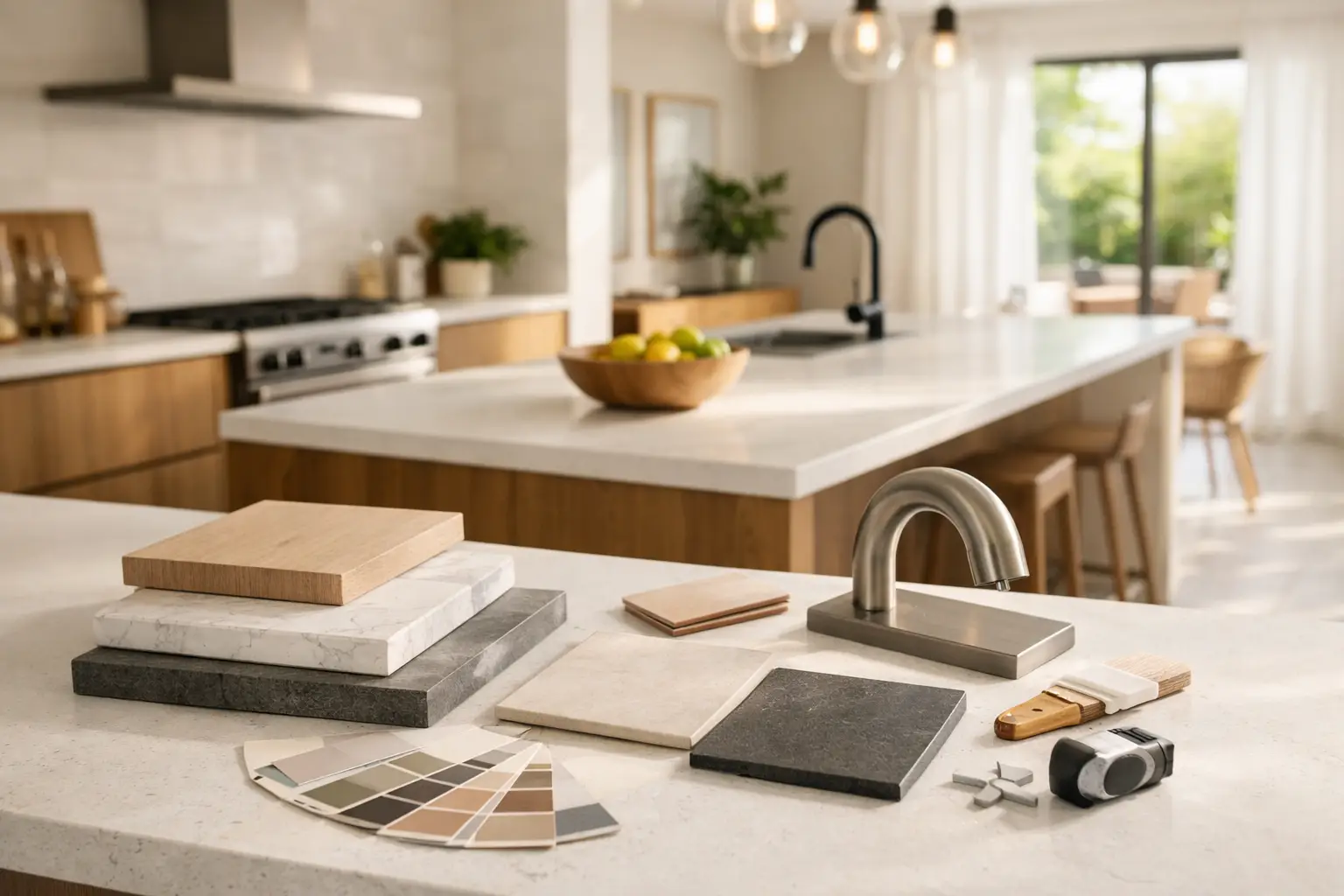
It is also wise to see samples under the kitchen’s own lighting. Natural daylight, warm pendant lights and under-cabinet LEDs can all change how a tile’s undertone appears. Take note of surrounding elements too, including timber flooring, appliance finishes and the direction of adjoining living spaces.
Porcelain Tiles for Kitchen Floors and Walls
Porcelain is one of the most dependable kitchen tile materials because it is dense, low-porosity and designed for everyday wear. It handles spills well, is simple to clean with appropriate pH-neutral products, and offers extensive choice across stone, concrete, terrazzo, timber and plain-colour looks.
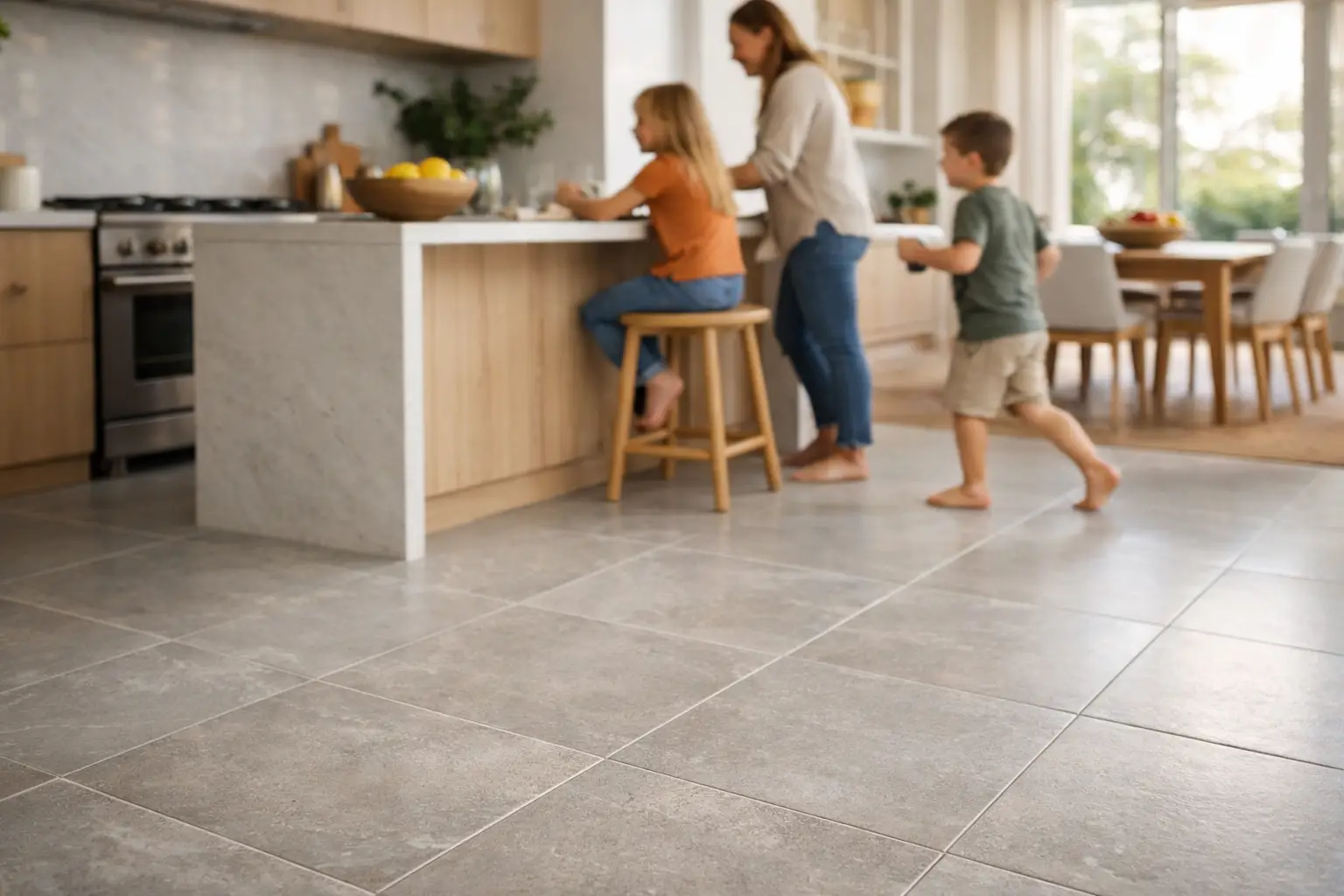
For floors, look beyond appearance to wear and slip performance. PEI ratings are commonly used to indicate the abrasion resistance of glazed tiles, with higher ratings generally suited to busier residential areas. Slip resistance is another consideration, particularly near an external door, island sink or laundry connection. A matte or structured porcelain tile often gives more practical underfoot grip than a high-gloss finish, although the final selection should suit the specific area and installation requirements.
Large format tiles can make an open kitchen feel more spacious by reducing the number of grout joints. Popular sizes such as 600 x 600 mm, 600 x 1200 mm and larger rectified formats create a refined, continuous surface when installed carefully. Rectified tiles have precisely finished edges, allowing narrower joints, but they still require correct substrate preparation and suitable movement joints. Large tiles are not automatically the best choice for every renovation: smaller rooms, uneven subfloors and complex layouts may benefit from a more manageable format.
For splashbacks, porcelain offers a durable alternative to more delicate decorative finishes. A satin or glossy wall tile can reflect light behind the benchtop, while a large porcelain slab look keeps joints to a minimum. If using a heavily veined tile, plan the tile layout before installation so the pattern feels intentional around power points, rangehoods and corners.
Choosing Finish, Colour and Grout
Matte tiles are a strong choice for busy kitchens because they soften reflections and tend to disguise everyday marks better than highly polished surfaces. Polished porcelain can create a more formal look, particularly on walls, but needs consideration in high-traffic wet zones where glare and visible footprints may be less desirable.
Grout should support the long-term look of the room, not just the tile sample. A close tonal match creates a calm, expansive finish, while a contrasting grout line makes the layout more graphic. Mid-tone grout is often a sensible family-friendly choice because it is less likely to show every splash than bright white or very dark grout. Use a quality grout system appropriate for the joint width and consult the installer about sealing and maintenance requirements.
Benchtops: Safety, Durability and Daily Use
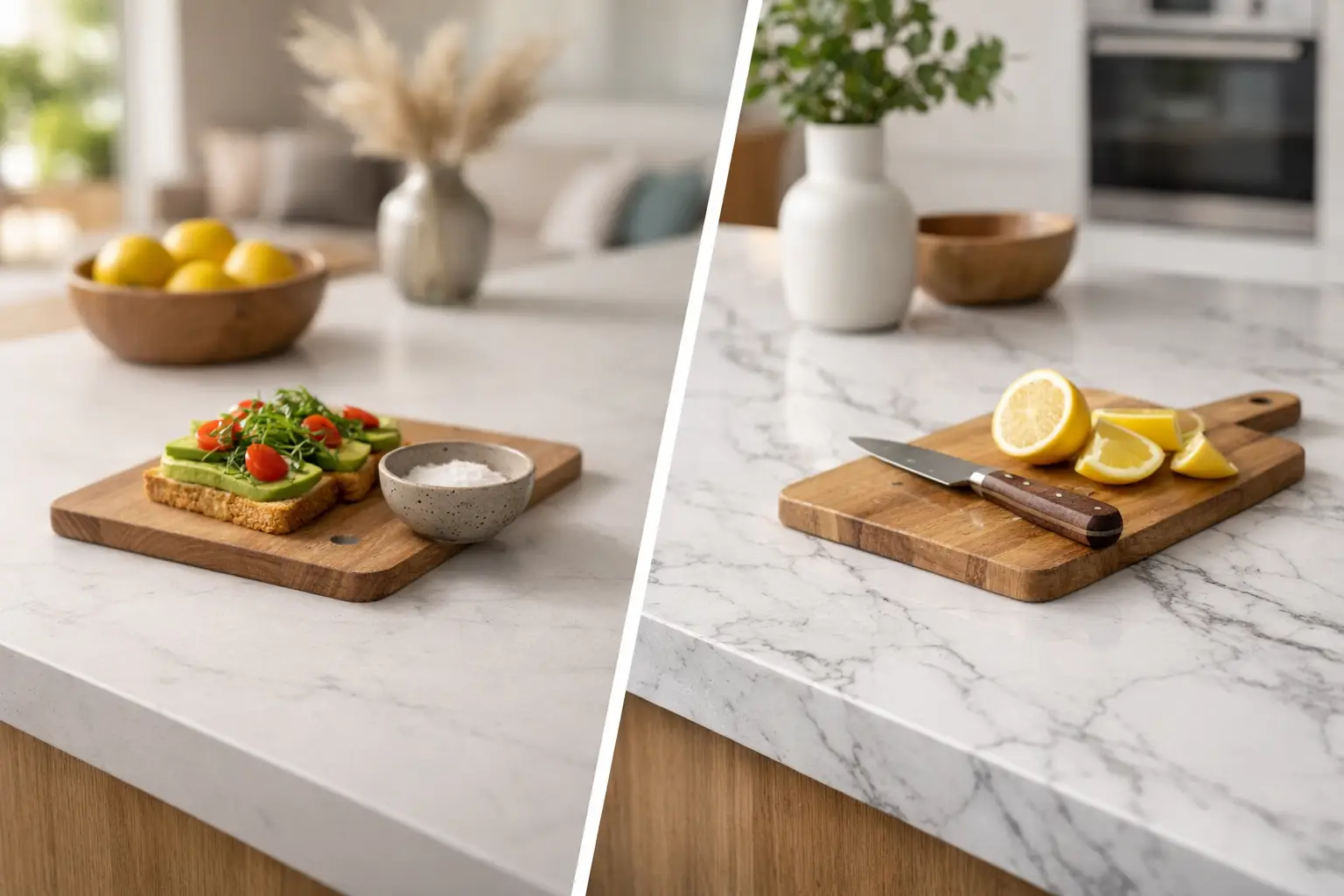
The benchtop carries the visual centre of the kitchen, but it also needs to manage heat, moisture, food preparation and regular cleaning. Zero-silica engineered stone benchtops offer a practical modern option for homeowners seeking a refined stone appearance without the respirable crystalline silica associated with traditional engineered stone fabrication.
This safety advantage matters during cutting and installation, where appropriate fabrication practices remain essential. For homeowners, the appeal is also in the surface’s everyday performance: a non-porous, easy-clean finish, consistent colour options and the ability to create a polished kitchen centrepiece. Always use a chopping board, clean spills promptly and follow the manufacturer’s care guidance. Even durable engineered surfaces should not be treated as a direct cutting board or a resting place for very hot cookware.
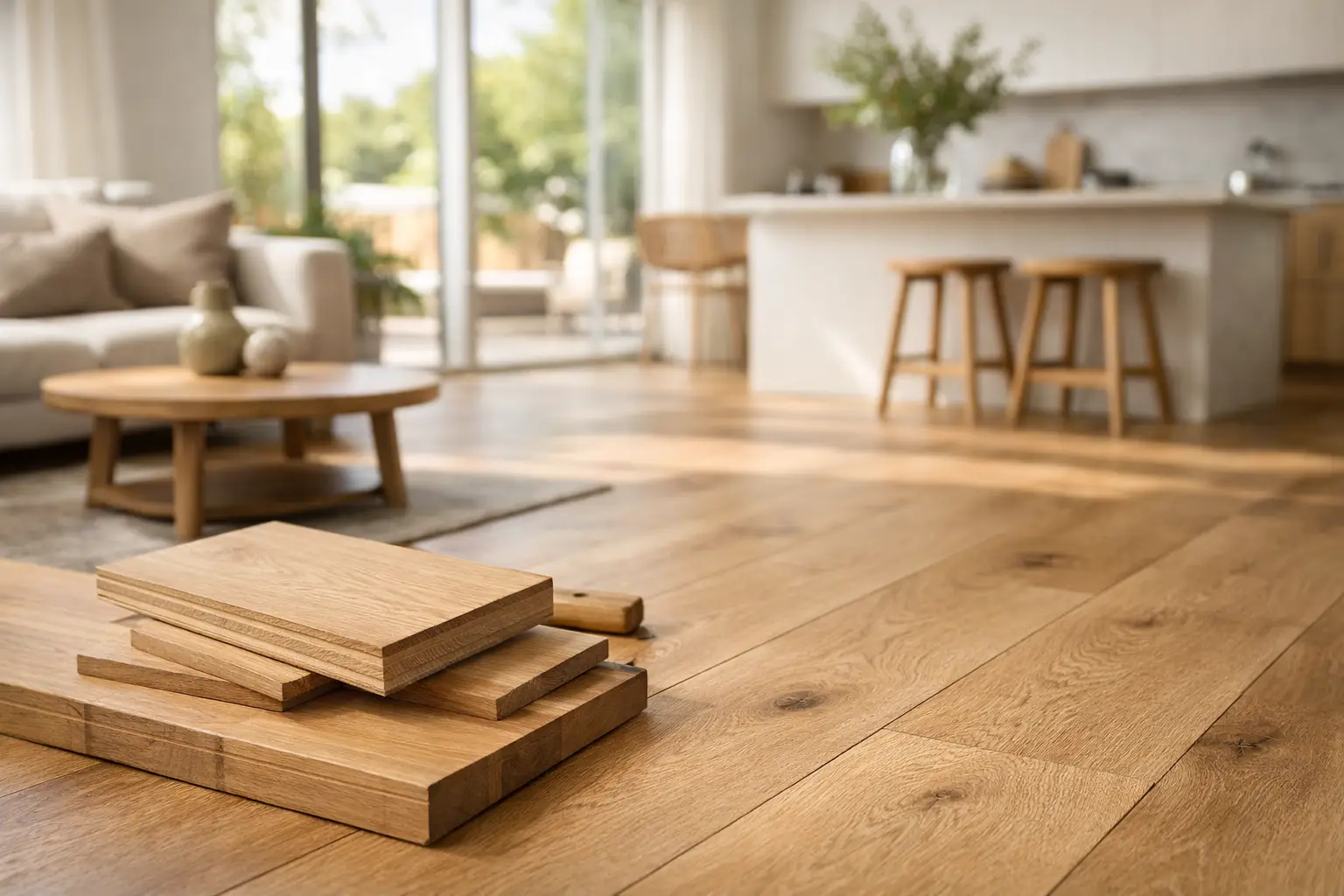
Colour selection should relate to the kitchen’s overall contrast. A soft white or warm beige benchtop works naturally with timber cabinetry and matte tiles, while charcoal or deep grey can anchor a lighter scheme. Veining can add movement, but restraint usually has greater longevity. If the benchtop has a strong pattern, choose a quieter floor or splashback so the room feels balanced rather than over-designed.
Cabinetry, Hardware and Supporting Finishes
Cabinetry is not simply a colour decision. Door finish affects cleaning, durability and the amount of light reflected through the room. Laminate is a value-conscious, hard-wearing option available in many timber and solid-colour looks. Two-pack polyurethane can provide a premium painted finish, while timber veneer introduces natural variation and warmth. Each can work beautifully when specified for the household’s use and maintained correctly.
Consider where fingers, water and impacts will occur. A flat matte door may hide fingerprints better than a glossy finish, but very dark mattes can still show marks in bright light. Around sinks and dishwashers, good edge detailing, properly installed seals and ventilation are as important as the visible finish.
Hardware deserves similar care. Soft-close hinges and drawer runners improve day-to-day use, while handles should feel comfortable and suit the cabinetry profile. Brushed metal finishes can be more forgiving than mirror-polished hardware, particularly in active family kitchens. Keep tapware, handles and appliances coordinated, rather than forcing every finish to match exactly.
Plan for Installation, Stock and Australian Requirements
A beautiful material can underperform if it is installed on an unsuitable base. Floor preparation, waterproofing where required, tile adhesive selection, movement joints and expansion allowances all influence the final result. Engage qualified trades and make sure they understand the tile size, finish and intended application before work starts.
For renovation timelines, material availability is practical rather than glamorous, but it can determine whether cabinetry, tiling and benchtop installation proceed smoothly. Selecting ready stock tiles from a local Melbourne warehouse can reduce waiting time and allow installers to check batch consistency before work begins. It is worth ordering enough material for cuts, approved wastage and future repairs, as batches can vary slightly between production runs.
Check that the selected products are appropriate for their intended use and that the installation approach aligns with relevant Australian standards and manufacturer instructions. This is especially important for wet areas, external thresholds and projects involving large-format tiles. A careful measure and layout plan also reduces avoidable cuts and helps align joins, fixtures and feature walls.
Build a Kitchen That Still Feels Right Years From Now
Trends can be useful for inspiration, but enduring kitchens usually rely on a calm material foundation. Neutral porcelain flooring, a well-proportioned zero-silica benchtop and cabinetry in a considered finish give you room to update lighting, stools or paint later without starting again.
At Verona Ceramic, homeowners and trade professionals can view premium architectural surfaces in person, with ready stock options and practical support including free measuring and 3D design services. The most satisfying renovation is not the one with the most materials in it. It is the one where every surface earns its place, making daily family life easier while bringing lasting beauty to the home.