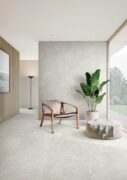
A pale limestone floor can make a room feel quietly established. A large-format porcelain tile can create much the same calm, architectural look, while standing up to wet feet, muddy shoes and a busy family schedule. That is why porcelain versus natural stone is not simply a question of which surface looks better. It is a decision about maintenance, variation, performance and how you want your home to live every day.
Both materials have a rightful place in considered Melbourne renovations. Natural stone offers individual character formed over time. Porcelain delivers highly controlled performance and an increasingly convincing interpretation of stone, concrete, timber and terrazzo. The better choice depends on the room, the finish you want and how much ongoing care suits your household.
Porcelain versus natural stone: the essential difference
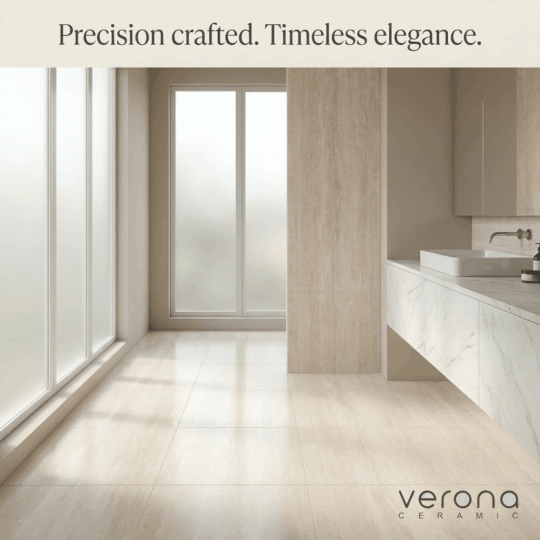
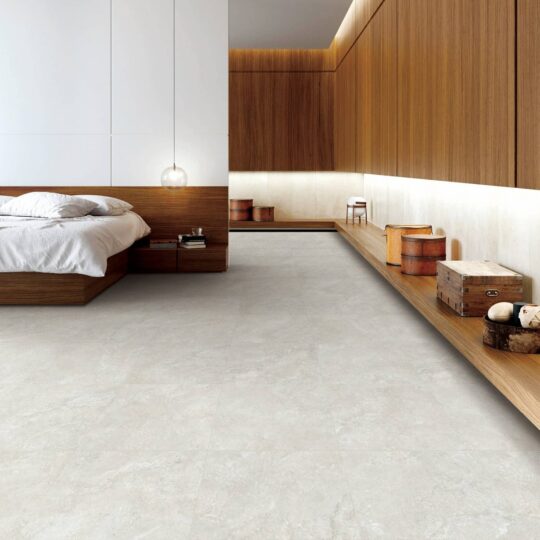
Porcelain is a dense ceramic material made from refined clay and minerals, fired at very high temperatures. Its low water absorption makes it particularly suitable for bathrooms, laundries, kitchens and other areas where moisture is part of daily life. Modern inkjet printing and moulding techniques allow porcelain to reproduce the veining, fossil detail and tonal movement of many natural stones with impressive realism.
Natural stone is quarried material, such as marble, limestone, travertine, granite, slate or bluestone. Every piece carries its own mineral composition, pores, veins and colour variation. This is its appeal: a stone floor or wall is never completely uniform, and it develops a sense of depth that is difficult to duplicate exactly.
Neither is automatically the premium choice in every application. A carefully selected porcelain can be the most practical premium architectural surface for a young family bathroom or a large open-plan floor. Genuine stone may be the right investment for a feature fireplace, an elegant entry or a project where authentic geological variation is central to the design brief.
Appearance: natural character or controlled consistency
Natural stone has inherent variation. Even samples from the same batch can differ in colour, veining, holes, edges and movement. For some homeowners and designers, that unpredictability is the entire point. It brings warmth and a one-of-a-kind finish, particularly in honed limestone, tumbled travertine or richly veined marble.
The same variation needs to be managed carefully. It is wise to view several pieces, not just one small sample, and to discuss the desired blend before installation. A natural feature such as a vein, fissure or filled hole is not necessarily a defect, but it should be understood before the floor is laid.
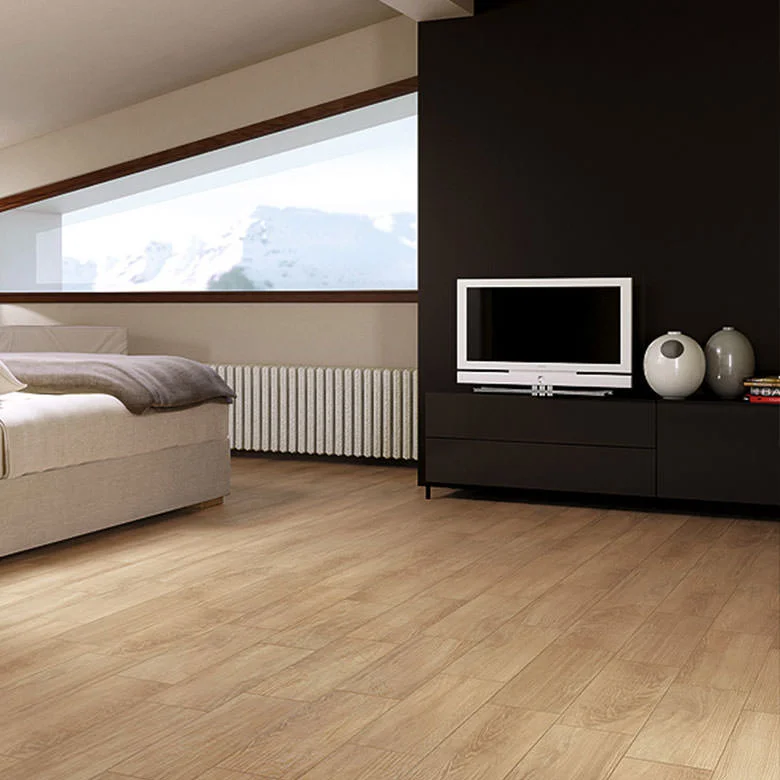
Porcelain gives more design control. A stone-look range can still offer multiple faces and gentle tonal variation, but the overall effect is easier to plan across a large area. This is useful when creating a consistent floor from kitchen to living room, or when matching wall and floor tiles in a compact bathroom.
Large format tiles are especially effective when you want fewer grout lines and a more continuous finish. They can make a room feel generous and refined, though their installation requires a flat substrate, careful handling and an experienced tiler. Tile size should complement the room and layout, not simply follow a trend.
Durability and care in real family homes
Porcelain is valued for its resistance to staining, scratching and moisture in everyday settings. It generally does not require sealing, and routine cleaning is straightforward with a pH-neutral cleaner and a soft mop or cloth. This makes it an appealing choice for kitchen tiles, bathroom tiles, mud-prone entries and homes with children or pets.
Natural stone needs a more deliberate care plan. Most stone should be sealed appropriately, then resealed as required according to the stone type, finish, traffic level and sealer used. Acidic spills such as citrus, vinegar or wine can etch some calcareous stones, including marble and limestone. Etching changes the surface sheen rather than simply leaving a removable stain, so prompt cleaning matters.
Granite and some dense stones can be very hard-wearing, but they are not maintenance-free. Stone cleaners should be pH-neutral, and abrasive or acidic products should be avoided unless they are specifically approved for that material. For homeowners who enjoy patina and accept that a natural surface may evolve with use, this is often part of the charm. For those wanting a consistently easy-care finish, porcelain is usually the calmer choice.
Water, slip resistance and room-by-room suitability
A beautiful surface must also work safely where it is installed. In bathrooms, laundries, pool-adjacent spaces and outdoor areas, the tile’s slip-resistance rating and texture matter more than its colour alone. A polished tile may look striking on a wall, but a matte or structured finish is often better suited to a wet floor.
Porcelain offers a broad range of matte, grip and structured finishes, making it easier to specify a coordinated look across indoor and outdoor zones. For example, a smooth matte tile may suit the living area, while a matching outdoor finish provides more grip on an alfresco floor. Always confirm that the selected product is appropriate for the intended wet or external application and meets the relevant Australian requirements.
Natural stone can also perform beautifully outdoors, but the stone type and finish are crucial. A flamed, sawn, tumbled or naturally split surface may offer useful texture, while polished stone is generally less suitable for exposed wet areas. Some porous stones may also be more vulnerable to moisture, salts or weathering if the wrong product is used in the wrong location.
For a kitchen splashback or bathroom wall, both porcelain and stone can work well because direct foot traffic is not a concern. On a shower floor, however, smaller tiles or mosaics can provide more grout joints underfoot and may be a more practical choice than large smooth pieces. Good design is often about choosing the right finish for each zone, not forcing one material everywhere.
Cost, installation and long-term value
The upfront cost of natural stone can vary widely depending on rarity, thickness, origin, cutting and finish. Installation may also require extra labour for sorting, sealing, cutting and managing variation. Its long-term value is often emotional as well as financial: homeowners choose it for authenticity and the character it gains over years.
Porcelain can offer excellent value where a project needs a premium stone appearance with predictable quantities, simple care and efficient installation. Factory direct tiles and ready stock can also help keep a renovation moving when timing matters. However, porcelain is not a shortcut for poor preparation. Large format tiles in particular need a level base, suitable adhesive coverage and accurate levelling to reduce lipping between edges.
For either material, allow for an appropriate quantity of spare product. Keeping a few matching tiles or stone pieces can be helpful for future repairs. Confirm shade, batch, calibre and finish before work begins, and inspect materials before installation. Once a surface has been fixed, changes become far more difficult and costly.
What about benchtops?
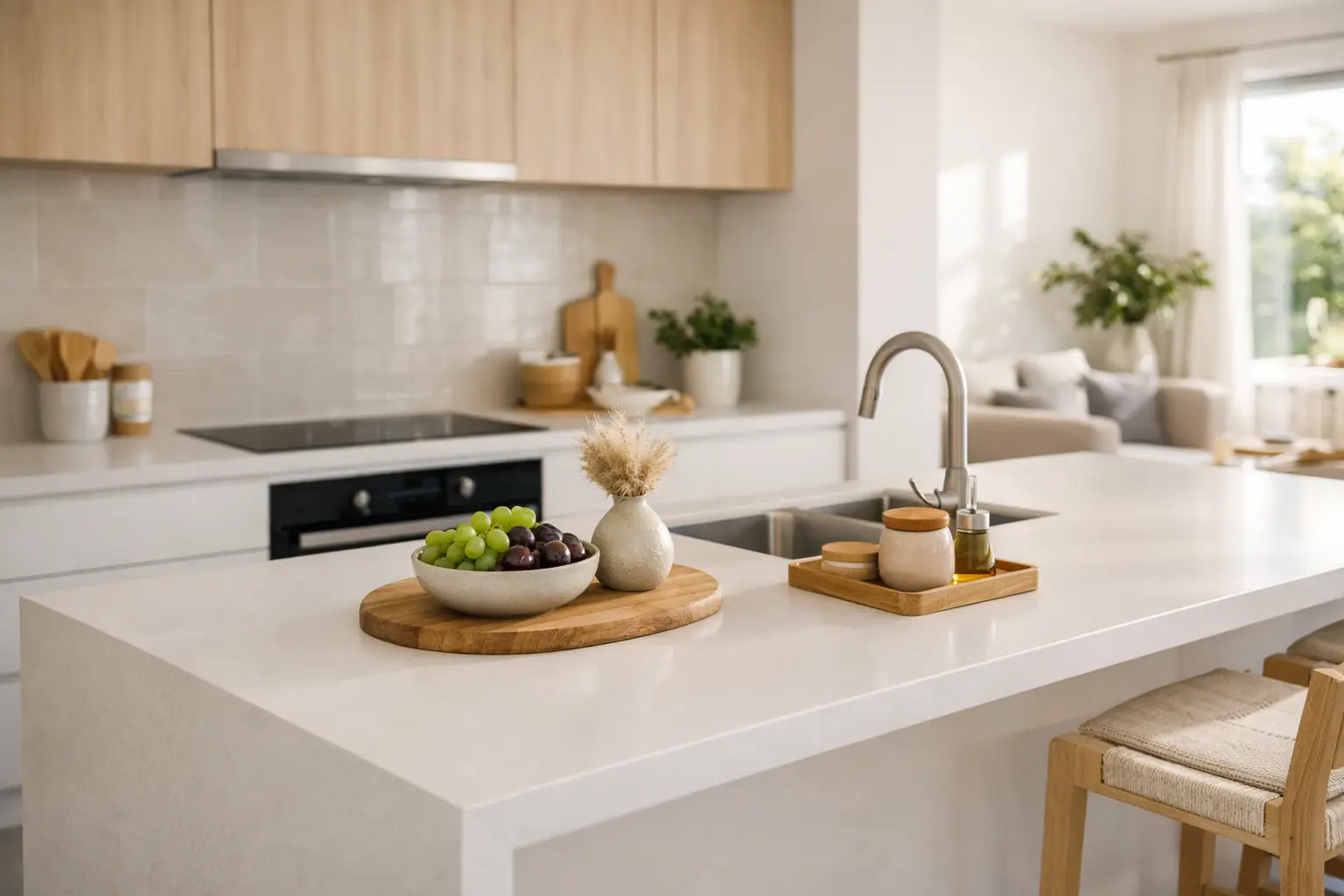
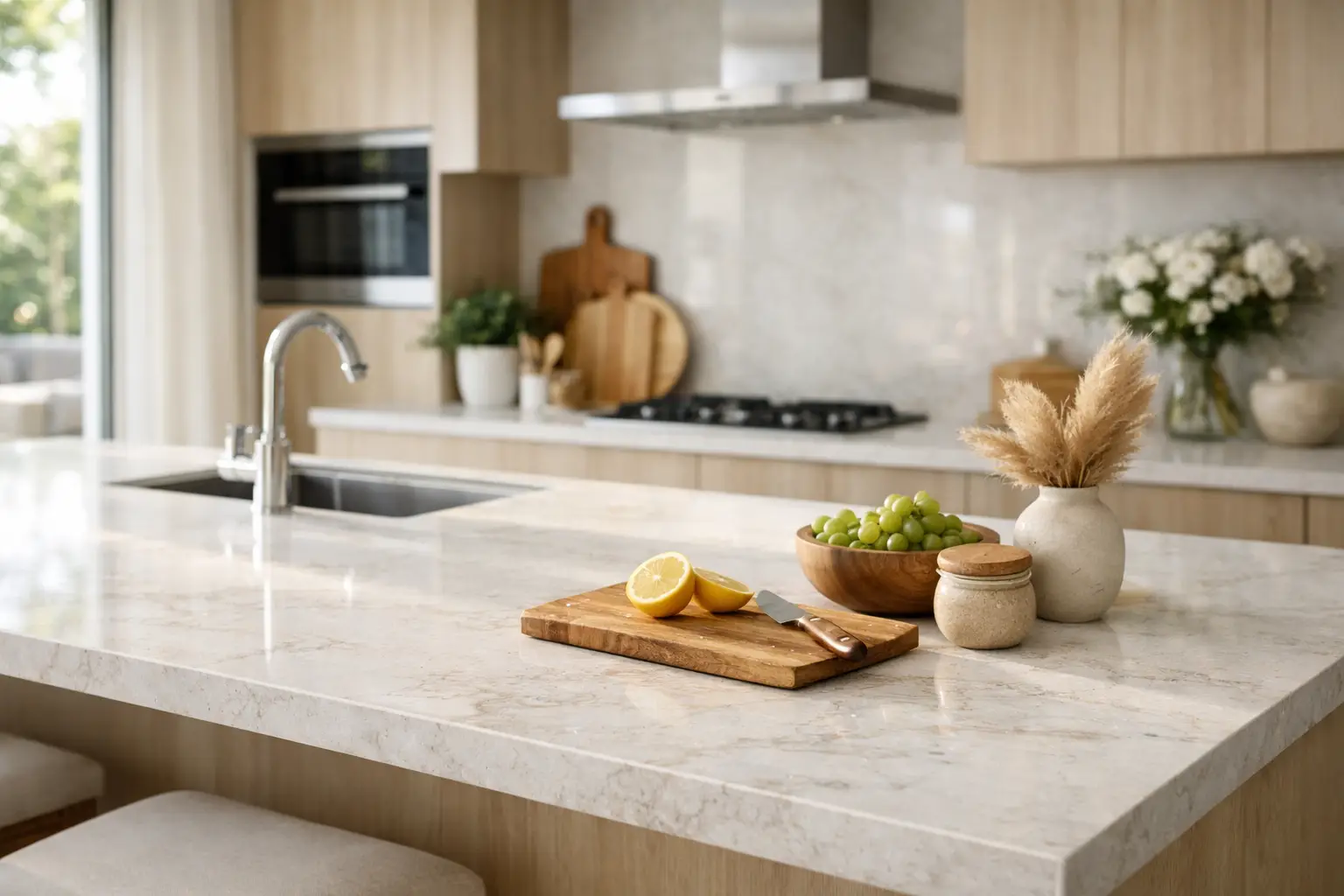
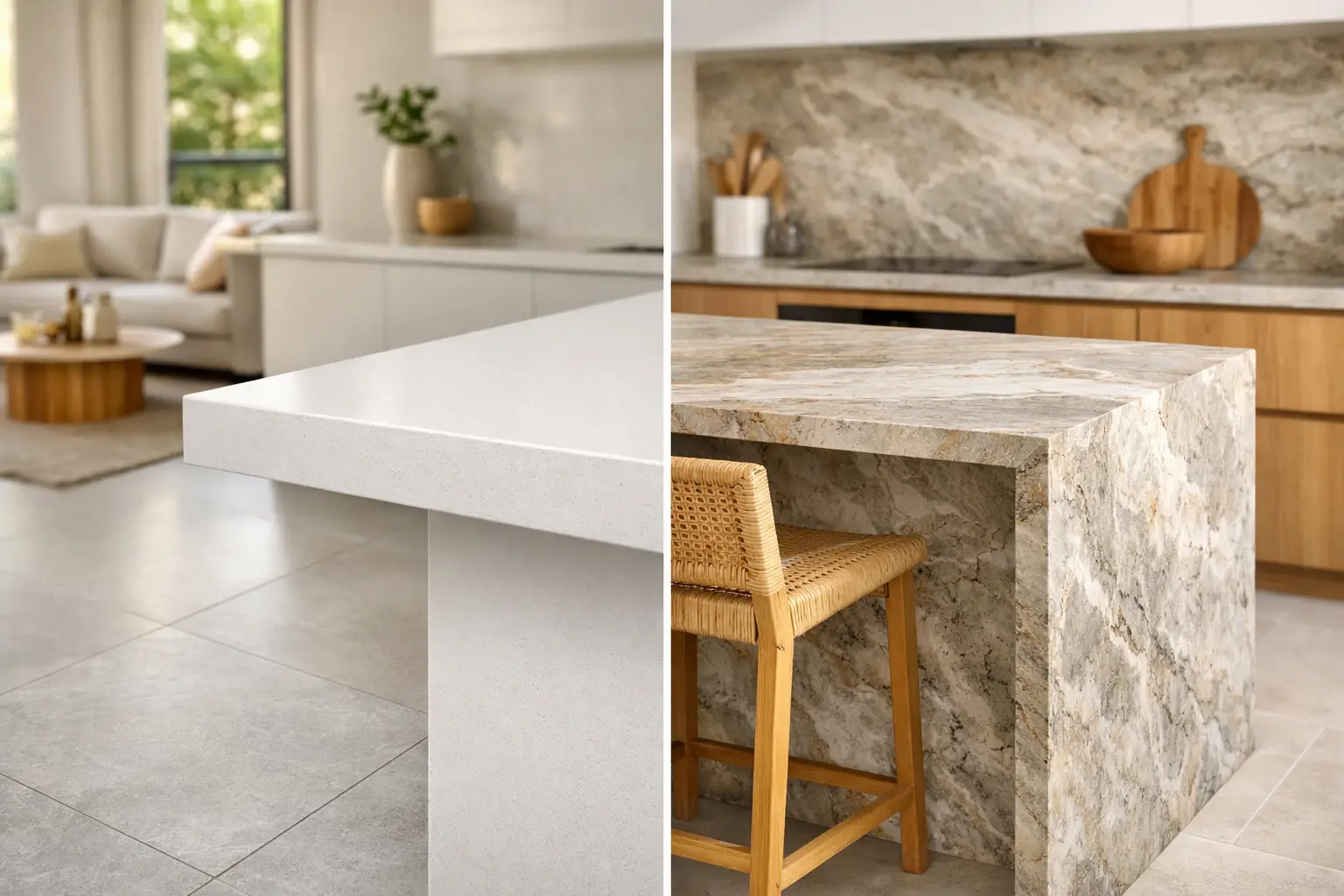
The porcelain versus natural stone discussion changes slightly at bench height. Natural stone benchtops can deliver exceptional depth and individuality, especially marble, quartzite or granite. Yet each type has different requirements around staining, etching, heat and sealing. A benchtop should be selected for the way the kitchen is actually used, not only for its showroom appearance.
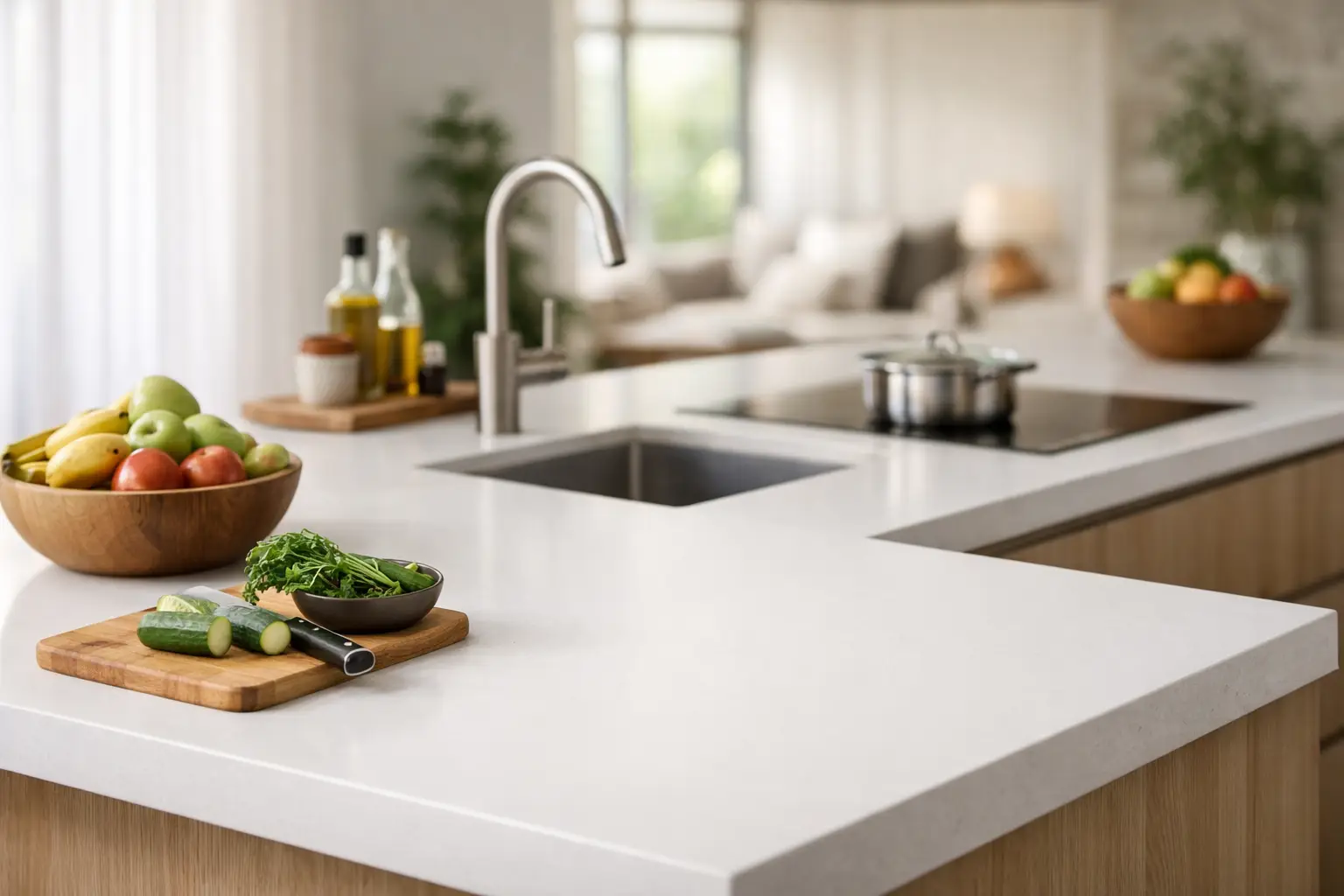
Porcelain slabs are dense, low-porosity surfaces with strong resistance to many household stains and heat, making them a practical option for hardworking kitchens. Edge detailing, cut-outs and fabrication quality remain essential, as porcelain slabs need experienced handling. For families also considering engineered options, zero silica benchtops provide another surface category designed around safer materials and everyday practicality.
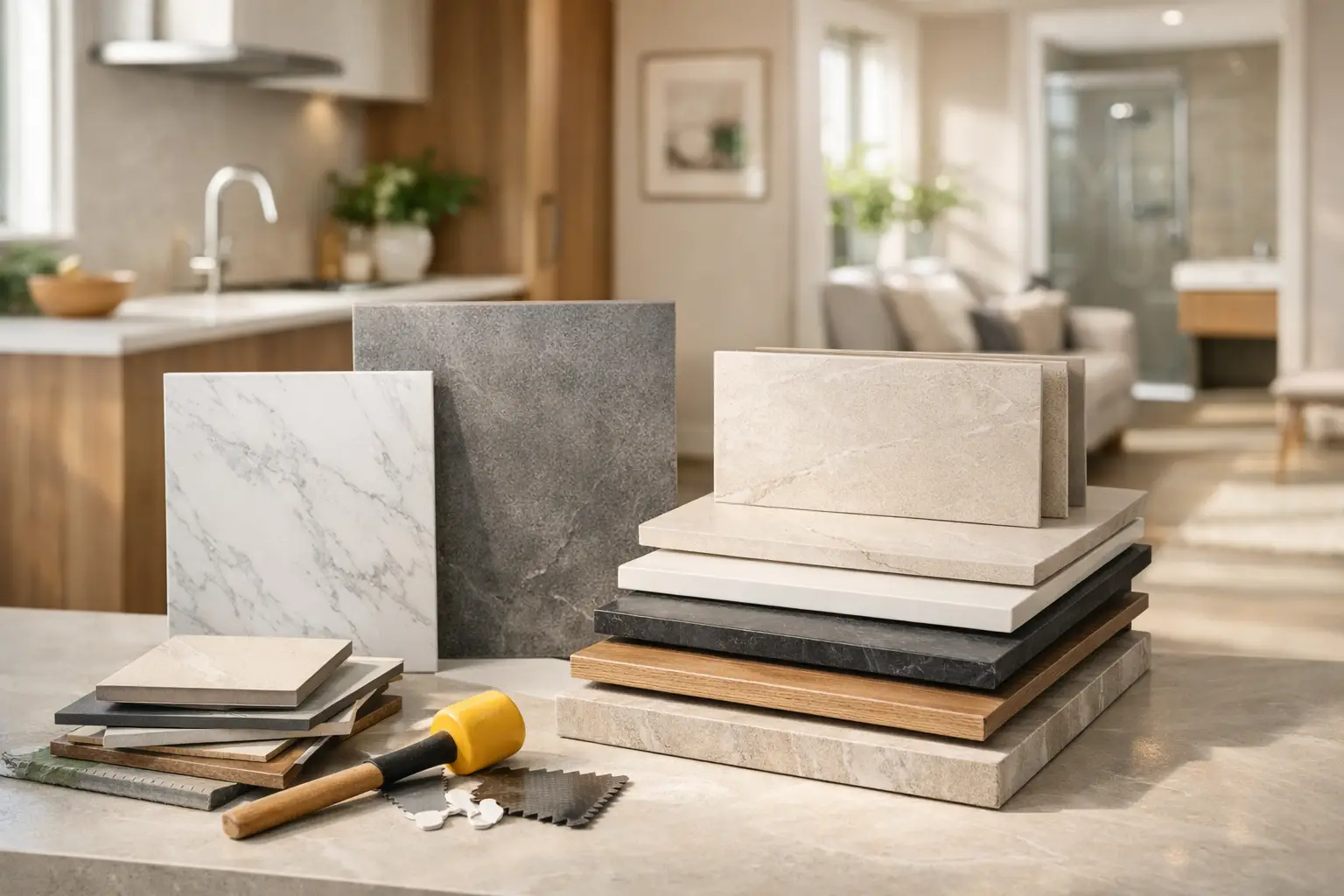
A specialist can explain the differences between slab thicknesses, edge profiles, splashbacks and suitable support around sinks and cooktops. Samples are valuable here because light can change a surface dramatically between a showroom and your kitchen.
A practical way to choose
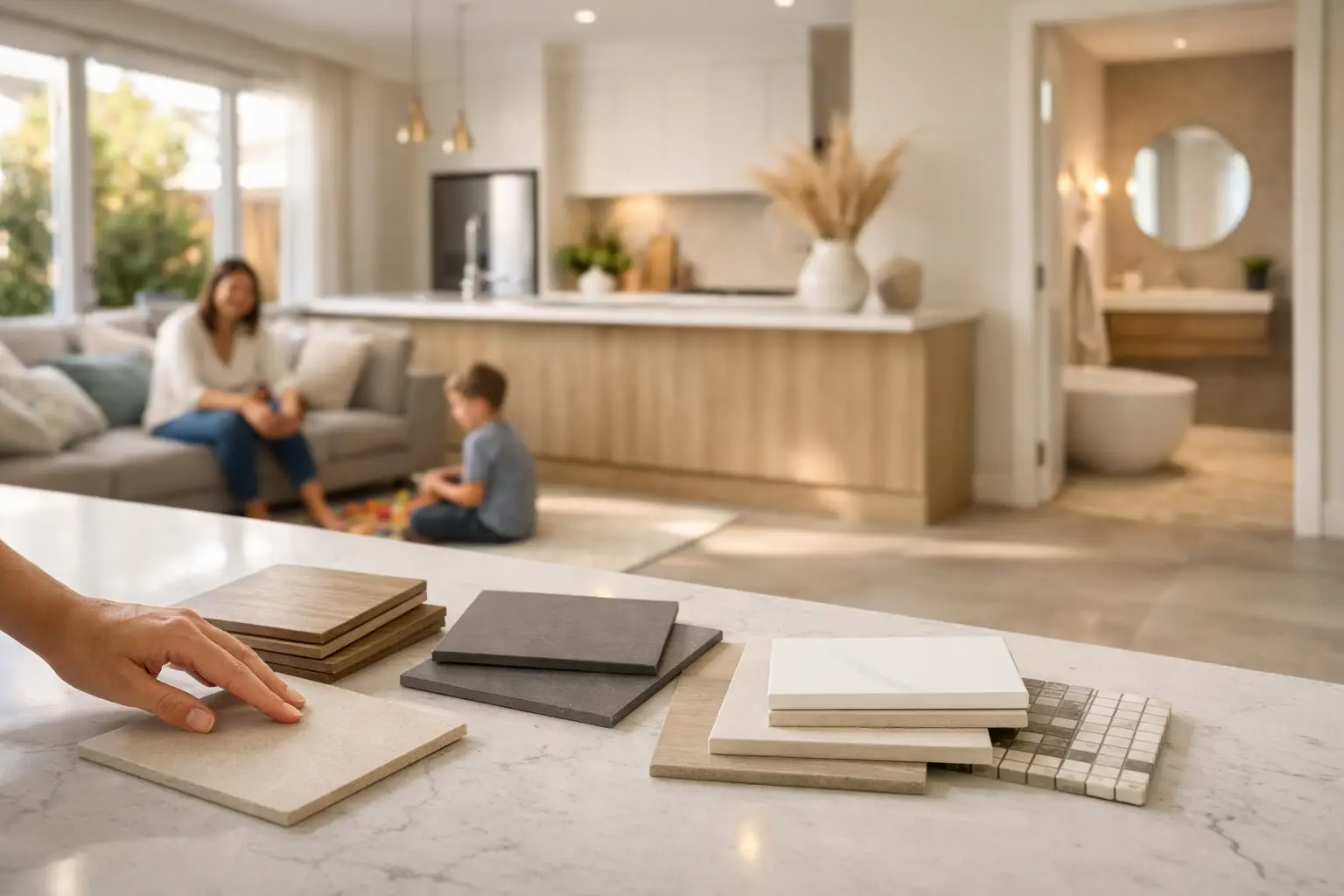
Start with the room’s demands. Ask whether the area is wet, exposed to weather, subject to heavy traffic or likely to see food spills and cleaning products. Then consider the visual goal: do you want every tile and slab to feel intentionally consistent, or do you value the irregular beauty of genuine stone?
Next, be honest about maintenance. There is no wrong answer in choosing a low-maintenance matte porcelain floor over a sealed stone floor. A successful renovation is one that still feels beautiful after school mornings, weekend entertaining and years of normal living.
At Verona Ceramic, viewing full-size samples and discussing tile finish, slip resistance, layout and stock availability can make the decision clearer. With ready stock tiles available from a Melbourne warehouse and practical design guidance, it is easier to select a surface that suits the schedule as well as the space.
Choose the material that lets you enjoy your home rather than worry about it. Whether that is the unmistakable movement of natural stone or the dependable ease of porcelain, a well-specified surface will bring beauty to daily living for many years.