A lot of kitchen decisions come down to look and price. Benchtop material should also come down to safety, durability and how confidently it can be specified for everyday family living. If you have been asking what is zero silica engineered stone, the short answer is this: it is an engineered benchtop surface made without added crystalline silica, designed to deliver the refined look of modern stone surfaces while reducing the health risks linked to silica dust during processing.
That matters well beyond the showroom. For homeowners, it can influence what feels like a responsible long-term choice for a renovation. For builders, cabinet makers and designers, it changes the conversation around fabrication, compliance and product selection. In Australia, where awareness around silica exposure has risen sharply, zero-silica surfaces are not just a trend. They are part of a broader move towards healthier building materials and better site practices.
What is zero silica engineered stone made from?
Traditional engineered stone has usually been made from crushed stone aggregates bound with resin and pigments, with a high proportion of crystalline silica often coming from quartz. Zero silica engineered stone is different because it replaces that silica-based content with alternative minerals and carefully formulated binders.
Depending on the manufacturer, those minerals may include recycled glass, porcelain-based materials, natural minerals or other low-silica aggregates. The exact recipe varies, but the goal is consistent – to create a surface with the appearance, stability and finish quality expected in a premium benchtop, without relying on silica-rich quartz.
For the homeowner, that composition detail might seem abstract. In practice, it affects the safety profile of the product during cutting and finishing, and that is the key reason zero-silica options have become more relevant in Australian kitchens and laundries.
Why zero silica engineered stone matters
The biggest reason people ask what is zero silica engineered stone is concern about health and compliance. When high-silica stone is cut, ground or polished, it can release very fine respirable crystalline silica dust. Without proper controls, that dust can pose serious health risks to workers over time.
Zero-silica engineered stone aims to reduce that risk at the source by removing the material most associated with the problem. It does not mean fabrication can be careless. Any benchtop material still needs proper handling, dust control and professional installation. But removing added crystalline silica is a meaningful shift, especially for trades and suppliers committed to safer practices.
For architects and designers, this also supports better specification decisions. Clients increasingly want beautiful finishes that align with healthier homes and more responsible material choices. A zero-silica benchtop gives them a surface that feels current, practical and better suited to today’s expectations.
Comparing Zero Silica vs. Traditional Engineered Stone
At a glance, many zero-silica surfaces look very similar to traditional engineered stone. You can still find soft whites, concrete-inspired tones, marble-look veining and contemporary matt or polished finishes. The difference is mainly in composition, not visual style.
The more important distinction sits behind the appearance. Traditional engineered stone built its reputation on consistency, stain resistance and broad colour choice, but often with high silica content. Zero-silica alternatives are developed to offer a comparable design outcome while addressing the material issue that has become a major concern across the industry.
Performance can vary from brand to brand, so it is worth comparing individual technical specifications rather than assuming all products behave the same way. Some zero-silica surfaces are especially strong in scratch resistance. Others are better known for colour depth, low porosity or heat tolerance. As with tiles, the best product is usually the one matched properly to the application.
What are the practical benefits for homeowners?
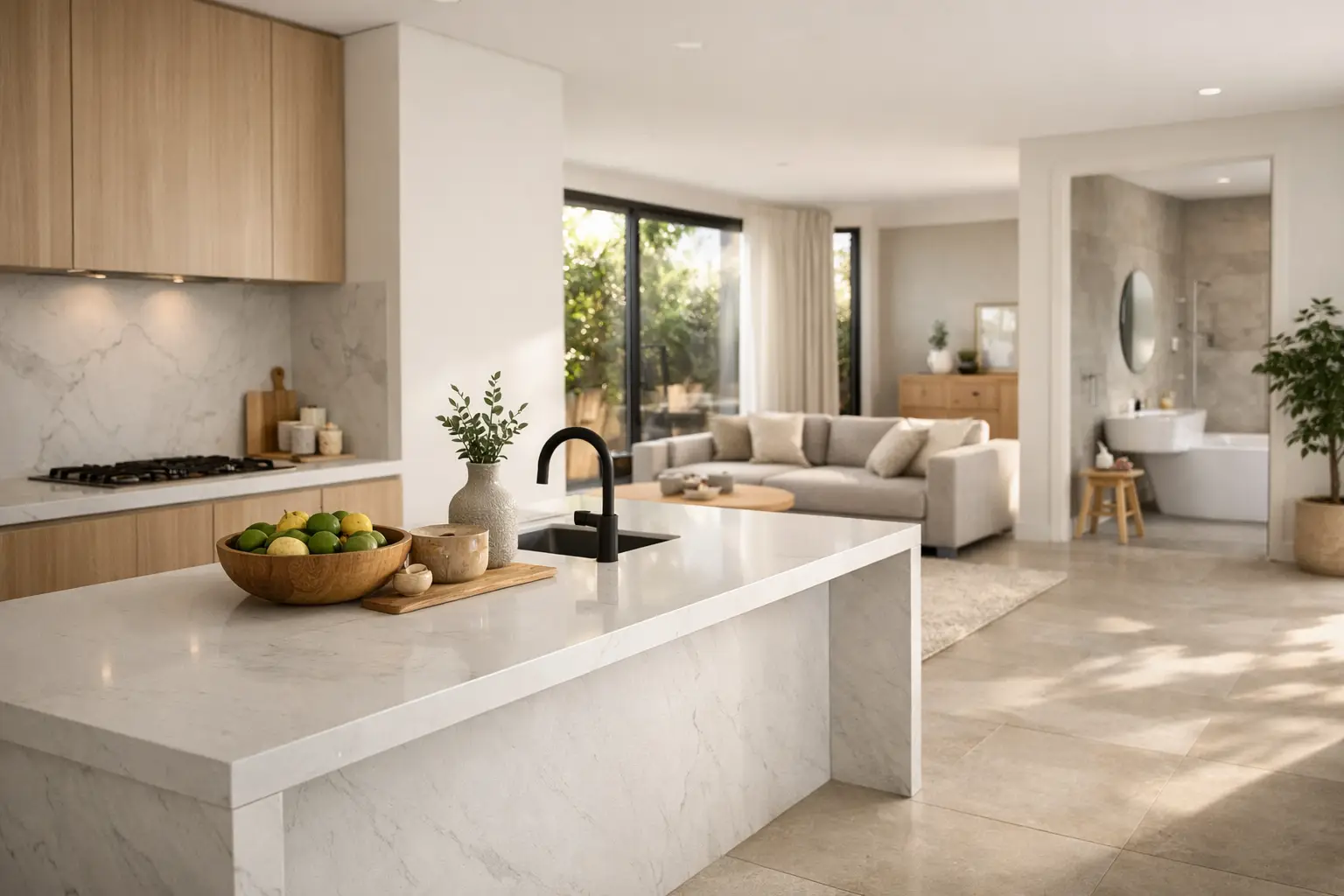
For most renovators, the appeal is a combination of peace of mind and everyday usability. A zero-silica benchtop can offer the clean lines and premium finish people want in a new kitchen, while also supporting a safer material selection process.
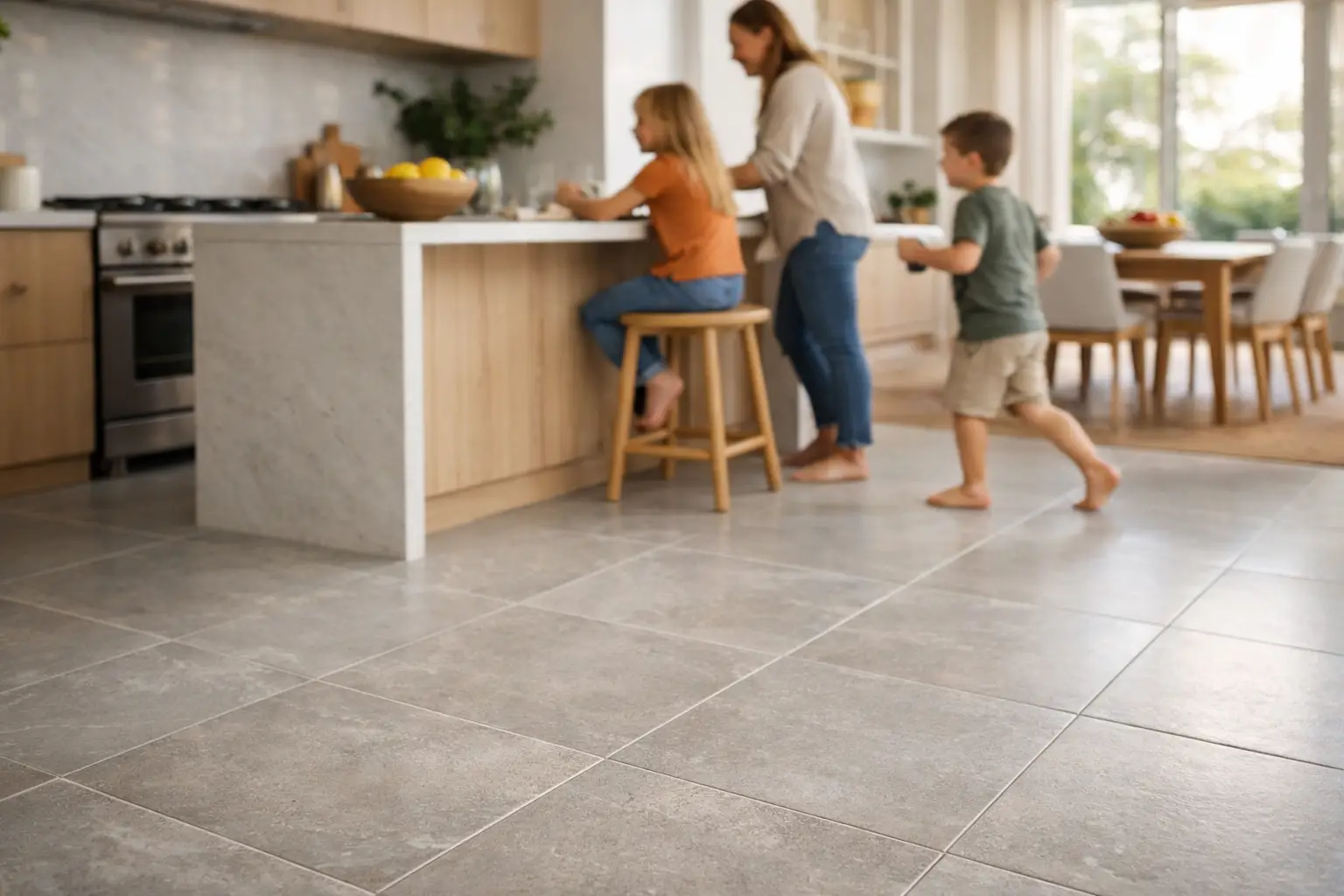
Day to day, these surfaces are generally chosen because they are easy to maintain, visually refined and suited to busy homes. In a family kitchen, that matters. People want a benchtop that can handle meal prep, school bags, coffee cups and the general pace of daily life without constant fuss.
Another practical advantage is design flexibility. Zero-silica engineered stone is available in a wide range of colours and surface styles, making it easier to coordinate with floor tiles, splashbacks, joinery and bathroom finishes. That creates a more cohesive result across the home, particularly in projects where clients want durability without giving up a premium architectural feel.
Are there any trade-offs?
There usually are, and it is better to be clear about them. Zero-silica engineered stone is not one single material with one universal performance standard. Different products can vary in density, heat resistance, edge detailing and finish characteristics.
That means selection should not be based on the phrase zero silica alone. A well-informed buyer or specifier should still ask about thickness, finish, suitable applications, cleaning requirements and fabrication guidance. Some surfaces may be ideal for kitchen benchtops but less suited to outdoor use. Some may perform beautifully in a butler’s pantry but call for extra care around high heat.
Cost can also depend on the brand, finish and slab format. While factory direct supply can help improve value, the smartest decision is not simply the lowest figure on paper. It is the product that delivers the right balance of beauty, performance and confidence for the job.
Where does zero silica engineered stone work best?
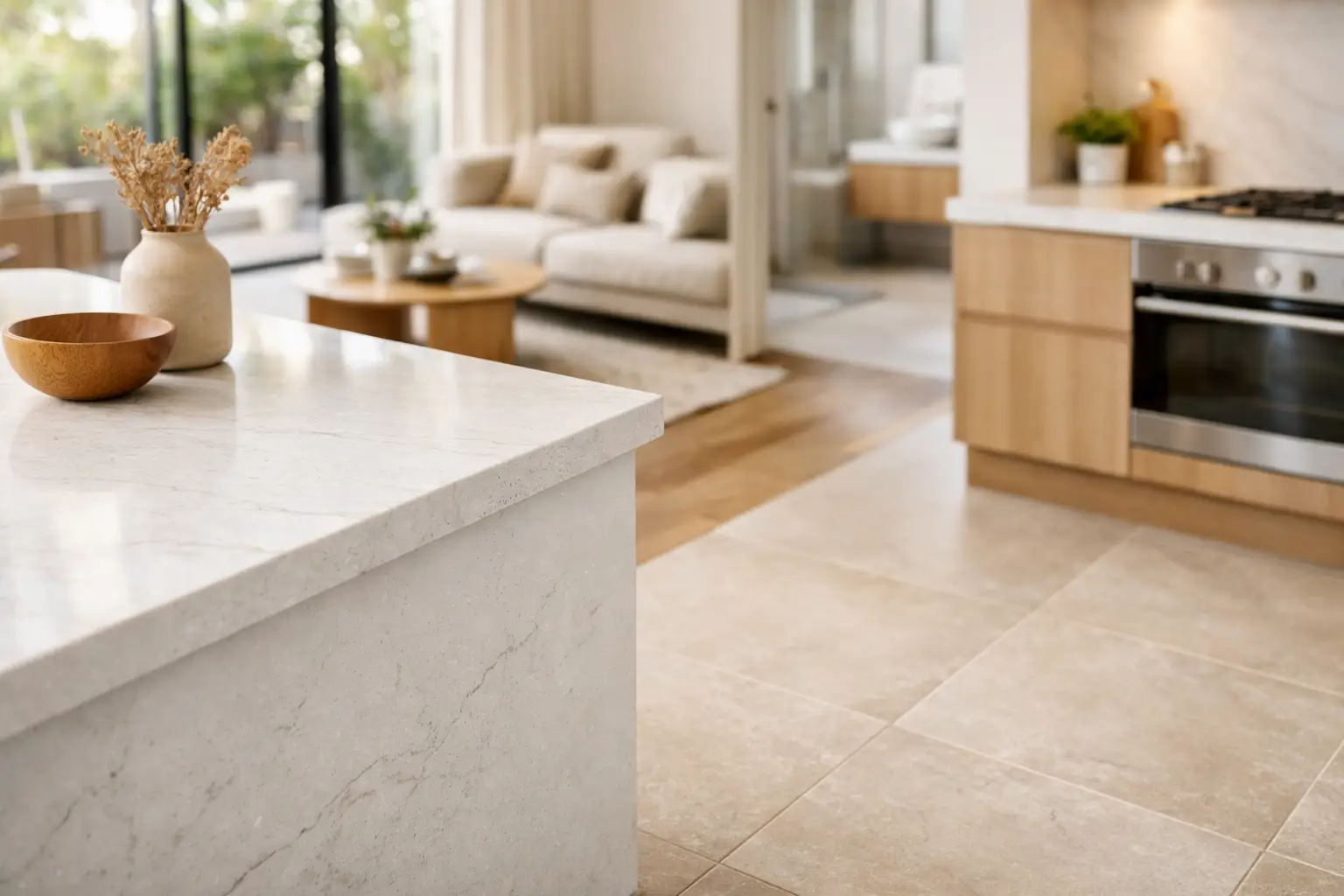
The most common application is the kitchen benchtop, where appearance and practicality need to work equally hard. It also suits island benches, splashbacks, bathroom vanities, laundries and other interior joinery surfaces where a refined and durable finish is important.
For designers and builders, one of the strengths of engineered surfaces is consistency. If a project needs a certain tone, repeatability across slabs, and a finish that complements porcelain tiles or large-format wall surfaces, zero-silica options can be a very practical specification.
This is especially useful in full-home renovations where the material palette has to feel connected. A softly veined benchtop paired with neutral floor tiles and textured bathroom walls can create a home that feels calm, durable and considered without appearing overdesigned.
What to ask before choosing zero silica engineered stone
A good supplier should be able to explain more than just colour names and slab sizes. Ask what the product is made from, whether it complies with relevant Australian requirements, what finishes are available, and how it should be fabricated and maintained.
It is also worth asking about stock availability. For renovation timelines, ready warehouse stock can make a genuine difference, especially when cabinetry and installation schedules are tight. For trade customers, reliable local supply helps avoid delays and keeps planning realistic.
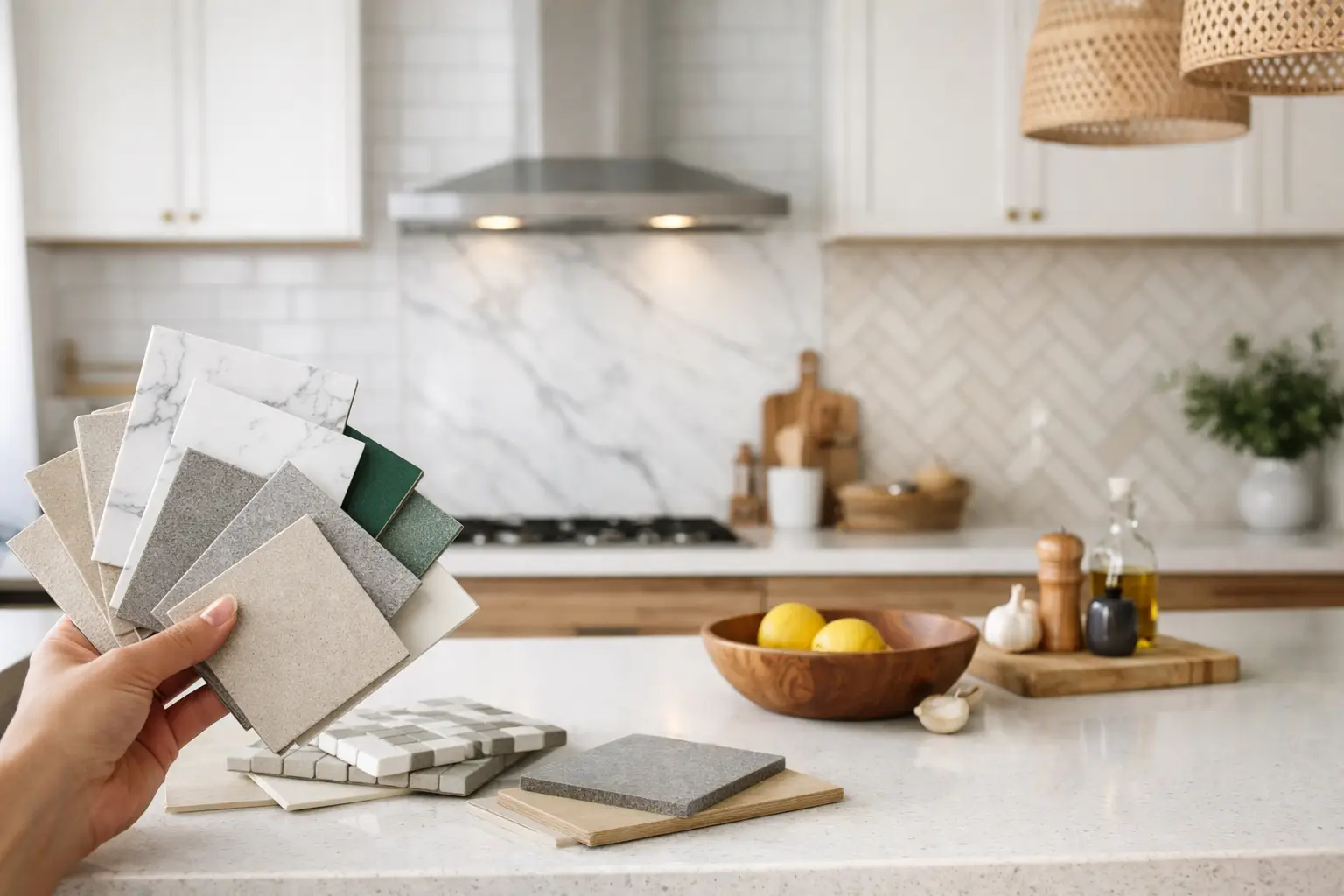
You should also inspect the actual surface where possible. Samples are useful, but full slabs reveal more about pattern movement, tone variation and finish quality. In premium spaces, those details matter just as much as the headline specification.
What is zero silica engineered stone in the Australian market?
In the Australian context, zero-silica engineered stone reflects a shift towards safer, more carefully specified interior surfaces. It answers a real concern in the building and renovation industry while still meeting the visual expectations of modern kitchens and bathrooms.
For local homeowners, that means the choice is no longer between style and responsibility. For builders, cabinet makers and designers, it means there are now innovative surfaces that support safer workflows and still deliver enduring quality. That is why more projects are moving in this direction.
At Verona Ceramic, the interest in zero-silica benchtops often comes from clients who want the complete picture – not just how a surface looks, but how it performs, how quickly it can be supplied, and whether it supports a healthier home environment. That is a sensible way to choose any major finish.
A beautiful benchtop should do more than complete a kitchen. It should make daily living feel easier, safer and more considered, which is exactly why zero-silica surfaces are earning serious attention.