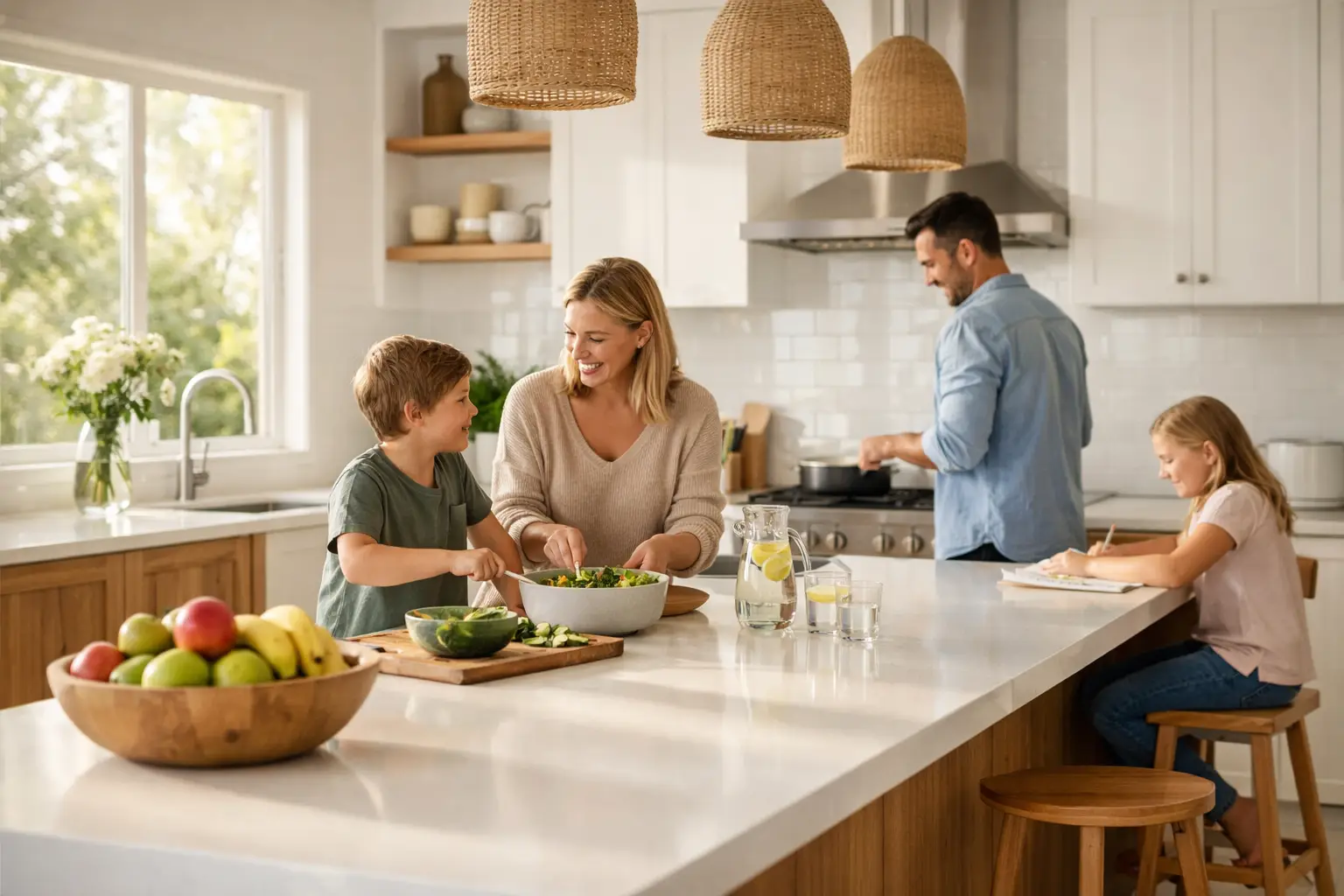
A family kitchen transformation is tested long before guests arrive. It is tested by wet school shoes, dropped bowls, hurried weekday breakfasts, hot pans and the constant question of where everyone can sit. The best result is not simply a kitchen that photographs well. It is a calm, hardworking room with surfaces that keep their finish, clean easily and feel right for the way your household actually lives.
For Melbourne homeowners, that usually means making early decisions about the materials that take the most wear: flooring, splashbacks and benchtops. These surfaces set the practical standard for the whole renovation, while also giving the kitchen its character.
Start with the family routine, not the colour palette
Before choosing a tile or stone sample, consider how the kitchen works at its busiest. A household with young children may need generous clear floor space, soft visual contrast between floor and cabinetry, and a benchtop that is easy to maintain after craft projects and cooking. A family with older children may prioritise a long island for homework, charging devices and relaxed meals.
This is also the moment to identify pressure points in the existing layout. Perhaps the fridge door blocks the main path, the pantry is too far from the preparation zone, or there is nowhere to put a school bag without it landing on the floor. Good design makes daily movement simpler. Materials then support that design by standing up to regular use.
A practical brief should cover storage, seating, lighting and cleaning as well as appearance. It gives your cabinet maker, builder and tile supplier a clearer basis for recommending sizes, finishes and installation details.
Choose flooring for real life underfoot
Kitchen flooring needs to handle water, food spills, chair movement and frequent cleaning without looking tired. Porcelain is a particularly strong choice because it is dense, low-porosity and highly resistant to staining and scratching when correctly selected and installed. Unlike many natural materials, it does not need ongoing sealing to maintain its everyday performance.
Matte porcelain balances beauty and grip
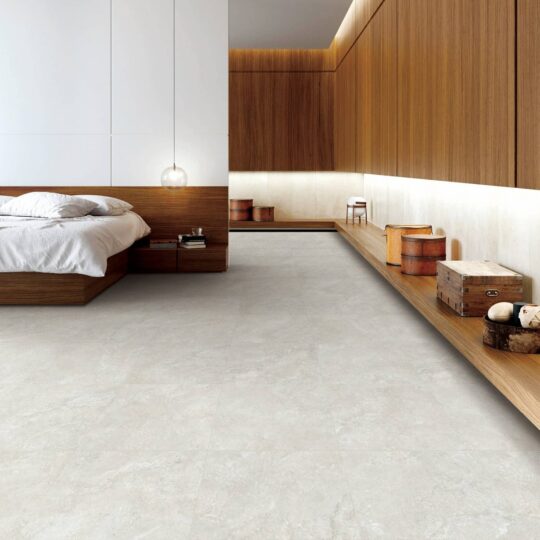
Matte tiles are often the most comfortable option for family kitchens. Their low-sheen finish disguises light dust, splashes and footprints better than highly polished surfaces, while creating a composed, contemporary look. A stone-look or concrete-look matte porcelain can also bring warmth and texture without the maintenance demands associated with more porous finishes.
Slip resistance matters, especially near the sink, dishwasher and external doors. Ask for the tile’s slip rating and discuss whether the room connects to a laundry, alfresco area or pool zone. A finish that feels suitable in a quiet showroom may need more grip in a busy home. The right choice depends on the tile’s location, amount of natural light and how often the floor gets wet.
Tile size changes the feel of the room
Large format tiles can make a kitchen feel more open because there are fewer grout lines interrupting the floor. Sizes such as 600 x 600 mm or 600 x 1200 mm suit many modern renovations and are especially effective in open-plan kitchen and living spaces. Fewer joints can also mean less grout to clean.
That said, large format tiles require a well-prepared, level substrate and an experienced installer. In a compact kitchen with numerous corners, doorways or uneven existing floors, a smaller format may reduce cutting and installation complexity. The most impressive tile is only as good as the preparation beneath it.
For high-use areas, ask about the PEI rating, which indicates the abrasion resistance of glazed tiles. A suitable rating provides reassurance that the surface is designed for residential foot traffic. Your tiler should also use the correct adhesive, movement joints and grout for the tile format and substrate, in line with Australian installation requirements.
Make the benchtop the dependable centre of the kitchen
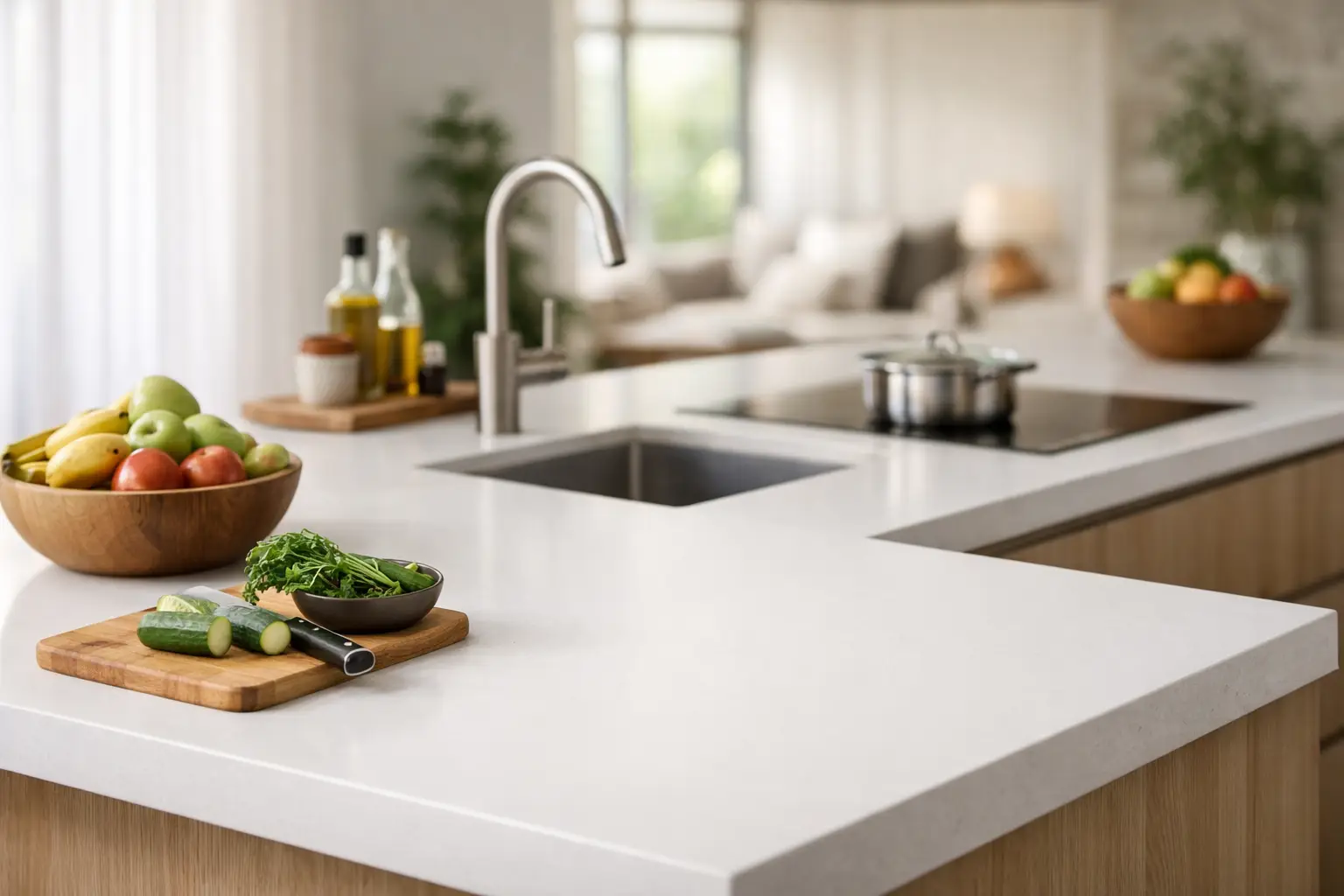
The benchtop is where family life gathers. It needs to look refined under pendant lights while dealing calmly with crumbs, spills, grocery bags and a full week of meal preparation. A zero-silica engineered stone benchtop offers the crisp appearance and consistent colour of an engineered surface without crystalline silica in the material.
That zero-silica advantage is particularly meaningful during fabrication and installation, where responsible handling of all building products remains essential. Choosing materials designed with safety in mind supports a healthier approach to renovation while still delivering a premium architectural finish. Always confirm the product specifications, fabrication process and installation requirements with your supplier and trades.
Colour is not just an aesthetic decision. Pale benchtops brighten a kitchen and pair naturally with timber, white or soft-grey cabinetry, but can show strong-coloured spills sooner. Mid-tones and subtle veining are often more forgiving in active households. Dark surfaces can look dramatic, although fingerprints, water marks and dust may be more visible depending on the finish and lighting.
For families who use the island as a multi-purpose table, consider the edge profile as well. A softened arris or rounded edge is easier to live with than a sharp profile, particularly where small children move around stools. It is a modest detail that makes a noticeable difference every day.
Build a splashback that earns its place
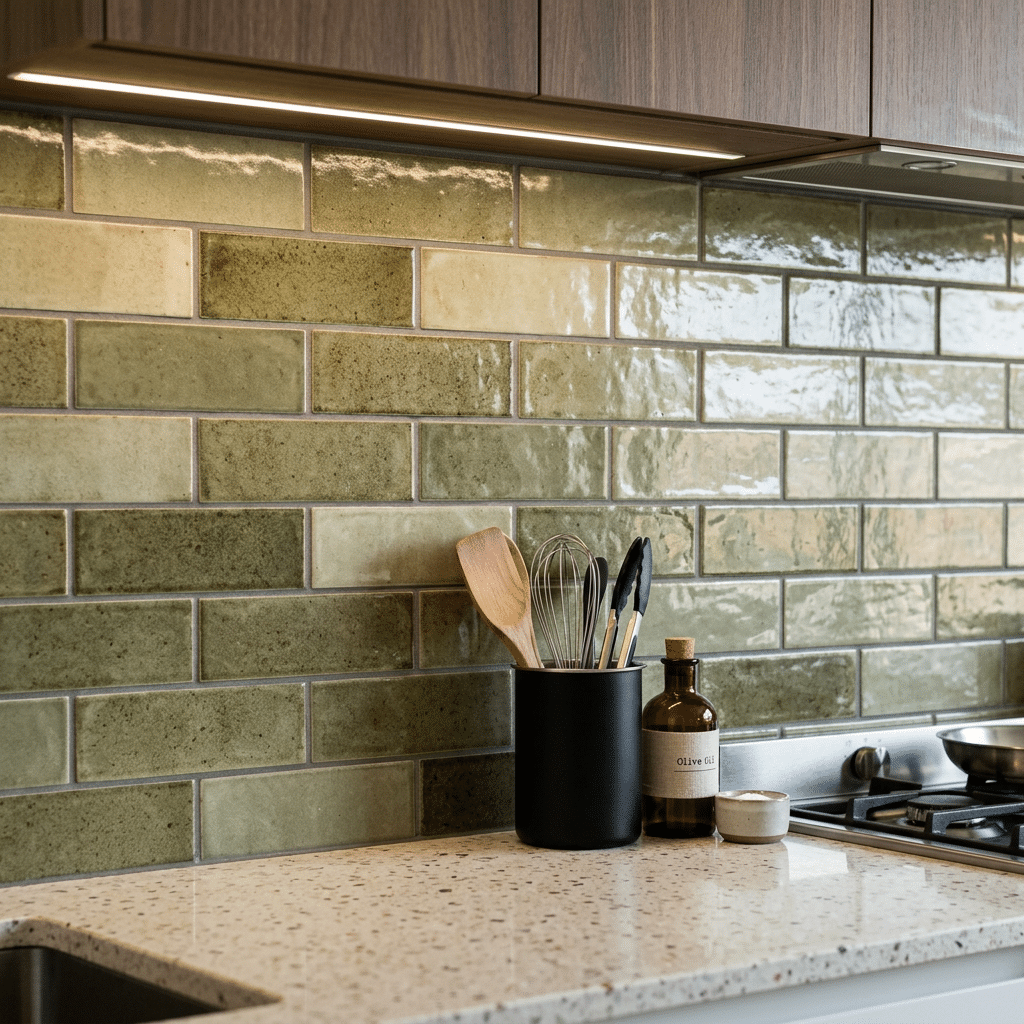
A splashback protects the wall, but it also gives the kitchen an opportunity for colour, pattern or quiet texture. Porcelain kitchen tiles are well suited to this zone because they are easy to wipe down and available in finishes ranging from handmade-look gloss to understated satin and stone-look styles.
Large porcelain panels create a minimal, continuous appearance with very few joins. They work beautifully behind cooktops and along long benchtop runs, though their installation needs careful measuring and skilled handling. Smaller tiles introduce more texture and can make a simple kitchen feel personal, but additional grout lines mean more routine cleaning.
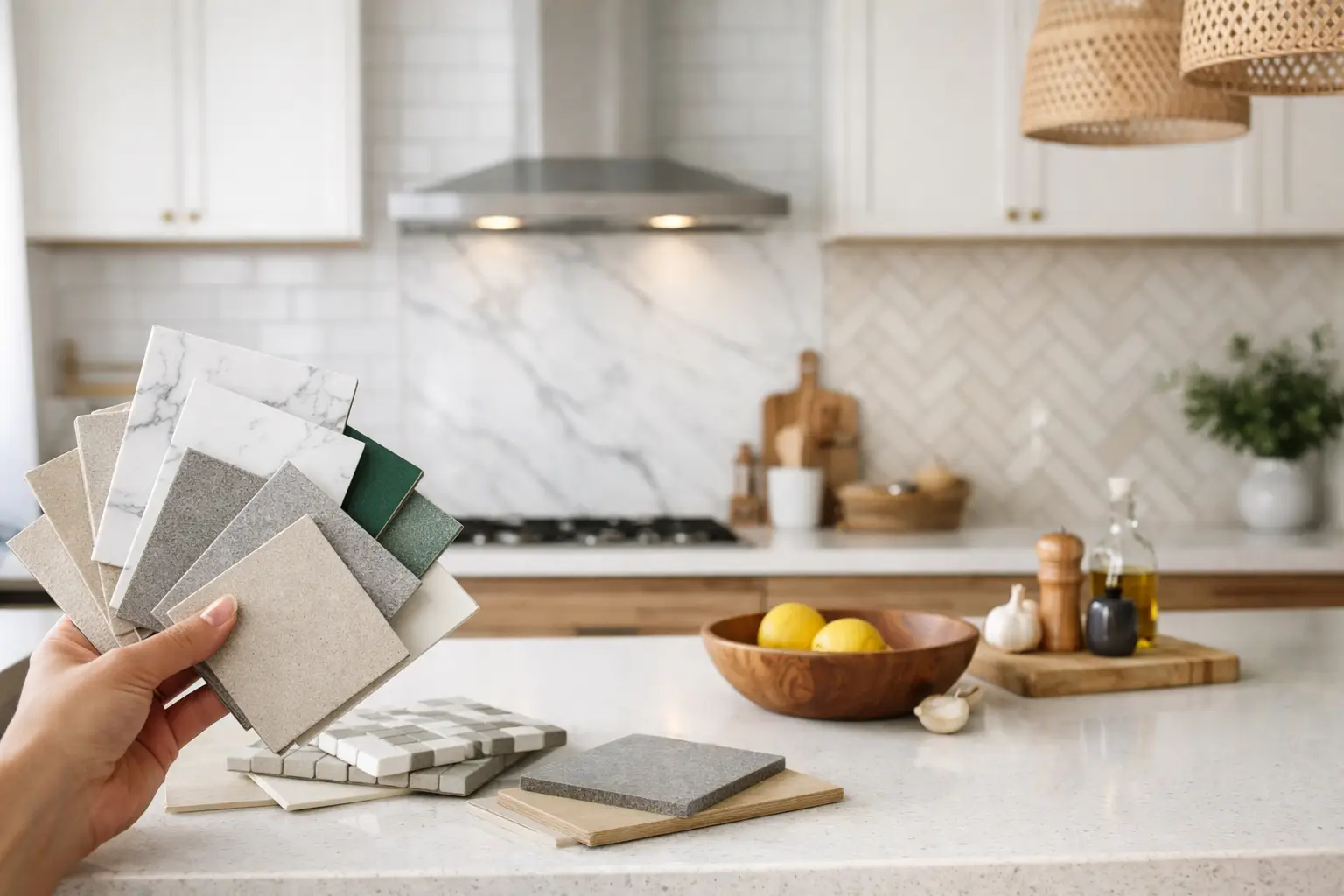
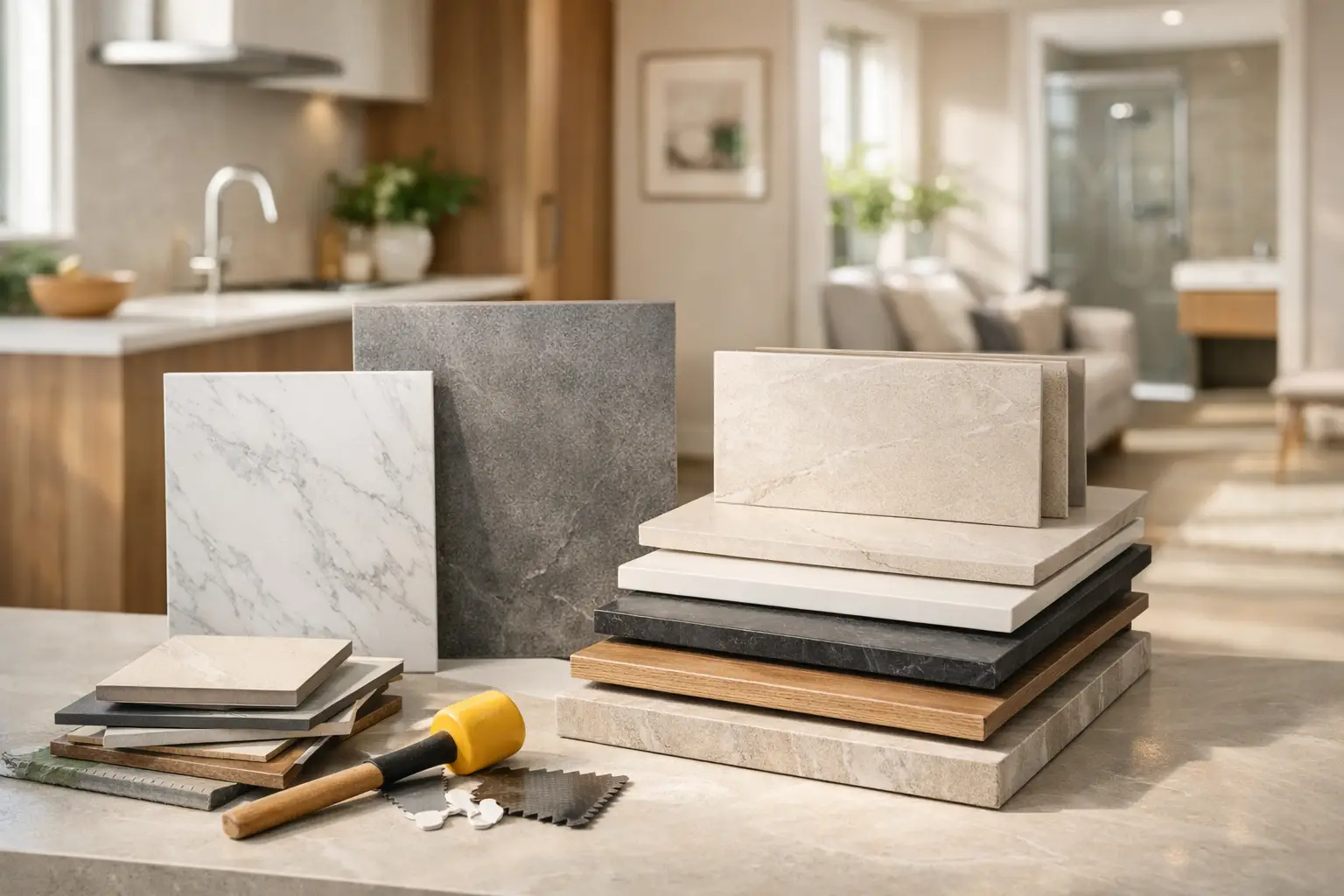
Consider the relationship between the splashback and benchtop rather than choosing each in isolation. If the benchtop has distinctive movement or veining, a quieter splashback usually creates balance. If the benchtop is plain, the wall can carry more visual interest. Bringing cabinetry, tile and benchtop samples together in the same light is far more reliable than selecting from individual photographs.
Plan for longevity behind the finished surfaces
A successful family kitchen transformation is built on decisions that are rarely visible once the project is complete. Adequate waterproofing where required, properly prepared walls and floors, correctly sized movement joints and careful sealing around sinks all protect the investment in the finishes above.
It is worth confirming lead times before finalising the layout. Ready stock tiles can help keep a renovation moving, particularly when a builder’s programme is tight or replacement quantities may be needed later. Ordering an appropriate allowance for cuts, breakages and future repairs is sensible, especially for directional patterns or large format tiles where the layout affects waste.
Benchtops should be measured after cabinetry is installed and confirmed level. This avoids costly assumptions about wall straightness, appliance clearances and splashback dimensions. A professional measure and 3D design service can help homeowners visualise proportions before materials are cut, including how an island, waterfall end or integrated seating will sit within the room.
At Verona Ceramic, Melbourne homeowners and trade professionals can view porcelain tiles and zero-silica benchtops together, making it easier to compare finish, scale and colour in person. Factory-direct supply and local warehouse stock are practical advantages when quality, availability and a reliable turnaround all matter.
Keep the finished kitchen easy to care for
Durable materials reduce maintenance, but they still benefit from simple habits. Sweep or vacuum grit from porcelain floors regularly, then mop with a pH-neutral cleaner appropriate for tiles and grout. Avoid harsh products that can leave residue or affect grout over time. Wipe benchtop spills promptly and use trivets and chopping boards as part of normal kitchen care.
Grout colour deserves thought too. Very white grout can look crisp, but may require more attention around cooking and dining areas. A warm grey, mushroom or charcoal tone can be more forgiving, depending on the tile. Ask to see grout samples against the selected porcelain rather than relying on a small chart.
The most enduring kitchens are not designed around a fleeting trend. They use dependable materials, thoughtful proportions and finishes that welcome the marks of ordinary family life without demanding constant attention. Choose the surface that makes your morning easier, your home safer to use and your kitchen a place everyone naturally returns to.