A tile can look perfect under showroom lights, then feel completely different once it is laid across a sun-filled living room or a busy family bathroom. Knowing how to choose porcelain tile finish means looking beyond colour and pattern to consider light, slip resistance, maintenance and how the room is actually used every day.
Porcelain is valued for its low porosity, strength and enduring appearance, but the finish on its surface has a major effect on performance. A polished tile may suit one space beautifully, while a matte or grip finish could be the smarter choice just a few metres away.
Start with how the room will be used
The best tile finish is rarely the one that simply looks best on a sample board. Think about who uses the space, how often it gets wet, how much natural light it receives and whether shoes, pets or outdoor dirt will regularly cross it.
For a formal entry or a light-filled lounge, a refined polished or satin surface can create an elegant, spacious feel. In a family kitchen, however, a matte porcelain tile is often more forgiving of crumbs, water marks and everyday traffic. Bathrooms, laundries and outdoor areas need even more careful consideration because safety underfoot matters as much as appearance.
Wall tiles have fewer functional restrictions than floor tiles. A glossy porcelain on a bathroom wall can reflect light and make a compact room feel brighter, while the same glossy finish on the floor may not provide the traction required for wet bare feet. It is common, and often very effective, to combine finishes: a polished or satin wall tile with a matte or slip-resistant floor tile in a coordinating colour.
How to choose porcelain tile finish by room
Kitchens: practical beauty where life happens
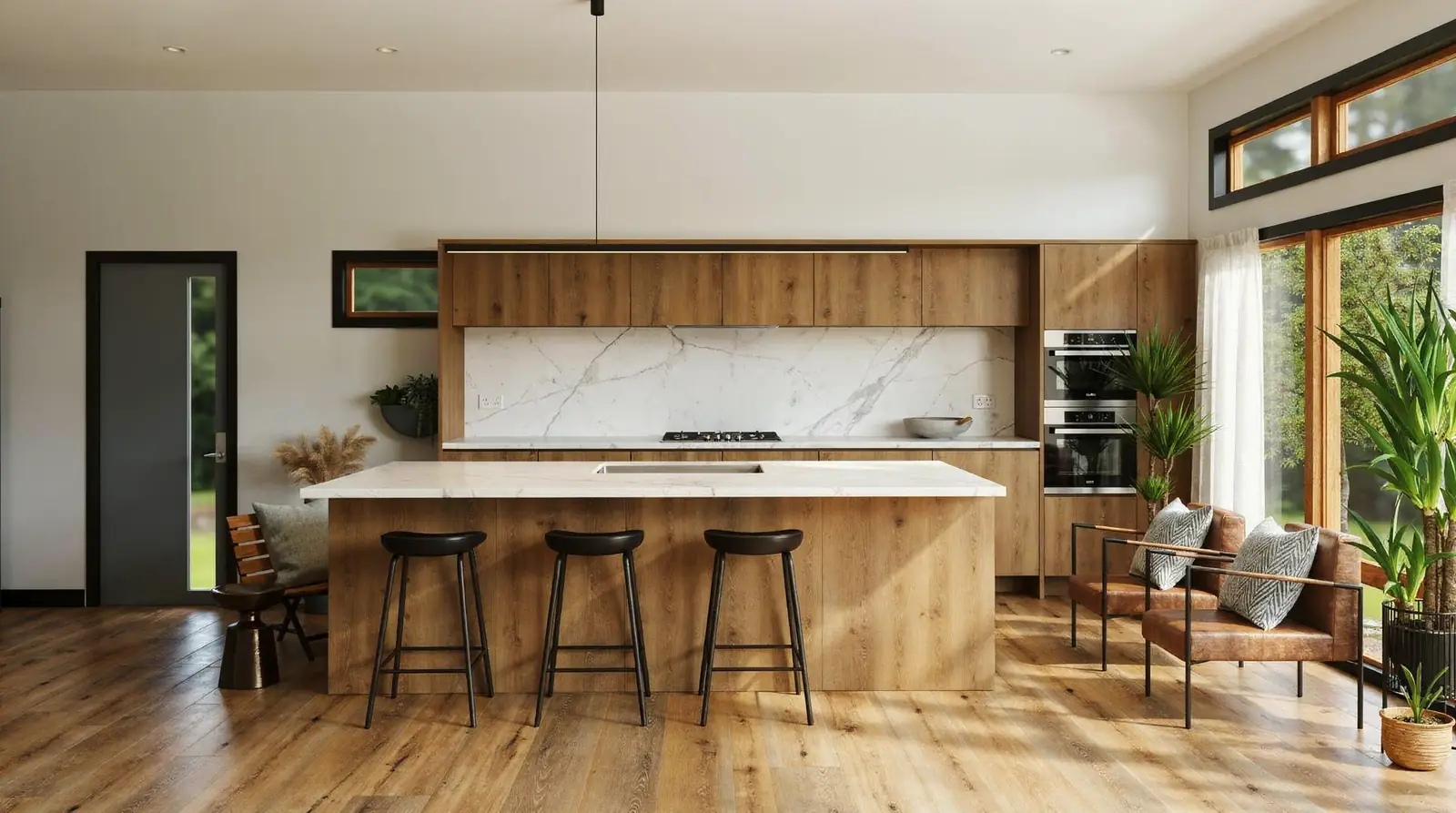
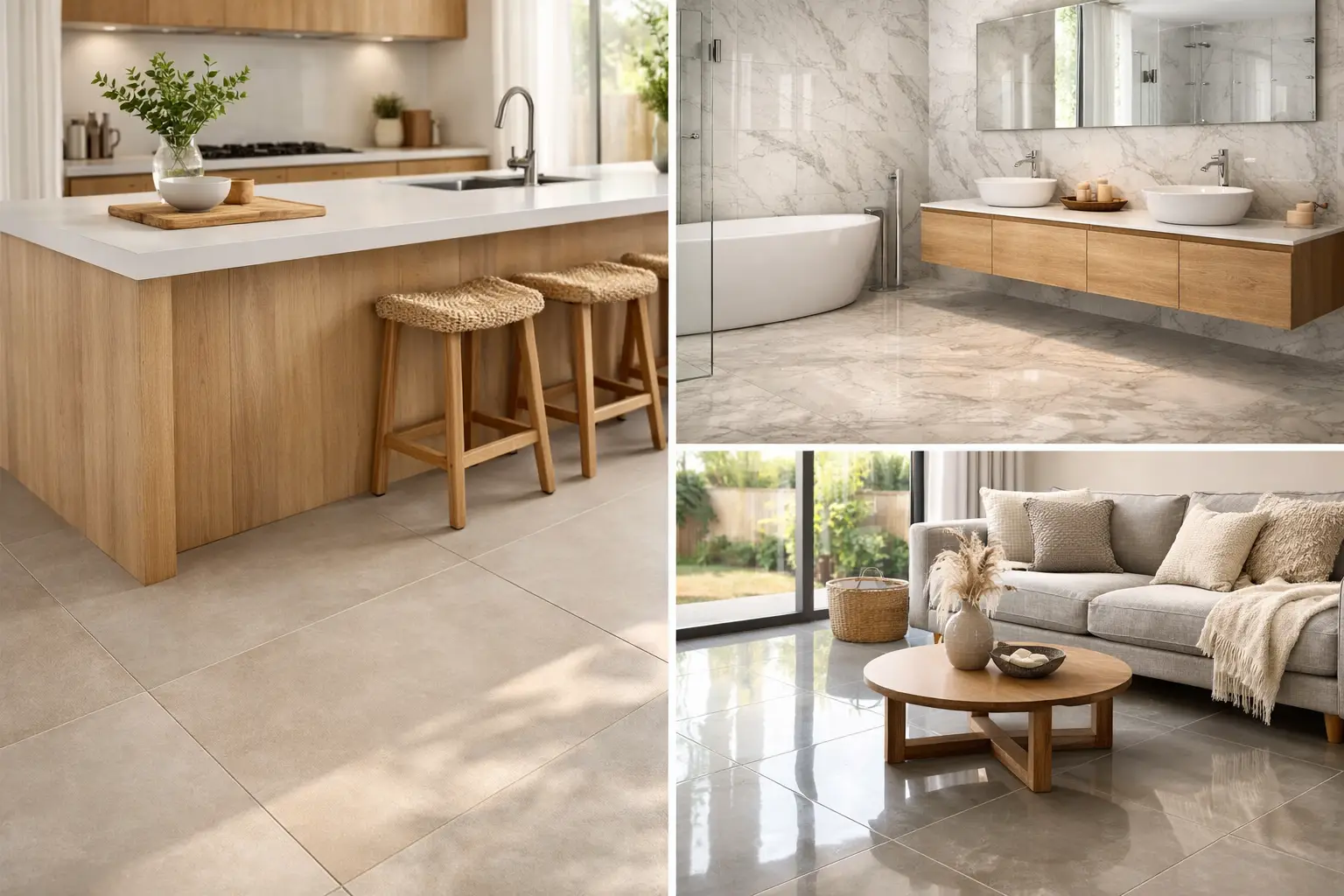
Kitchen tiles need to work around splashes, dropped food, chairs moving in and out, and regular cleaning. Matte and satin finishes are popular for kitchen floors because they offer a calm, contemporary look while disguising minor smudges and water spotting better than highly polished tiles.
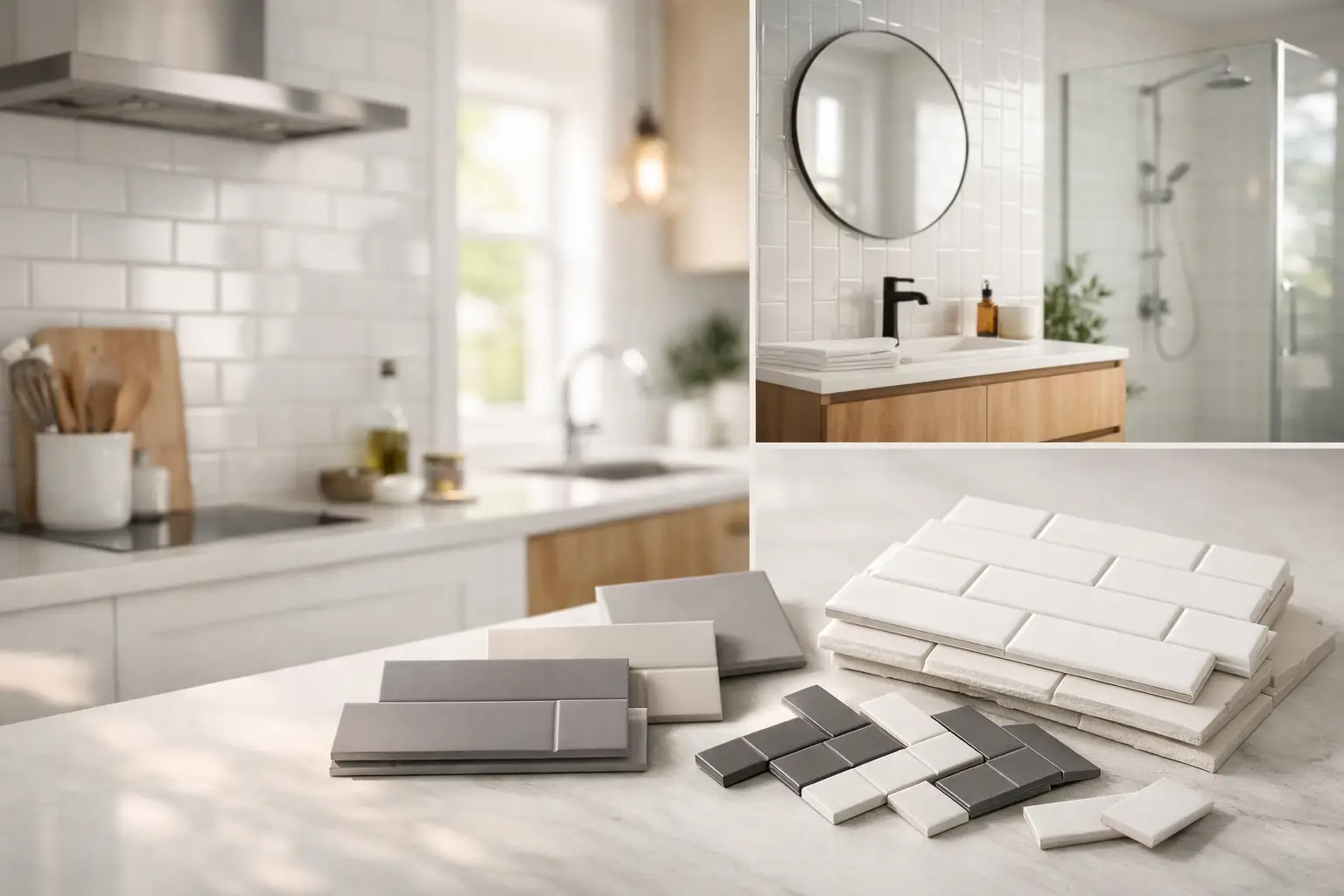
For splashbacks, a gloss or polished finish can be a wonderful choice. It reflects light, is easy to wipe down and adds visual contrast against matte cabinetry, timber details or zero silica benchtops. If you are using large format tiles on the splashback, a satin finish can also provide a more understated premium architectural look with fewer visible grout lines.
Very textured tiles can trap grease or grime around cooking zones, so they are generally better reserved for flooring or outdoor applications rather than directly behind a cooktop.
Bathrooms and laundries: prioritise wet-area safety
Bathroom floors call for a finish with suitable slip resistance when wet. Matte tiles with a fine texture are often a reliable choice, combining a soft look with easier everyday care. Shower floors may need a higher-grip surface, particularly where the area is frequently wet or used by young children, older family members or anyone with limited mobility.
Smaller tiles can be practical on shower floors because the additional grout joints contribute to grip and help the floor fall correctly to the drain. Large format tiles can still be used in many bathrooms, but the layout and drainage need to be planned carefully by an experienced tiler.
For walls, the choice is more open. Gloss porcelain can brighten a darker bathroom, while matte wall tiles create a relaxed, spa-like finish. Consider the balance of the whole room: if the floor is textured and the vanity is richly patterned, a simpler wall finish may prevent the space from feeling too busy.
Living areas, hallways and bedrooms: match the light
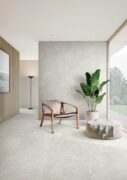
In open-plan living areas, finish has a big influence on the mood of the home. Polished porcelain reflects windows, lighting and surrounding furnishings, which can make a room appear larger and more formal. It is especially effective in spaces with controlled lighting and a lower risk of wet footwear.
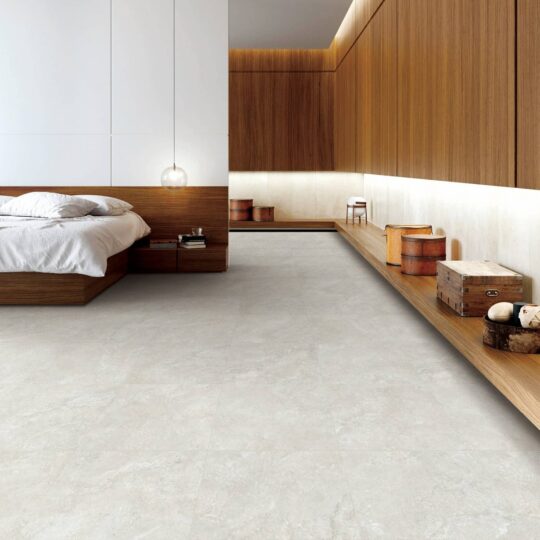
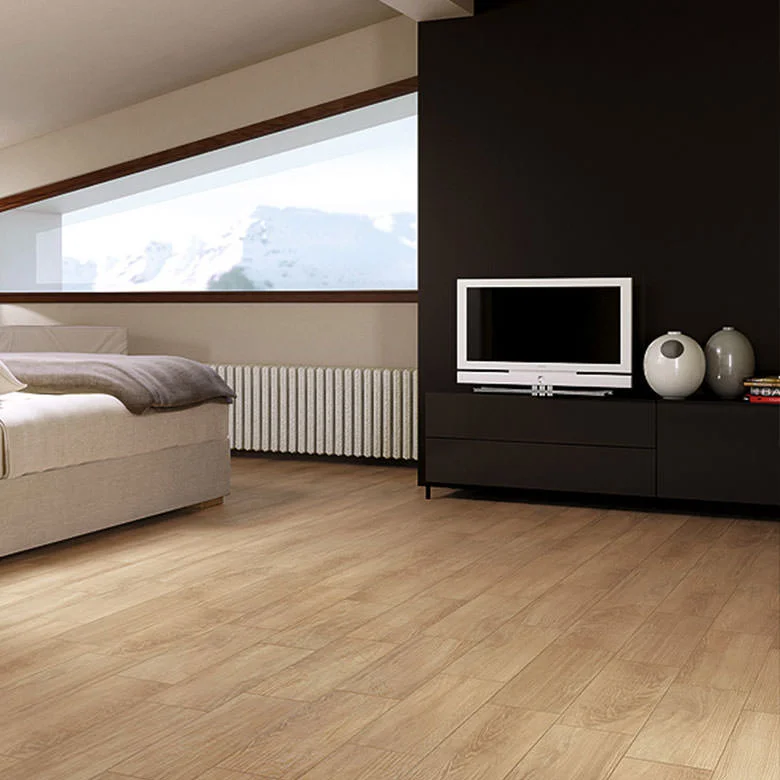
Matte tiles absorb rather than bounce light, giving floors a natural, grounded appearance. They work well with timber-look cabinetry, soft furnishings and modern Australian interiors. They are also a sensible option for hallways and family rooms where a little dust or a paw print should not become the centre of attention.
Satin and lappato finishes sit between matte and polished. Lappato porcelain is lightly polished, so it catches the light without producing a full mirror sheen. It can suit homeowners who want a more elevated finish but prefer something less reflective than polished tile. Always inspect a full sample, as the look and feel of lappato finishes can vary between tile ranges.
Outdoor spaces: grip comes first
Outdoor porcelain tiles should be selected for their slip resistance, weather suitability and ability to handle changing conditions. A structured or grip finish is designed to provide more traction around pools, alfresco areas, paths and external entries. It may feel slightly rougher underfoot and require a little more attention when cleaning, but that is a worthwhile trade-off for a safer surface.
For a smooth transition from indoors to outdoors, some porcelain collections offer matching indoor matte tiles and outdoor grip tiles. This creates visual continuity while giving each zone the surface performance it needs.
Understand the main porcelain tile finishes
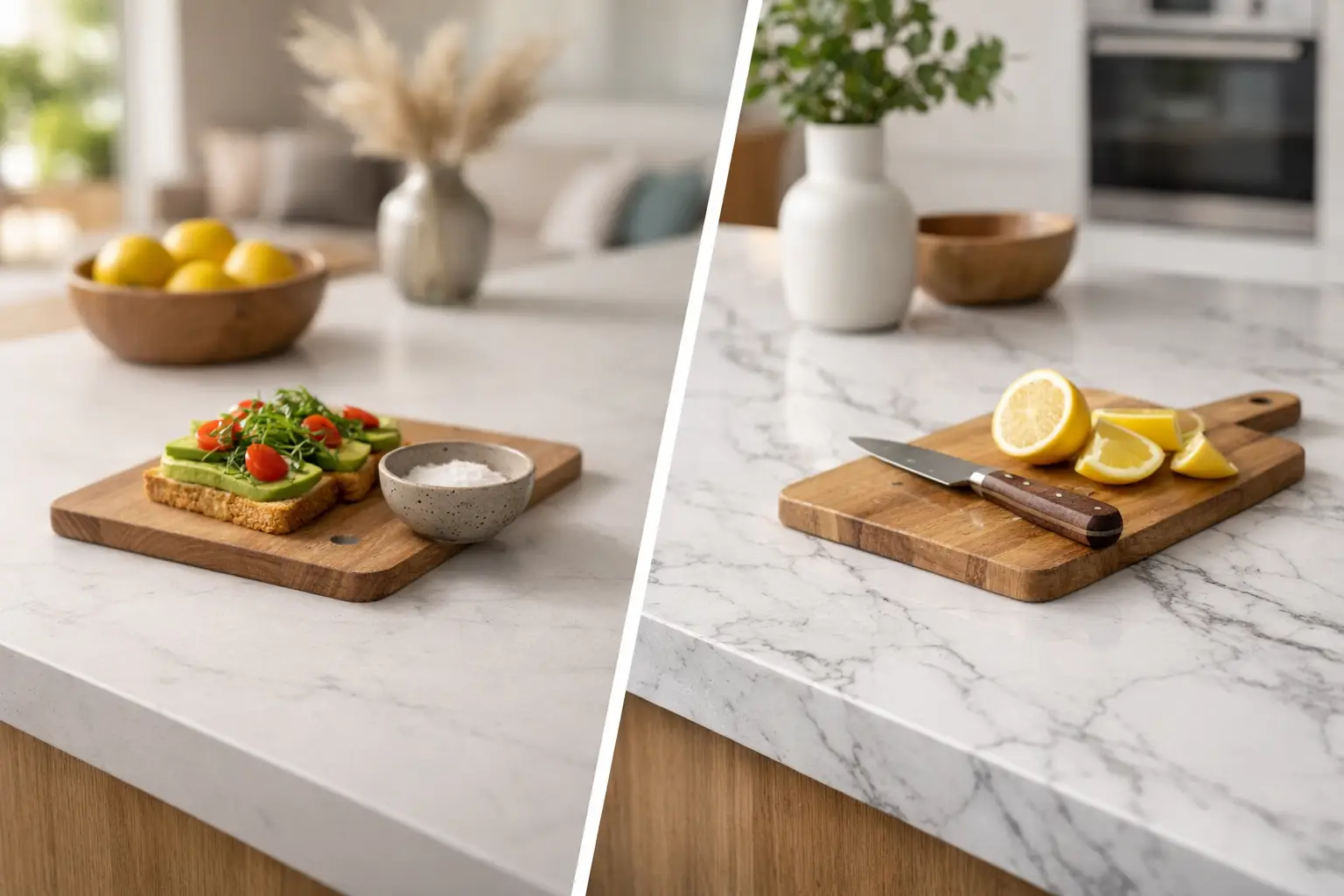
A polished finish has a glossy, reflective surface. It brings light and a sense of luxury to walls and low-moisture floors, but it can show water marks, scratches and dust more readily. It is usually not the first choice for wet floors or exposed external areas.
A matte finish has little or no shine. It is a versatile choice for kitchen tiles, bathroom tiles and living spaces because it feels contemporary, is easier to live with and generally offers better underfoot traction than polished porcelain.
A satin finish has a gentle sheen, providing a middle ground between the softness of matte and the light reflection of polish. It suits interiors where you want a refined surface without a high-gloss look.
Grip, structured or external finishes have a more textured face intended for wet or outdoor settings. They are practical around pools and alfresco spaces, though the texture can hold more dirt than a smooth internal tile. Good installation, suitable cleaning products and regular maintenance keep these surfaces looking their best.
Check slip ratings, not just the surface feel
A tile that feels slightly textured in the showroom is not automatically suitable for every wet area. Ask for the product’s slip-resistance information and discuss the intended application with your supplier and installer. In Australia, slip resistance is assessed using recognised test methods under AS 4586, and the relevant rating depends on where the tile will be installed.
You may see R ratings, which are commonly used for ramp testing, as well as wet pendulum classifications. Neither should be viewed in isolation. The right requirement can differ between an internal bathroom, a commercial entry, an outdoor patio and a pool surround. Drainage, slope, cleaning practices, footwear and exposure to rain all affect real-world safety.
For renovation professionals, this documentation is particularly valuable when specifying tiles. For homeowners, it provides reassurance that the tile choice is being made with both design and everyday use in mind.
Consider size, colour and cleaning together
Finish is only one part of the final result. Large format tiles can make a floor feel calm and expansive because there are fewer grout lines, but a highly reflective large tile may show reflections and residue more noticeably in strong sunlight. Matte large format tiles are often chosen for open-plan homes because they create a consistent, easy-going surface from room to room.
Colour also changes how a finish performs visually. Very dark polished tiles can reveal dust, while very pale textured tiles may show outdoor dirt. Mid-tones, stone-look patterns and gentle variation are often the most forgiving choices for active family homes.
Porcelain itself is straightforward to maintain. Regular vacuuming or sweeping, followed by a mop with a pH-neutral cleaner, is generally enough. Avoid waxy products that leave residue and can affect the appearance or slip performance of the tile.
View samples in your own light before ordering
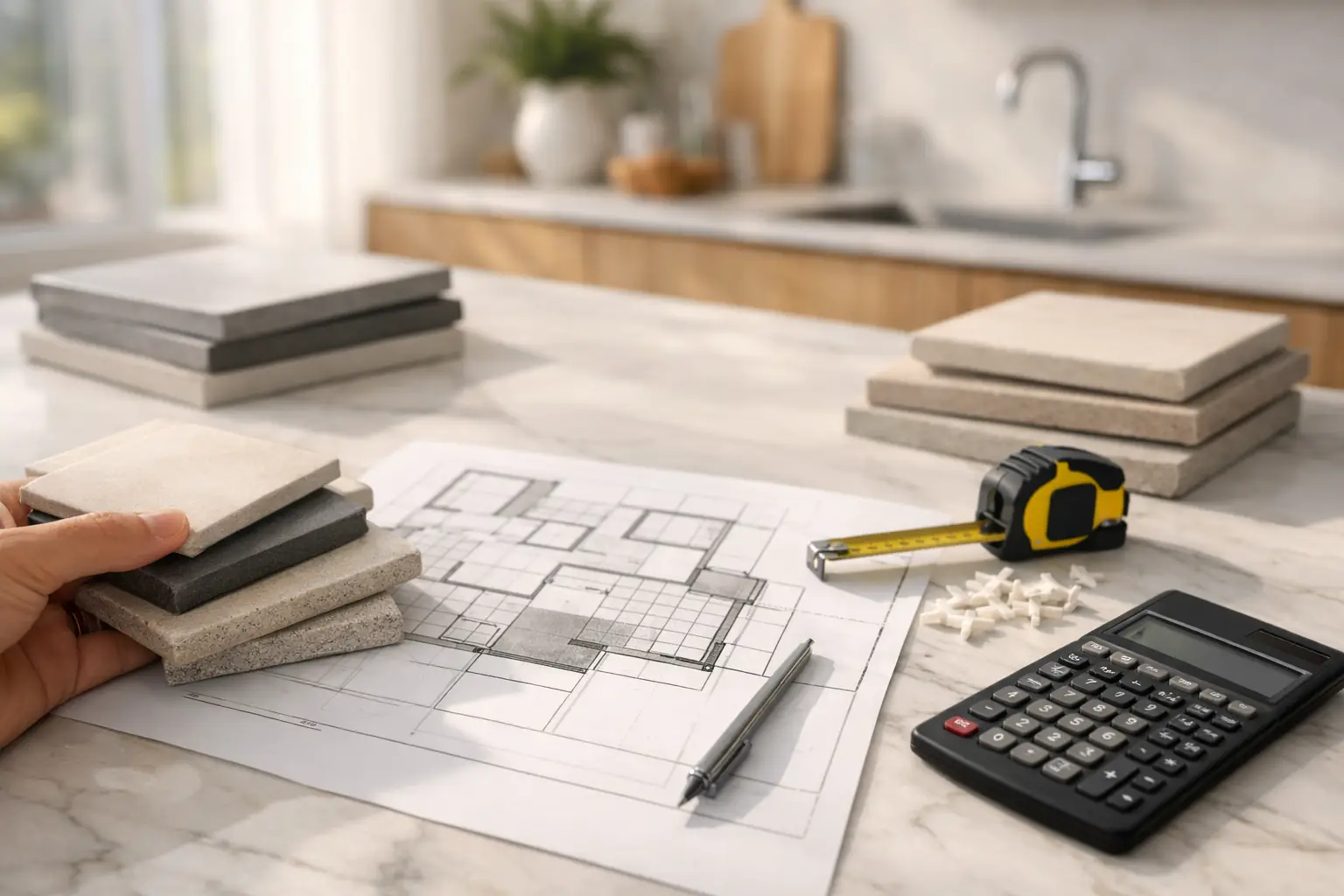
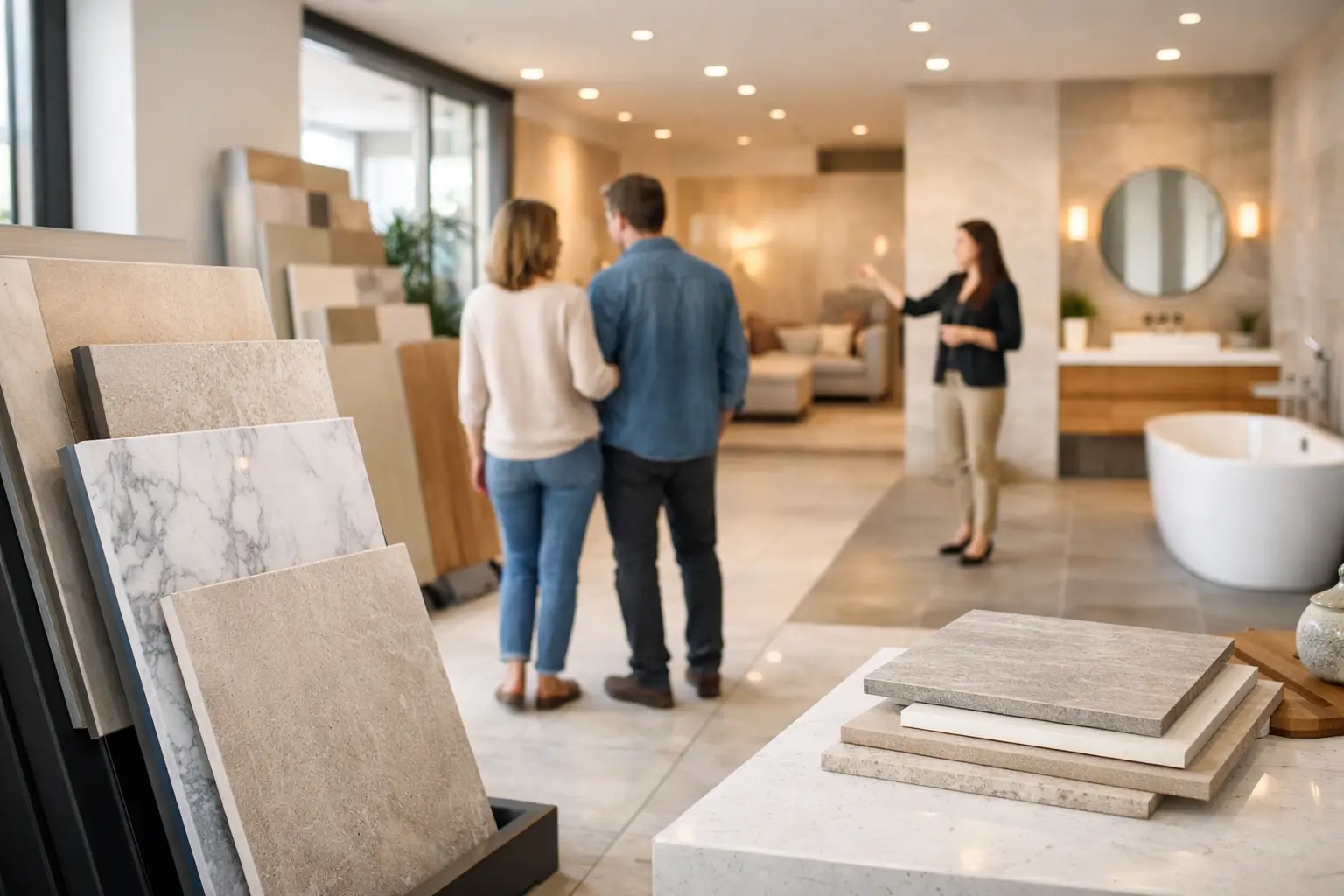
Take tile samples home and place them where they will be installed. Look at them in morning light, afternoon sun and artificial lighting. Wet a sample if it is being considered for a bathroom, laundry or alfresco area, and feel it with bare feet as well as shoes.
It is also wise to view several pieces from the same range. Stone-look and concrete-look porcelain often include intentional variation, which gives the floor character once laid but can be difficult to judge from a single tile. Check the nominated shade variation rating and confirm that enough material is available from the same batch for your project.
For Melbourne renovations with firm timelines, ready stock can make a meaningful difference. At Verona Ceramic, viewing tile finishes in person and discussing room-by-room requirements helps homeowners and trade professionals select premium surfaces with confidence before installation begins.
The right finish should make daily life easier, not demand constant attention. Choose a surface that suits the light, the level of traffic and the people who will walk across it every day, and your porcelain tiles will continue to look considered and comfortable for years to come.